

A bouldering crash pad is a portable landing mat intended for use beneath bouldering areas. Choosing one means balancing the landing area you need with the pad’s folded size, construction and ease of transport.
Start by confirming that a product is intended for climbing use. Then consider where you will use it, how much landing coverage you need, and whether you can comfortably transport and store it. A soft-looking mat or a product called a crash pad is not, by itself, evidence of suitability for climbing.
Compare Bouldering Crash Pads

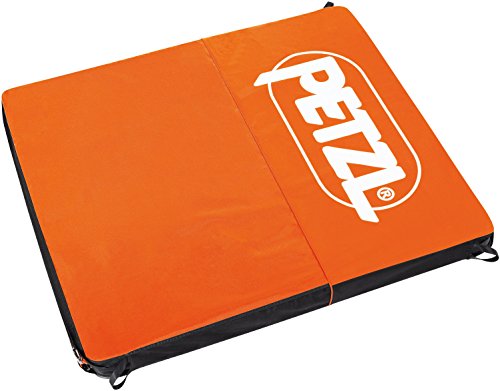


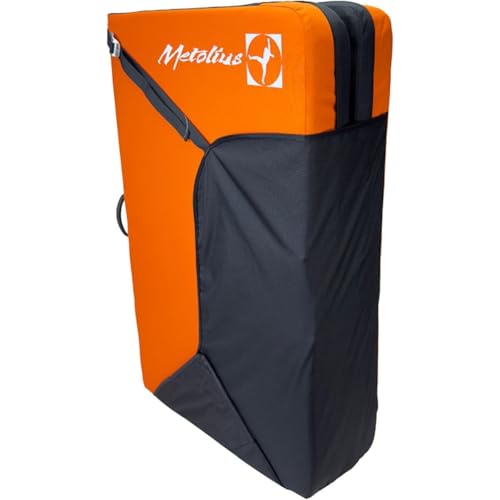
As an Amazon Associate we earn from qualifying purchases.
What should you look for in a bouldering crash pad?
Prioritize clear information about intended use, unfolded dimensions and construction. Match the pad’s coverage to the landing area you need to protect, while accounting for how it folds and carries. The trade-off is practical: a larger pad may cover more ground but can be harder to transport and store. Compare the individual product details, and do not treat any pad as a guarantee of a safe landing.
Compare the features that affect your choice
| Feature | What It Means | Why It Matters | What To Check |
|---|---|---|---|
| Intended use | The activity and setting the product is designed for | Some products described as pads may be intended for recreation or home use rather than climbing | Look for explicit climbing-use information and any stated limitations |
| Unfolded dimensions and shape | The area and layout the pad covers when open | Coverage matters, and gaps or an unsuitable shape can limit how useful a pad is for a particular landing area | Compare the listed open dimensions and shape with your intended use |
| Thickness and construction | The pad’s depth and how its cushioning is described | Construction affects the product’s design, but a label alone does not establish suitability for every landing | Check the specific construction details and intended-use guidance |
| Fold style | How the pad closes for carrying or storage | Fold patterns affect packed shape and can create seams when the pad is open | Review the unfolded layout as well as the folded form |
| Weight and carry features | How heavy the pad is and how it is carried | A pad that is awkward to move may be impractical for your approach or storage space | Check listed weight, straps or handles, and folded dimensions |
| Care information | Instructions for cleaning, drying and storage | Care needs can differ by materials and construction | Read the product’s specific care guidance before purchase |
Choose by coverage, construction and transport
Coverage and dimensions
Compare the open dimensions with the landing area you have in mind, not just the product’s folded size. Consider how the pad’s shape fits the space and whether the listed dimensions describe it open or folded. If you are considering multiple pads, do not assume they will form a continuous surface; their edges and placement can leave gaps.
Thickness and cushioning construction
Crash pads may describe their cushioning in different ways, and construction can vary between models. Read the specific product information rather than inferring performance from a general phrase such as “soft” or “dense.” Specifications vary by model, so always check the individual product page before buying.
Fold style and seams
Bi-fold and tri-fold designs describe ways a pad can fold for transport and storage. The fold affects its packed shape and where seams fall when it is open. Compare the open layout, not just the number of folds, and consider whether that shape suits the space where you intend to use it.
A supplemental pad may add coverage in a setup where its dimensions and intended use make sense, but a thin or small pad should not be assumed to replace a full-size landing pad. Check its purpose and details individually.

Weight, carry system and storage
Consider the distance you need to carry the pad and the room you have to store it. Check the listed weight, folded dimensions and carry features, if provided. A larger pad may offer a broader area when open, while a smaller or more compact design may be easier to move; neither trade-off makes one choice right for every climber.
Types and variations
- Folding crash pads: Bi-fold and tri-fold formats can suit buyers who want a pad that packs into a more compact shape. Their open dimensions and seam layout still need to fit the intended landing area.
- Supplemental pads: Smaller or thinner pads may be considered as additions when their stated use and dimensions fit the setup. Do not assume they offer the same coverage as a larger pad.
- Recreational or home-use pads: Some products may be marketed for lounging or general recreation. Do not assume these are suitable for climbing; verify the intended use directly.
Match the pad to your needs
- For a first pad: Focus on clearly stated climbing suitability, open dimensions, construction details and carry information. Avoid choosing based on appearance or a product name alone.
- For a specific landing area: Compare the pad’s open shape and dimensions with the space you need to cover. Think about seams and edges rather than considering total area alone.
- For frequent transport: Give weight, folded size and carry features more attention, while checking that the open coverage still suits your use.
- For adding to an existing setup: Check the supplemental pad’s intended role and dimensions, and consider whether the combined layout could leave gaps.
- For general home or recreational use: Choose according to that activity’s stated needs; do not rely on a climbing-related category or the word “crash” to establish climbing suitability.
Common buying mistakes
- Choosing by folded size alone: A compact packed shape does not tell you how much area the pad covers when open. Compare both forms.
- Assuming all cushioning is alike: Descriptions such as soft or thick do not fully explain construction or intended use. Read the product-specific details.
- Overlooking seams and shape: A listed surface area can be less informative than the actual layout. Check where folds and edges fall when open.
- Confusing recreational padding with climbing equipment: Verify that the product is explicitly intended for climbing rather than relying on its name, cover or appearance.
- Ignoring transport and storage: A pad that suits the landing area may still be inconvenient to carry or store. Check weight and folded dimensions before deciding.
Safety and suitability
A crash pad is one part of a broader approach to bouldering safety; it cannot guarantee a safe landing or prevent injury. Suitability depends on the product, the landing area and the climbing context. Follow the manufacturer’s intended-use information, and do not assume that a recreational mat or a pad of any particular size is appropriate for every situation.
Care, maintenance and storage
Care needs depend on the pad’s materials and construction. Read its product-specific guidance for cleaning, drying and storage, and consider whether you have a suitable place to keep it. Do not assume that all covers or cushioning respond to the same care methods; check the maker’s instructions rather than improvising repairs.
A practical buying process
- Define where and how you intend to use the pad, and confirm that climbing is a stated intended use.
- Estimate the coverage and open shape that fit the landing area you have in mind.
- Compare construction details, fold layout and any stated limitations.
- Balance open coverage against weight, folded dimensions, carrying needs and storage space.
- Review the individual product information for dimensions, care guidance and other details you need before deciding.
Buyer checklist
- Is climbing use explicitly stated?
- Are the open dimensions and shape clear?
- Do the construction details and limitations make sense for your intended use?
- Have you considered fold seams, edges and possible gaps?
- Can you carry and store the folded pad comfortably?
- Have you checked product-specific care and use guidance?
Frequently asked questions
How do I choose the right size crash pad?
Start with the landing area you need to cover and compare it with the pad’s open dimensions and shape. Then weigh that coverage against transport and storage needs. A larger listed area does not, on its own, establish suitability for a particular landing.
Is a thicker crash pad always better?
Not necessarily. Thickness is only one part of a pad’s design, and construction and intended use matter too. Compare the specific product details rather than using thickness as a stand-alone measure.
What is the difference between bi-fold and tri-fold pads?
The terms describe different folding formats. They can affect packed shape and the layout of seams when open, so compare both the folded and unfolded forms. The fold count alone does not tell you which pad fits your needs better.
Can I use a recreational or home-use pad for bouldering?
Do not assume it is suitable. Check whether the product is explicitly intended for climbing and read any stated limitations. A soft surface or a crash-pad name is not proof of climbing suitability.
Should I buy a supplemental pad?
It may make sense if its intended role and dimensions fit your needs. Check how it relates to the main pad and whether the resulting layout could have gaps. Do not treat a smaller supplemental pad as an automatic substitute for broader coverage.
What should I check before buying online?
Confirm climbing suitability, open and folded dimensions, construction information, weight and carry features, and care guidance. If an important detail is unclear, do not infer it from a product title or photograph.
More Bouldering Crash Pads
See all 14 Bouldering Crash Pads →


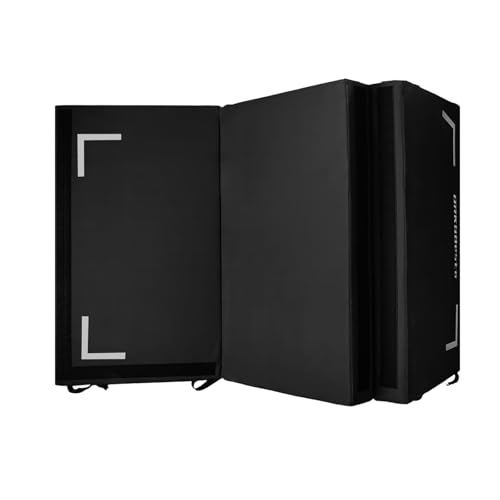
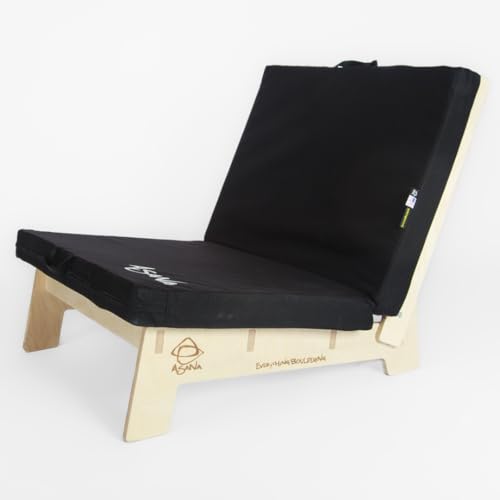

As an Amazon Associate we earn from qualifying purchases.