

Half climbing ropes are dynamic ropes designed to be used as a two-rope system. Each strand is clipped to protection separately, commonly in an alternating pattern, rather than treating the pair as one thicker rope. The category is most relevant to climbers whose routes and rope-handling skills suit that system.
Choosing a pair involves more than comparing diameter or length. Consider the routes you climb, whether the ropes are intended to be used together, how they work with your belay device, and the care requirements stated by the manufacturer.
Compare Half Climbing Ropes


As an Amazon Associate we earn from qualifying purchases.
What should you look for in half climbing ropes?
Start with the intended rope system: confirm that the ropes are marked and described for half-rope use, and plan to use them as a compatible pair. Then compare length, diameter, weight, handling information, and any treatment or construction details the manufacturer provides. The best fit depends on your routes, equipment, and experience; no single specification suits every climber.
Compare the main buying factors
| Feature | What It Means | Why It Matters | What To Check |
|---|---|---|---|
| Rope designation | The rope is identified for use in a half-rope system. | Rope systems have different intended clipping methods and use requirements. | Read the rope markings and manufacturer instructions; do not assume a rope is suitable for another system. |
| Pair compatibility | The two strands are intended to work together as a set or compatible pair. | Clear matching information helps avoid combining ropes with unsuitable specifications or instructions. | Check whether the product is sold as a pair or as a single strand, and whether the manufacturer approves the intended combination. |
| Length | The stated length of each rope. | Route length and planned use affect how much rope is appropriate. | Compare the length with the routes and rope-use plans you have in mind; check how the product listing describes each strand. |
| Diameter and belay-device fit | The rope’s stated diameter and the range supported by your belay device. | Device compatibility affects whether your existing equipment is suitable for the rope. | Compare the rope’s stated diameter with the device manufacturer’s approved range and instructions. |
| Weight and handling | Information the manufacturer provides about rope weight and handling. | These characteristics can affect how the pair feels to carry and manage. | Compare like-for-like product information, and consider the combined weight of two strands. |
| Care and treatment details | Any manufacturer-stated treatment, care guidance, or limitations. | Care needs and suitable use can differ between ropes. | Read the product and care information rather than assuming a treatment or benefit from the category name. |
Key selection criteria
Choose for the routes and rope system
Think about the routes you expect to climb and how their protection and line might affect rope handling. Half ropes allow each strand to follow a separate path when clipped appropriately, which can be useful on routes where managing rope drag is a concern. That benefit depends on suitable technique and route conditions; it is not a reason to choose the system without understanding how it is used.
Confirm you have a compatible pair
Check whether the listing is for one rope or a pair. If buying strands separately or combining ropes you already own, verify that the manufacturer permits that combination and that their use instructions align. Similar-looking ropes are not automatically interchangeable.
Match length to your plans
Consider the routes and other intended uses for which you need the ropes, then compare each strand’s stated length with those plans. A longer rope can add carrying weight, while a shorter one may not suit a route or use you have in mind. Specifications vary by model, so always check the individual product page before buying.
Check diameter against your belay device
Compare the listed rope diameter with the compatibility information for your belay device, especially because a half-rope setup involves two strands. Do not assume that a device suitable for one rope configuration will handle every paired-rope setup. Follow the instructions for both the rope and the device.
Balance weight, handling, and care information
When carrying two ropes, their combined weight may matter more than the weight of one strand alone. Compare the manufacturer’s stated information and consider whether any handling or care notes fit your priorities. Features such as a stated treatment should be evaluated from the product details, not assumed to remove the need for appropriate care.
Half ropes and other rope systems
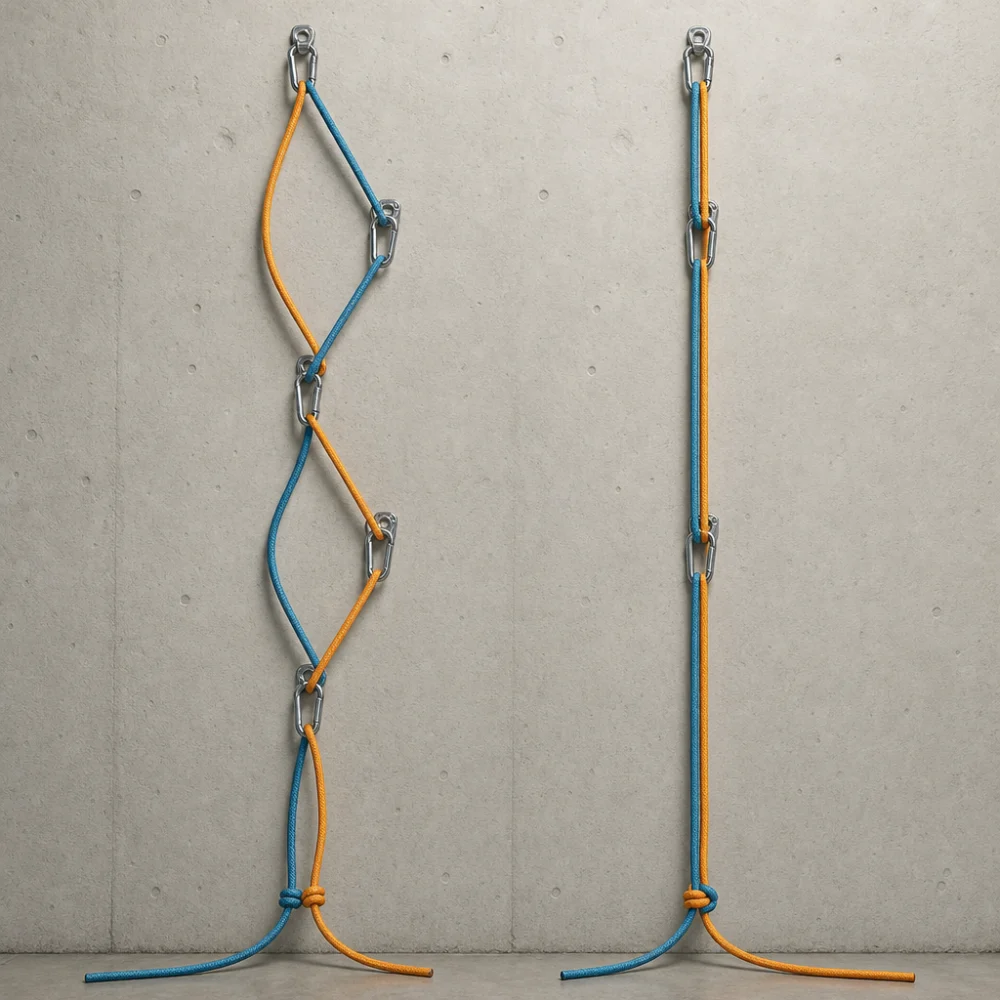
Half ropes are used as a pair, with the strands clipped separately, commonly to alternating protection. This allows each strand to follow a different path, but requires familiarity with the system.
Twin ropes are a distinct rope system with different intended clipping instructions. Do not treat twin and half ropes as interchangeable simply because both involve two strands; check the rope markings and manufacturer directions.
Single ropes are intended for a different rope system. A half rope should not be treated as a single rope unless its manufacturer explicitly permits that use and specifies the conditions.
The diagram below illustrates the general distinction in clipping pattern; it is conceptual and does not replace rope or equipment instructions.
Which needs might suit this system?
- Routes with wandering lines: Separate strand paths may help manage rope drag when the route and protection layout make that relevant. The benefit depends on appropriate clipping and experience with the system.
- Climbers who need two-rope versatility: A paired system may suit plans that call for two strands, provided the rope configuration and intended uses match the manufacturer’s guidance.
- Climbers replacing an existing pair: Check the old pair’s designation, length, diameter, and manufacturer information before choosing replacements. Do not assume a new rope is compatible with an existing strand based on appearance alone.
- Newcomers to paired ropes: First consider whether you have the knowledge, instruction, and compatible equipment for this system. If not, seek qualified guidance before selecting it for use.
Common buying mistakes
- Assuming all two-rope systems work the same way. Half, twin, and single ropes have different intended uses. Check the rope designation and follow its specific instructions.
- Buying one strand when you need a pair. Product listings may describe a single rope or a set. Confirm exactly what is included before comparing options.
- Choosing by diameter alone. Diameter is only one consideration; pair compatibility, length, intended system, and belay-device fit also matter.
- Assuming existing equipment is compatible. Compare rope and belay-device information directly, and verify any proposed pairing against the manufacturers’ instructions.
- Expecting a rope feature to replace care. Do not infer a performance guarantee from a treatment or product label. Check the manufacturer’s description and care requirements.
- Using a half rope as a single rope by assumption. Confirm any permitted use with the manufacturer; the category name alone does not establish that a particular model can be used that way.
Safety and suitability
Climbing ropes are safety-critical equipment. Choose ropes for the intended system and use, and follow the product instructions alongside guidance for your belay device and other equipment. If you are unsure how a half-rope system is used or whether your equipment is compatible, get qualified instruction before relying on it. A category label alone does not establish suitability for a particular route or setup.
Care, maintenance, and storage
Before buying, review the manufacturer’s care, inspection, and retirement guidance so you understand the commitments associated with the rope. Follow its storage and cleaning instructions, and avoid assuming that care requirements are identical across models. There is no universal service-life estimate that can replace the manufacturer’s guidance and an assessment of the rope’s history and condition.
A practical buying process
- Identify the routes and intended uses for which you need a rope system.
- Confirm that a half-rope system fits those plans and your experience.
- Determine whether you need a pair, then verify the listed contents and pair compatibility.
- Compare length, diameter, weight, and care information against your needs and existing equipment.
- Check the individual product details and manufacturer instructions before deciding.
Buyer checklist
- Is the rope explicitly designated for half-rope use?
- Does the listing include one strand or a pair?
- Are the two strands confirmed as compatible for your intended use?
- Does the length suit your planned routes and uses?
- Is the diameter within your belay device’s stated range?
- Have you reviewed the manufacturer’s use, care, and retirement guidance?
Frequently asked questions
What does half rope mean?
It describes a dynamic rope intended for use in a two-strand half-rope system. The strands are clipped separately, commonly in an alternating pattern. Follow the markings and instructions for the specific rope.
How are half ropes different from twin ropes?
They have different intended clipping methods and should not be treated as interchangeable systems. Check the designation on each rope and follow the manufacturer’s instructions for its use.
Can I use one half rope by itself?
Do not assume so. Use a strand on its own only if the manufacturer explicitly permits that use for the specific rope and provides applicable instructions.
Do half ropes need to be the same model?
Check the manufacturer’s guidance for combining strands rather than relying on appearance or similar names. Confirm compatibility of the rope designation and relevant specifications before using a pair.
How do I choose a half-rope length?
Compare the stated length of each strand with the routes and other intended uses you have in mind. Check the product details carefully, including whether the listing is for one rope or a pair.
Will my belay device work with half ropes?
Compatibility depends on the device and the rope specifications. Compare the rope’s stated diameter and intended use with the device manufacturer’s instructions, including guidance for handling two strands.
Do half ropes require special care?
Care and storage guidance can vary by model. Follow the manufacturer’s instructions for inspection, cleaning, storage, and retirement rather than applying a universal schedule.
More Half Climbing Ropes
See all 24 Half Climbing Ropes →


As an Amazon Associate we earn from qualifying purchases.