
A golf driver is one of the most personal clubs in the bag, and the right choice depends on how you launch the ball, how much forgiveness you want, and how comfortable you feel at address. If you are replacing an old driver or buying one for the first time, it helps to focus on a few practical features instead of chasing every buzzword.
This guide covers the main decision points without assuming one driver style suits every golfer. It is designed to help you compare options sensibly, whether you are looking for more consistency, a different look at address, or a club that better matches your current game.
What should you focus on first when choosing a golf driver?
Start with loft, forgiveness, and shaft fit, because those three factors usually have the biggest effect on how a driver feels and performs for an individual golfer. Head shape and adjustability matter too, but they are easier to judge after you know the basics. If you are unsure, prioritize a driver that supports repeatable contact and a comfortable setup over one chosen only for appearance or a single headline feature.
| Feature | What It Means | Why It Matters | What To Check |
|---|---|---|---|
| Loft | The upward angle of the clubface | Affects launch and how easily the ball gets airborne | Match the loft range to your launch needs and usual ball flight |
| Forgiveness | How stable the driver is on off-center strikes | Can help reduce the penalty for imperfect contact | Look for design cues that emphasize stability and confidence at impact |
| Adjustability | Settings that may let you change loft or ball-flight bias | Can help fine-tune the club as your swing changes | Confirm which settings are included and whether you will use them |
| Shaft fit | The shaft’s weight, flex, and overall feel | Affects timing, control, and comfort through the swing | Check the available shaft options and the stated flex before buying |
| Head shape and profile | The visible look of the driver head at address | Influences confidence and how the club frames the ball | Choose a shape you find easy to aim and set behind the ball |
Key decision criteria explained
Loft and launch
Loft is often the first number golfers compare, but it should be read in context. A driver with more loft may help some players launch the ball more easily, while less loft may suit others with different swing dynamics. The best choice is the one that gives you a usable flight and consistent contact, not just the one with the lowest printed number.
Forgiveness and stability
Forgiveness matters because most golfers do not strike the center of the face every time. Drivers built with stability in mind may feel more predictable on mishits, which can make them easier to use over a round. That does not make them automatically longer in every case, but it can make results more consistent.
Shaft fit and feel
The shaft influences how the club loads and returns through the swing. A golfer who prefers a smoother feel may not like a shaft that feels too firm or heavy, while another player may want more structure and control. Specifications vary by model, so always check the individual product page before buying.
Adjustability
Some drivers offer adjustable hosels or weighting features that let you fine-tune the club. This can be useful if you want flexibility, but it can also add complexity you may not need. If you are a straightforward player, a simpler driver can be easier to live with than one with settings you will never change.
Head shape and visual confidence
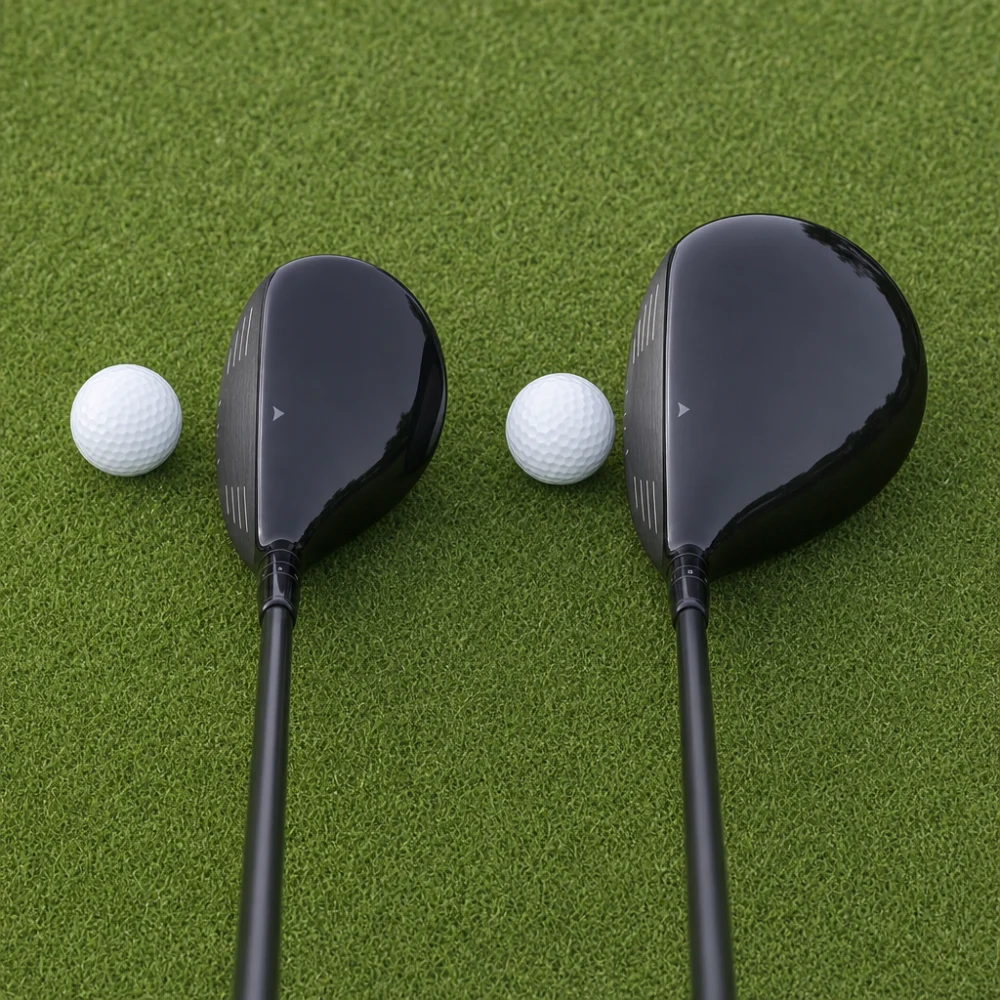
Many golfers overlook the way a driver looks at address, but confidence matters. Some heads appear more rounded, some more compact, and some more stretched out behind the ball. The best visual profile is usually the one that helps you line up comfortably and swing without second-guessing the setup.
Common golf driver types and variants
Within drivers, the main differences usually center on forgiveness, adjustability, and visual profile rather than radically different use cases. A more forgiving driver may suit a wider range of players, while a more compact or adjustable head may appeal to golfers who want a specific look or tuning flexibility.
- Forgiveness-focused drivers: Often chosen by players who want a more stable, confidence-building option on imperfect contact.
- Adjustable drivers: Suit golfers who want to experiment with setup and fine-tuning over time.
- Compact-looking drivers: May appeal to players who prefer a smaller visual footprint at address.
The right variant depends less on status or trend and more on how much control, simplicity, and visual confidence you want from the club.
Which driver style tends to suit different buyers?
| Buyer need | What usually matters most | Possible trade-off |
|---|---|---|
| Beginner or newer golfer | Forgiveness, ease of use, and a comfortable look at address | Less emphasis on advanced adjustability may be fine |
| Golfer seeking more consistency | Stable head design and a shaft that matches swing tempo | The most adjustable club is not always the simplest to use |
| Golfer who likes to tune equipment | Adjustability and multiple setup options | More settings can mean more complexity |
| Gift buyer | Broadly forgiving design and a standard, easy-to-understand setup | It is harder to tailor fit without knowing the golfer’s preferences |
Common mistakes and misunderstandings
- Choosing by loft alone: Loft matters, but launch, forgiveness, and shaft fit also shape the result.
- Assuming adjustability is essential: Some golfers will use it; others are better served by a simpler setup.
- Ignoring the look of the head: If a driver does not look comfortable behind the ball, confidence can suffer.
- Overvaluing a single feature: A driver that sounds good on paper may not suit your swing or visual preference.
Safety and suitability caveats
Drivers are intended for golf use, and suitability depends on the golfer’s ability, comfort, and playing context. Check the listed specifications carefully if you have a particular preference for shaft flex, head style, or adjustability, and make sure the club matches the way you actually play rather than how you hope to play.
Maintenance, storage and lifespan considerations
Driver care is usually straightforward, but it still affects long-term usefulness. Keep the club clean, store it where the head and shaft are protected from unnecessary knocks, and pay attention to signs of wear at the grip, shaft, or head connection points where applicable. If a driver includes adjustable parts, it is worth keeping those settings and components organized so the club remains easy to use.
How to compare golf drivers efficiently
- Decide whether you want more forgiveness, more adjustability, or a simpler setup.
- Check the loft and shaft options first, because they shape the starting fit.
- Compare the head shape and overall look at address for confidence and alignment comfort.
- Weigh the trade-off between simplicity and tuning flexibility.
- Read the individual product page closely before deciding.
Summary buyer decision checklist
- Does the loft range suit your launch needs?
- Does the head style look comfortable behind the ball?
- Is forgiveness or adjustability more important for your game?
- Do the shaft options match your preferred feel?
- Will the driver be simple enough for you to use confidently?
- Have you checked the individual product page for the exact specifications?
Frequently asked questions
What is the main job of a golf driver?
A driver is designed for tee shots, where distance and launch are usually the main goals. For many golfers, the bigger question is not just how far it can go, but whether it helps produce a playable and repeatable ball flight.
Is a more adjustable driver always better?
Not necessarily. Adjustability is useful only if you plan to use it, and some golfers prefer a simpler club with fewer settings to manage. The right choice depends on whether you want flexibility or ease of setup.
How important is forgiveness in a driver?
Very important for many recreational golfers, because off-center strikes happen often. A more forgiving driver can help make those misses less costly, although it will not solve every swing issue.
Should I choose the lowest loft available?
No. Lower loft is not automatically better, and it may not suit your swing or launch needs. It is usually wiser to choose loft based on the ball flight you can actually use consistently.
Does the shaft really matter that much?
Yes, because the shaft affects feel, timing, and how the club responds through the swing. A driver head that looks appealing can still feel wrong if the shaft is not a good match.
What if I only care about comfort and confidence at address?
That is a valid priority. If a driver looks easy to aim and feels natural to you, that can be just as important as any technical feature, especially for buyers who value consistency over tinkering.