
Streamer flies are a category many fly anglers explore when they want to imitate baitfish, leeches, or other larger prey rather than insects. That makes them a useful choice when you are thinking about how a fly should move, sink, and present in the water, not just how it looks in the box.
Because streamer patterns vary a lot in size, profile, and material choices, the right option depends on where you fish and what you want the fly to do. A simple approach is to start with the water type, the forage you are trying to imitate, and the rod, line, and retrieve style you plan to use.
Specifications vary by model, so always check the individual product page before buying.
What should you look for in streamer flies?
The most useful starting point is to match the fly’s profile and movement to the water and the prey you want to suggest. From there, think about depth control, casting ease, and how much action you want the fly to have during the retrieve. A streamer that looks good in still water may not be the easiest choice for faster current, and a bulky pattern may cast differently than a slimmer one.
| Feature | What It Means | Why It Matters | What To Check |
|---|---|---|---|
| Profile | The overall shape and bulk of the fly | Helps determine how closely the fly suggests baitfish, leeches, or other prey | Look at the silhouette and how much volume the materials create |
| Size | The general physical scale of the pattern | Affects casting feel, visibility, and how the fly may be perceived underwater | Compare the product’s stated size or hook reference on the page |
| Weight and sink behavior | Whether the fly is intended to ride high, suspend, or get down more quickly | Influences depth control and where the fly can be fished effectively | Check any notes about added weight, bead heads, or unweighted construction |
| Material movement | How the materials pulse, breathe, or collapse in the water | Strongly affects the fly’s action on the retrieve and pause | Look for streamers with materials suited to the kind of motion you want |
| Hook style | The hook shape and shank style used by the pattern | Can affect presentation, holding potential, and overall fly shape | Review the hook description and whether the pattern is tied on a standard, long, or other style |
| Color | The pattern’s color blend or contrast | Helps you match local forage or choose a more visible option | Compare color notes with your water clarity and common prey |
Key decisions that matter most
Match the water and the retrieve
Streamer flies often perform differently in moving water, still water, and edge cover. If you fish a faster current, a slimmer profile or a pattern that sinks in a controlled way may be easier to manage. In still water, movement and profile may matter more than getting the fly deep right away.
Choose the level of action you want
Some streamers are designed to swing or pulse with a lot of movement, while others present a cleaner, narrower profile. More motion can be useful when you want to call attention to the fly, but it can also make casting or tracking the fly feel less precise. If you prefer a steadier retrieve, look for a pattern that should stay balanced through the water.
Think about size in practical terms
Larger streamers may suggest bigger forage and can create a stronger profile, but they can also be more demanding to cast. Smaller streamers can be easier to fish on lighter tackle and may look more subtle. The best choice is often the size you can cast comfortably while still presenting the silhouette you want.
Pay attention to how the fly is built
Construction details affect both appearance and behavior. A compact fly and a soft, flowing fly of similar length can fish very differently. Look closely at how the body, tail, and any flash or bulk are arranged, since those elements shape both the fly’s movement and how easy it is to control on the retrieve.
Specifications vary by model, so always check the individual product page before buying.
Common streamer fly types and variants
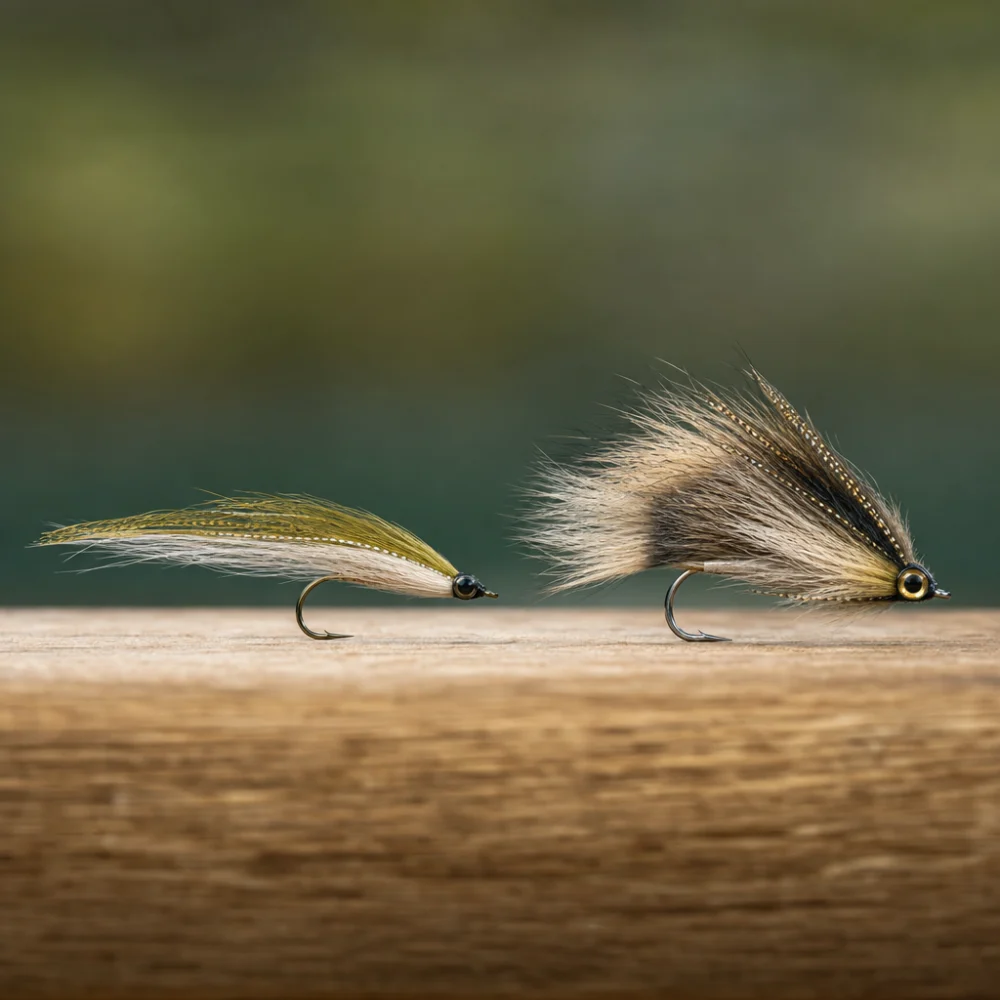
Within this category, the main differences are usually about profile, weight, and intended action rather than dramatically different use cases. Some streamers are built to imitate baitfish with a slimmer body, while others lean toward a fuller, softer look. Some are easier to keep shallow, while others are better suited to helping the fly get down more quickly.
- Slender baitfish-style patterns: Often suit anglers who want a streamlined look and easier casting.
- Bulkier patterns: Can create a stronger silhouette and more movement, but may feel less subtle.
- Weighted or sink-assisting patterns: Help the fly reach depth faster when that matters.
- More mobile materials: Add motion in the water and may suit a more active retrieve.
Which type fits your needs?
| Buyer need | What to prioritize | Why that helps |
|---|---|---|
| New to streamers | Simple profiles and easy-to-understand size choices | Makes it easier to focus on presentation without too many variables |
| Fishing moving water | Controlled sink behavior and manageable bulk | Helps the fly track more predictably through current |
| Fishing still water | Action, silhouette, and retrieve response | Lets the fly stand out during pauses and strips |
| Wanting a subtler presentation | Smaller or slimmer patterns | Can be easier to cast and may look less overpowering |
| Wanting a stronger presence | More profile and visible movement | Creates a bolder impression in the water |
Common mistakes buyers make
- Choosing by appearance alone: A fly that looks impressive in a photo may not be the easiest to cast or fish in your conditions.
- Ignoring sink behavior: If the fly does not get to the depth you need, it may not fish the way you expect.
- Buying too large too soon: Bigger patterns can be useful, but a more moderate size is often easier for a first streamer setup.
- Overlooking local forage: A general baitfish look may be enough in many situations, but matching the local food source can matter in some waters.
- Not checking the hook description: Hook style affects how the fly fishes and how it fits your intended use.
Safety and suitability caveats
Streamer flies are simple tackle items, but suitability still matters. Make sure the pattern suits the waters you fish, the tackle you plan to use, and the kind of retrieve you prefer. If you fish around brush, weeds, or rocks, consider whether the fly’s bulk and hook style fit those conditions.
Keep in mind that fly behavior can change with line choice, leader setup, and how the fly is stripped or paused. The product page is the best place to confirm the pattern details that matter for your setup.
Maintenance, storage, and lifespan
Like most flies, streamers last longer when they are dried, organized, and stored so materials do not stay compressed. After fishing, separate wet flies from dry storage as needed and keep them where hooks will not damage other gear. If a pattern uses delicate or mobile materials, gentle handling can help preserve its shape over time.
Because streamer flies are small and varied, it also helps to keep them sorted by size, color, or intended water type so you can find the right option quickly on the water.
How to compare options efficiently
- Start with the water you fish most often and the prey style you want to imitate.
- Decide whether you want a slimmer, subtler fly or a fuller, more visible one.
- Check whether the fly is weighted or designed to sink in a way that suits your depth needs.
- Review the hook style, size, and material notes on the product page.
- Compare the likely casting feel and retrieve behavior before choosing.
Summary buyer decision checklist
- Does the fly match the water type you fish most often?
- Is the profile suited to the baitfish or prey style you want to suggest?
- Will the size and bulk be manageable on your tackle?
- Does the pattern’s sink behavior fit your depth goal?
- Are the materials and hook style appropriate for your intended use?
- Have you checked the product page for the exact pattern details?
Frequently asked questions
Are streamer flies only for larger fish?
No. Streamer flies are often used when anglers want to imitate larger prey, but that does not mean they are limited to one fish size. The more useful question is whether the pattern fits the forage and presentation you want in your water.
Should I choose weighted or unweighted streamer flies?
It depends on how deep you want the fly to fish and how you like to present it. Weighted flies can help the pattern get down faster, while unweighted flies may give you more control over depth and movement. Check the product page for the exact construction.
Is a bigger streamer always better?
Not necessarily. Bigger streamers create more presence, but they can also be harder to cast and manage. A moderate size is often a better starting point if you want versatility and easier handling.
How important is color when choosing a streamer?
Color matters, but usually alongside profile and movement rather than by itself. In clearer water, a more natural look may be useful, while higher contrast can stand out more in other conditions. Local forage and water clarity are the main things to think about.
Can I use the same streamer in different waters?
Yes, many anglers do. A versatile pattern can work in multiple settings, but you may still prefer different sizes or sink behaviors depending on the water. A single fly can be useful, but it may not be ideal for every situation.
What should a beginner prioritize first?
Begin with a streamer that is simple to understand: a manageable size, a clear profile, and construction that matches your tackle. That makes it easier to focus on presentation and retrieve rather than trying to solve too many variables at once.