
Saltwater flies are built for fly fishing in coastal and tidal waters, where wind, current, and larger target fish can make fly choice feel more technical than it first appears. If you are buying for the first time, the main challenge is not finding a single “best” fly, but matching the fly’s profile, size, and intended use to the conditions you expect.
This guide focuses on the choices that matter before you compare individual products: what kind of fly you need, how much detail you should care about, and where small differences can change how the fly behaves in the water. It is meant to help you narrow the field quickly without overcomplicating the decision.
Saltwater fly options vary widely by pattern, but the most useful starting point is simple: think about the forage, the water depth, and how you plan to present the fly. A slim baitfish pattern, a crab or shrimp imitation, and a more general attractor style can each solve a different fishing problem. The best choice is usually the one that fits the fish’s feeding situation and your casting conditions, not the most complicated-looking fly.
What should I look for in a saltwater fly?
Start with the fishing situation, then work outward to the fly’s shape, size, and construction. In salt water, flies often need to cast well in wind, hold their profile in current, and look convincing enough to trigger a response without being overcomplicated. The main trade-off is usually realism versus versatility: a fly that matches one bait or prey item closely may be more specialized, while a simpler pattern may cover more situations.
Specifications vary by model, so always check the individual product page before buying.
| Feature | What It Means | Why It Matters | What To Check |
|---|---|---|---|
| Pattern style | The general look and behavior of the fly, such as baitfish, shrimp, crab, or attractor styles | Helps match the fly to what fish are likely feeding on | Choose a style that fits the species, water type, and forage you expect |
| Profile | The fly’s overall shape and bulk in the water | Affects how visible, subtle, or lifelike the fly appears | Look for a profile that suits clear water, stained water, or windy conditions |
| Size | The relative length and overall scale of the fly | Can influence presentation, visibility, and realism | Match the size to local bait and the fish’s feeding mood |
| Weight and sink behavior | How the fly gets down in the water column | Changes where and how quickly the fly can be fished effectively | Check whether the fly is meant for shallow, intermediate, or deeper presentations |
| Hook style | The hook shape and intended application | Affects how the fly fishes and what kind of presentation it supports | Confirm the hook is appropriate for the target use and your rigging preferences |
| Durability and finish | How the materials and tying hold up to repeated casts and fish contact | Important in saltwater because flies can see harder use | Look for materials and construction that match how often you expect to fish it |
Key decision criteria explained
Match the fly to the prey or trigger
Many saltwater flies imitate baitfish, shrimp, crabs, or other common food sources. That does not mean you need an exact copy of local prey every time, but it does help to choose a fly that matches the general feeding pattern. If you are unsure, look for clues from the water type and target species rather than chasing a pattern name alone.
Consider how you will cast and retrieve it
Some flies are built for longer casts and faster strips, while others are meant to move more subtly. This matters because a fly that looks great in still conditions may be harder to fish when the wind picks up or current changes. A more compact profile may be easier to cast, while a larger profile may create more presence in the water.
Think about depth and speed
Saltwater fish do not always feed at the same depth, so the fly’s sink behavior can be more important than many buyers expect. A fly that gets down too slowly may miss the strike zone, while one that drops too quickly may not suit shallow water or skittish fish. Choose based on the depth you actually expect to fish, not just on appearance.
Check the construction for saltwater use
Saltwater conditions can be tougher on tackle than freshwater conditions, so materials and tying quality matter. You do not need to overanalyze every component, but it helps to think about whether the fly looks suited to repeated use, repeated casting, and exposure to salt. If the product page gives care guidance, follow it after each trip.
Common saltwater fly types and how they differ
There are not endless categories to learn, but a few broad types appear often enough to be worth understanding.
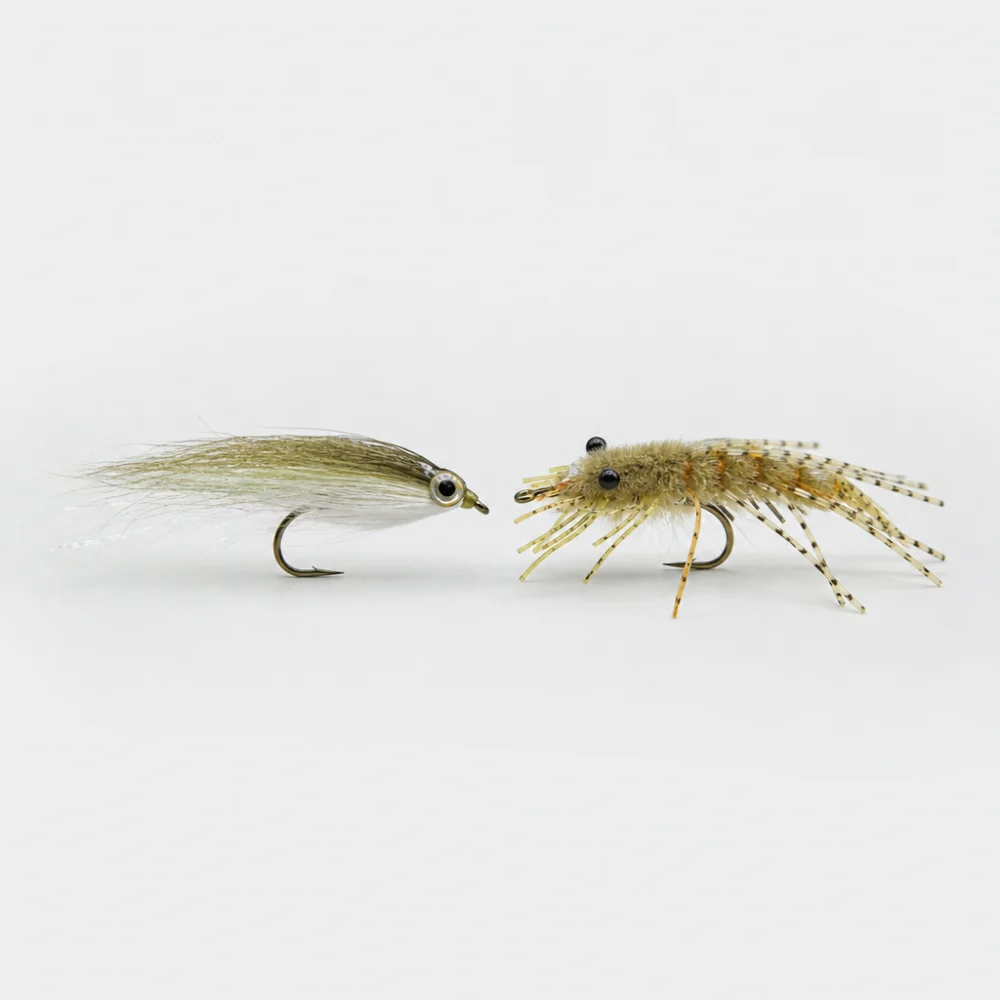
- Baitfish-style flies: Designed to resemble small fish, these are a natural starting point when predators are feeding on moving bait.
- Shrimp and crab patterns: Often useful in shallower or bottom-oriented situations where crustaceans matter more than baitfish.
- Attractor patterns: These do not try to copy one exact food source and can be useful when you want visibility or a broader trigger.
- Smaller, subtle presentations: Helpful when fish are pressured, water is clear, or you want a less obvious look.
Each type has a place, but none is universally right. The practical question is whether the pattern matches the way fish are behaving in the conditions you expect to face.
Which fly type fits which buyer need?
| Buyer need | What to prioritize | Why |
|---|---|---|
| Beginner building a first saltwater selection | Versatile patterns with clear purposes | It is easier to learn from a small, practical mix than from many specialized flies |
| Angler targeting bait-focused fish | Baitfish-style profiles and cast-friendly shapes | These are often the most direct fit when predators are chasing small fish |
| Angler fishing shallow flats or structure | Patterns that suit subtle presentations and the right depth | Presentation and sink behavior can matter more than bulk |
| Angler dealing with wind or longer casts | Cleaner, more compact flies that still show well | Some bulky patterns look good but are harder to deliver accurately |
| Buyer replacing a frequently used pattern | Construction quality and consistency | Repeat use makes durability and tying quality more important |
Common mistakes and misunderstandings
- Choosing by appearance alone: A flashy fly can be appealing, but the water depth, forage, and casting conditions usually matter more.
- Buying only oversized flies: Bigger does not automatically mean better. In some situations, a smaller or more natural profile is the better trigger.
- Ignoring sink behavior: Two flies that look similar can fish very differently if one gets down much faster than the other.
- Assuming one pattern covers everything: Versatility is useful, but different prey types and depths call for different options.
Safety and suitability caveats
Saltwater flies are simple purchases, but suitability still depends on the fishing situation and the rest of your setup. Check that the fly’s style makes sense for the species, the water depth, and the way you plan to present it. If you fish from shore, flats, a boat, or in strong current, those conditions can change which pattern is practical.
Also consider how the fly will fit with your rod, line, leader, and casting comfort. A pattern that looks useful on paper may be less suitable if it is too demanding to cast or too specialized for the waters you actually fish.
Maintenance, storage, and lifespan considerations
Saltwater use can be hard on flies, so ownership care matters. Rinsing and drying after use can help reduce corrosion and material wear, and storing flies where they can dry fully may help them last longer. If you are comparing options, it is reasonable to think about whether the fly looks easy to keep organized and whether its materials seem suited to repeated exposure.
Some flies are meant to be more expendable, while others are tied with greater attention to durability. That does not make one automatically better; it just changes the value trade-off for frequent anglers versus occasional buyers.
How to compare saltwater flies efficiently
- Start with the water you fish most often and the species you expect to target.
- Decide whether you need baitfish, crustacean, or attractor-style patterns first.
- Compare size, profile, and sink behavior before worrying about small visual details.
- Think about casting conditions and whether the fly seems practical in wind or current.
- Check the individual product page for any specific details that affect fit and use.
Summary buyer decision checklist
- Does the fly style match the prey or trigger you expect?
- Is the size and profile appropriate for the water and fish behavior?
- Does the fly’s sink behavior fit the depth you want to fish?
- Is the pattern practical for the casting conditions you face?
- Does the construction look suitable for saltwater use and repeat fishing?
- Will it complement your existing flies instead of duplicating them?
Frequently asked questions
What makes a saltwater fly different from a freshwater fly?
Saltwater flies are generally chosen with coastal species, wind, current, and tougher conditions in mind. The important difference for buyers is not just the environment, but how the fly needs to present itself and hold up during use.
Should I choose realistic patterns or attractor patterns?
Both can work, depending on conditions. Realistic patterns are often useful when fish are keyed in on specific prey, while attractor patterns can help when visibility or general reaction is more important.
How many saltwater flies do I need to start?
A small selection is usually more useful than a large random assortment. A few patterns that cover different prey styles and depths will teach you more and give you more practical coverage.
Does fly size matter more than color?
Often, size and profile matter first because they shape the fly’s silhouette and how it moves. Color can still matter, but it usually works best when the size and general pattern are already appropriate.
Can one saltwater fly work in different conditions?
Some can, especially versatile attractor or baitfish patterns. Even then, performance usually depends on whether the fly’s size, sink behavior, and profile fit the specific situation.
What should I check on the product page before buying?
Look for the fly type, size, intended use, and any details that affect how it fishes in your water. Specifications vary by model, so always check the individual product page before buying.