

Trolling rods are built for a style of fishing where the lure or bait is moved behind a boat at controlled speed. That changes what matters most: rod action, strength, comfort, and how the rod behaves under steady load.
If you are comparing trolling rods, the main job is not to find the fanciest description. It is to match the rod to your tackle, your boat setup, and the kind of trolling you actually do.
Because this category is often used for steady pressure rather than repeated casting, small differences in length, power, and handle design can affect how the rod feels over time. Specifications vary by model, so always check the individual product page before buying.
Compare Trolling Rods


As an Amazon Associate we earn from qualifying purchases.
What should you look for in a trolling rod?
The best starting point is to match the rod to the fish size, lure style, and boat setup you plan to use. A trolling rod should be comfortable to hold or place in a holder, responsive enough to show the load, and strong enough for the way you fish without feeling unnecessarily stiff. The biggest trade-off is usually sensitivity versus power: lighter rods can feel more responsive, while heavier rods may be better suited to sustained strain and larger targets.
| Feature | What It Means | Why It Matters | What To Check |
|---|---|---|---|
| Rod power | How much load the rod is designed to handle | Affects whether the rod feels suitable for lighter or heavier trolling setups | Look for the power rating and match it to your target fish and tackle |
| Action | Where the rod bends most under pressure | Changes how the rod loads and how it recovers | Check whether the action suits steady trolling and your preferred feel |
| Length | The overall rod length | Can influence leverage, placement in holders, and line spread | Confirm the length fits your boat space and fishing style |
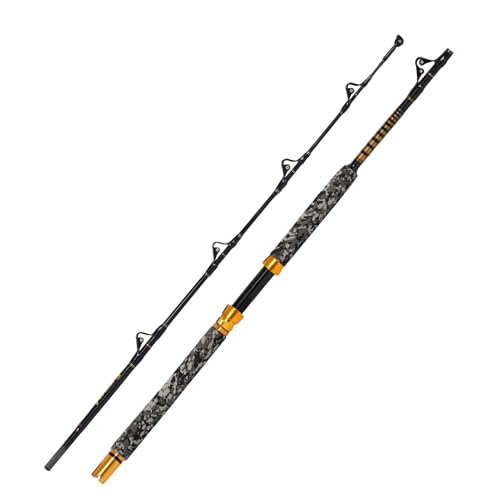
| Handle style | Grip shape and material layout | Helps with comfort during long sessions and when moving the rod | Review grip comfort, balance, and whether it suits hand-held or holder use |
| Guide layout | The number and placement of line guides | Can affect line control and how smoothly the rod handles load | Check the guide arrangement and make sure it suits your line setup |
Key decision criteria
Power and backbone
Power tells you how much resistance the rod is designed to handle before it bends deeply. For trolling, that matters because the rod is often under constant load rather than being cast and retrieved repeatedly. If you choose a rod that is too light, it may feel overworked; if you choose one that is too heavy, it may feel less responsive than you want.
Action and feel
Action describes where the bend begins and how the rod responds. Trolling setups often benefit from a rod that loads in a predictable way, but the right feel depends on your gear and target species. A more moderate feel may be easier for steady trolling, while a different action may be preferred for a more direct connection to the line.
Length and boat fit
Length is not just a number on the page. It can affect how the rod fits in holders, how much room you have on the boat, and how comfortably you can manage the rod when needed. Longer rods may help with line spread and leverage, while shorter rods can be easier to place and control in tighter spaces.
Handle comfort
Because trolling can involve longer sessions, the handle deserves more attention than many buyers expect. A grip that feels fine for a few minutes may become tiring over time, especially if you often hold the rod or adjust it during the trip. Look for a handle that feels secure and natural in hand, and consider whether you want a design that works well in a holder.
Guides and line path
The guide layout helps direct the line under load. For buyers, the useful question is not the exact guide count alone, but whether the layout looks suitable for the line type and use case you have in mind. Check the product page for any details that explain intended line compatibility or load handling.
Common trolling rod types and variants
Within trolling rods, the most useful differences usually come from intended use rather than flashy features. Some rods are aimed more at lighter trolling and others at heavier duty setups. Some may be better for hand-held use, while others make more sense as rod-holder rods on a boat. The right choice depends on how you fish most often.
It is also worth separating general trolling rods from other fishing rod categories. Casting rods, spinning rods, fly fishing rods, ice fishing rods, kids’ fishing rods, and travel fishing rods solve different problems, so a rod that looks similar at a glance may still be a poor fit for trolling.
Which trolling rod suits your needs?
| Your need | Look for | Why it helps |
|---|---|---|
| Longer boat sessions | Comfortable handle and manageable balance | Can reduce fatigue during extended use |
| Heavier trolling setup | More power and a rod that handles sustained load | Helps the rod stay composed under pressure |
| Tighter boat space | A length that fits holders and deck layout | Makes storage and handling easier on board |
| More direct feedback | A rod action that feels responsive to your setup | Can make it easier to notice load changes |
| General-purpose buying | A balanced middle-ground spec set | Can be more forgiving if you are still refining your setup |
Common mistakes buyers make
- Choosing by overall length alone. Length matters, but power and action may matter more for the way the rod actually fishes.
- Ignoring boat setup. A rod that seems appealing on paper may be awkward if it does not fit your holders or available space.
- Overlooking comfort. Long sessions make handle shape and balance more important than many buyers expect.
- Assuming all trolling rods feel the same. Different load behavior can change how stable, responsive, or demanding a rod feels in use.
Safety and suitability caveats
Choose a trolling rod that matches your intended use and the rest of your tackle. If you are uncertain about line, lure, or holder compatibility, check the individual product page carefully rather than assuming a close-looking rod will behave the same way. Specifications vary by model, so always check the individual product page before buying.
Maintenance, storage and lifespan considerations
Trolling rods generally benefit from basic care after use, especially if they are exposed to saltwater, moisture, or grit. Rinsing, drying, and storing the rod carefully can help preserve the finish, guides, and handle materials. Also think about how you will transport and store the rod, since a rod that is awkward to carry or stow can be less convenient over time.
How to compare trolling rods efficiently
- Start with your fishing style and the kind of load the rod will need to handle.
- Narrow the choice by length, power, and action.
- Check whether the handle and overall feel fit your boat setup and how you fish.
- Review the guide layout and any line-related details on the product page.
- Compare the practical trade-offs instead of focusing on a single headline feature.
Summary buyer decision checklist
- Does the rod suit your target fish and trolling style?
- Is the power rating appropriate for your setup?
- Does the action sound like the feel you want?
- Will the length work with your boat and rod holders?
- Does the handle seem comfortable for your typical session length?
- Have you checked the individual product page for model-specific details?
Frequently asked questions
What makes a trolling rod different from other fishing rods?
A trolling rod is designed for fishing behind a moving boat, so it is usually chosen for how it handles steady load rather than repeated casting. That changes the buying priorities: power, action, and boat fit often matter more than cast distance.
How do I know what power I need?
Start with the size of fish you expect to target and the rest of your setup. If you are unsure, it is usually better to compare the product page details against your actual use case than to rely on a general label alone.
Is longer always better for trolling?
Not necessarily. Longer rods can offer useful leverage and spread, but they may also be less convenient in tight boat spaces or holders. The right length depends on how you fish and how much room you have.
What does rod action matter for trolling?
Action affects how the rod bends and recovers under load. For trolling, that can influence comfort, responsiveness, and how the rod feels when it is under steady pressure.
Can one trolling rod do everything?
Some rods are more versatile than others, but no single rod is ideal for every setup. A general-purpose rod may be a good compromise if you are new to trolling, while more specific needs may call for a more targeted choice.
Should I focus on the handle or the blank first?
Both matter, but for many buyers the practical order is power, action, length, then comfort. Once the rod is suitable on paper, handle feel and balance can help you narrow the final choice.
Match the rod to the trolling setup
Some trolling rods are designed around a particular way of presenting a lure or bait, so consider the setup as well as the target fish. A downrigger setup, a lead-core or copper line setup, and heavier offshore trolling can place different demands on the rod. These labels are useful starting points, not a substitute for checking the manufacturer’s stated intended use.
Before choosing, check whether the rod is intended for your line type and how you plan to fish it, including whether it will spend most of its time in a holder or be handled directly. For a specialized setup, a general-purpose rod may not provide the feel or fit you want; a more specialized rod may be less versatile for other uses.
How should I use a rod’s line rating?
Use the stated line rating as a compatibility clue for the line and setup, not as a direct measure of the fish the rod can handle. Compare it with the line, reel, and intended trolling method you plan to use, and follow the product’s own guidance. If your setup falls outside the stated range or the product page does not clarify its intended use, avoid assuming compatibility from the rod’s power label alone.
More Trolling Rods
See all 71 Trolling Rods →



As an Amazon Associate we earn from qualifying purchases.