
Baitcasting combos are for anglers who want a rod-and-reel setup built around casting control, lure presentation, and a more hands-on feel. They can be a strong fit for freshwater and other fishing styles where accuracy and line management matter, but they are not the simplest starting point for every buyer.
If you are comparing baitcasting combos for the first time, the main challenge is balancing control with ease of use. The right choice depends on how you fish, what lure weights you expect to use, and how much practice you are willing to put into learning the setup.
What should you look for in a baitcasting combo?
The best starting point is to match the combo to the kind of fishing you plan to do most often. A baitcasting setup is usually chosen for better casting control, stronger handling for certain techniques, and a compact feel, but those benefits can come with a steeper learning curve than a spinning combo.
Look first at the rod, reel, and overall balance as a system. Specifications vary by model, so always check the individual product page before buying.
| Feature | What It Means | Why It Matters | What To Check |
|---|---|---|---|
| Rod power | How much force the rod is built to handle | Affects whether the combo suits lighter presentations or heavier techniques | Match the listed power to your intended fishing style |
| Rod action | How much and where the rod bends | Influences sensitivity, hook-setting feel, and lure control | Look for the action description and think about your target use |
| Reel gearing | How quickly the reel retrieves line | Changes how fast you can pick up slack and work a lure | Compare the gear ratio or retrieve description if provided |
| Handle and grip feel | How the combo sits in your hand during repeated casting | Comfort matters during longer outings | Check grip style, handle layout, and overall ergonomics |
| Line management features | Reel features that help control spool behavior | Important for reducing frustration as you learn and tune the setup | Review braking or adjustment features on the product page |
| Overall balance | How the rod and reel feel together | Can affect fatigue and casting confidence | Consider whether the combo looks suited to the rod length and reel size |
Key decision criteria
Rod power and action
Rod power and action are two of the biggest drivers of how a baitcasting combo feels. Power affects how much resistance the rod is meant to handle, while action shapes where the rod bends and how responsive it feels. A stiffer setup may suit techniques that benefit from more backbone, while a more moderate feel can be easier to work with in other situations.
Do not treat these terms as interchangeable. A combo that sounds similar on paper can feel very different once you start casting and setting hooks.
Reel control and ease of use
Baitcasting reels are valued for control, but control depends on the angler as much as the gear. A combo that is easier to tune and adjust may be a better match for a newer baitcaster user, while experienced anglers may prioritize a more refined feel or specific retrieve behavior.
When comparing options, check how the reel is described and whether the product page explains any adjustable control features. That can be more useful than focusing on general marketing language.
Comfort and balance
A combo that feels balanced in the hand can make longer fishing sessions more comfortable. Balance is especially important when you cast often or hold the rod in one position for a while. A setup that feels nose-heavy or awkward may be tiring even if the specifications look suitable.
If possible, compare the rod length and reel size together rather than treating them as separate decisions.
Line and lure fit
Many baitcasting decisions come down to whether the combo suits the line and lure range you expect to use. The practical question is not just what the combo can do in theory, but whether it fits the presentations you actually plan to fish. If you know your typical lure range, use that as a filter before looking at finer details.
Specifications vary by model, so always check the individual product page before buying.
Common baitcasting combo variants
Within this category, the main differences usually come from rod length, power, action, and reel characteristics rather than from entirely different product families. That means you are often comparing different ways of tuning the same basic setup.
- More forgiving setups: Often better for anglers who want a smoother learning experience and less demanding control.
- Technique-focused setups: Better when you already know the style of fishing you plan to do and want the combo to support it closely.
- Versatile general-use setups: Useful if you want one combo that can handle a broader range of common fishing situations.
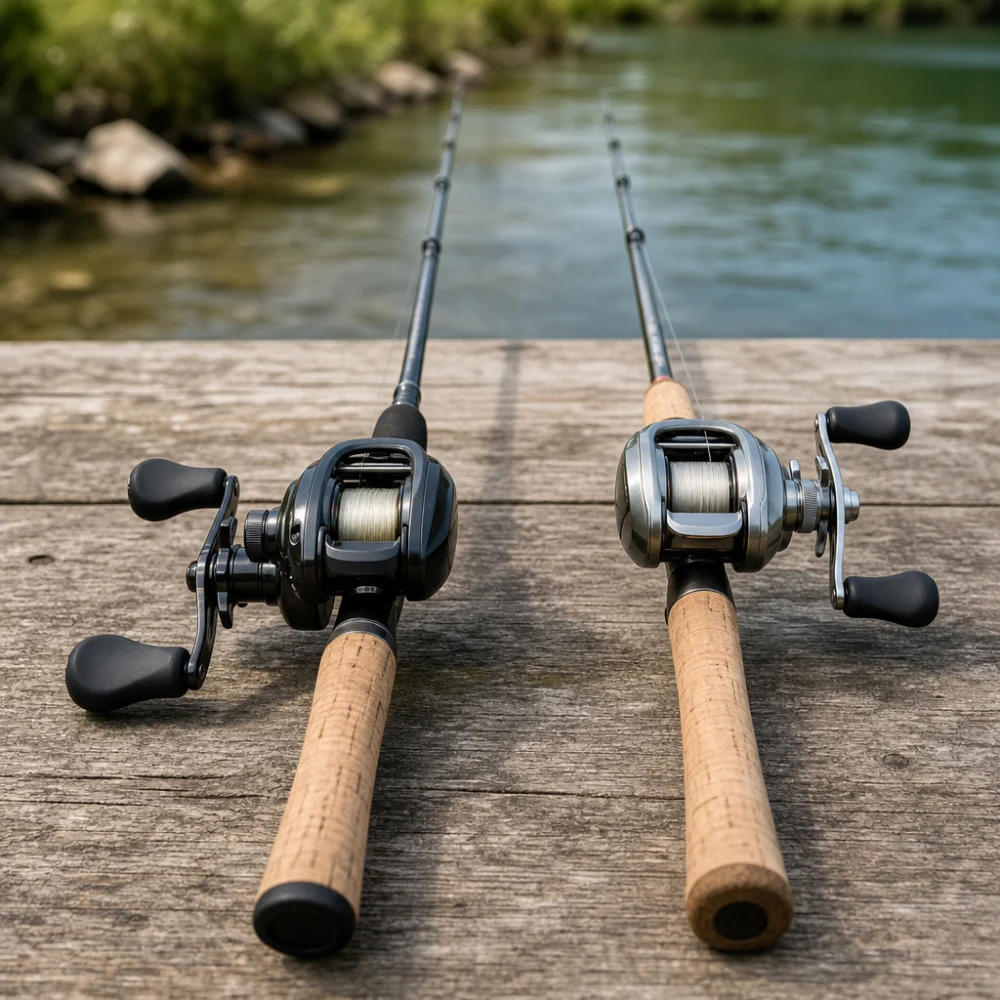
Which buyer type fits which setup?
| Buyer need | What to prioritize | Why it helps |
|---|---|---|
| First-time baitcaster user | Ease of adjustment, forgiving handling, clear product details | Reduces frustration while learning the casting feel |
| Angler upgrading from a basic setup | Better balance, improved comfort, more specific technique match | Helps the combo feel like a meaningful step forward |
| Technique-focused angler | Rod power, action, and reel behavior that match the intended use | Supports more consistent presentation and control |
| Gift buyer | General versatility and simple, clear specifications | Makes it easier to choose without knowing every detail of the recipient’s setup |
Common mistakes to avoid
- Choosing by looks alone: A good finish does not tell you whether the rod power or reel behavior fits your fishing.
- Ignoring the learning curve: Baitcasting gear often rewards practice, so a beginner may prefer a more forgiving setup.
- Overlooking balance: A combo that seems fine on paper can still feel awkward in hand.
- Assuming all combos are equally versatile: Some are better matched to specific techniques than others.
Safety and suitability caveats
For this category, the most important caveat is suitability rather than risk. Make sure the combo matches the kind of fishing you actually plan to do and that you understand the learning curve of baitcasting gear.
If you are buying for someone else, avoid assuming they want the same rod action, reel feel, or technique focus you would choose for yourself.
Maintenance, storage, and ownership considerations
As with most fishing gear, basic care affects how pleasant a combo is to use over time. Think about whether the setup will be easy to clean, transport, and store after trips, and whether the reel design seems straightforward to keep in good working order.
It also helps to consider whether you want a combo that is easy to break down or one that will mainly stay assembled between outings.
How to compare baitcasting combos efficiently
- Start with your main fishing use and the techniques you expect to fish most often.
- Check rod power, action, and reel description first, since those shape the feel of the combo.
- Compare comfort and balance so the setup makes sense for longer sessions.
- Look for any line-control or adjustment features that may affect ease of use.
- Read the individual product page carefully before narrowing your final choice.
Buyer checklist
- Does the combo match your main fishing style?
- Are rod power and action appropriate for the way you plan to fish?
- Does the reel description suggest the level of control you want?
- Will the combo feel comfortable for the length of your outings?
- Is the setup suitable for your experience level?
- Have you checked the product page for model-specific details?
Frequently asked questions
Are baitcasting combos hard to use?
They can be more demanding than spinning combos, especially for beginners. Many buyers choose baitcasting gear for control and technique-specific use, but that usually comes with a learning curve. If you are new to the category, a more forgiving setup may be easier to start with.
What matters more: the rod or the reel?
Both matter, because the combo is meant to work as a pair. The rod affects feel, power, and action, while the reel affects casting control and retrieve behavior. It is usually better to judge the whole setup together than to focus on only one part.
How do I know if a baitcasting combo fits my fishing style?
Start with the techniques, lure types, and line handling you expect to use most. Then compare those needs against the rod power, action, and reel description on the product page. If the combo is built around the same style of fishing you do most often, it is more likely to feel natural.
Is a baitcasting combo a good gift?
It can be, but only if you have a reasonable idea of the recipient’s fishing style and experience level. Because baitcasting gear can feel technique-specific, a general-purpose setup is often safer than something narrowly tailored to one use. Clear product details help a lot here.
What if I want one combo for different kinds of fishing?
Look for a more versatile setup rather than a highly specialized one. A broader-use combo may not be the absolute best match for any single technique, but it can be a practical choice when you want flexibility. The trade-off is usually less specialization.
Why does balance matter so much?
Balance affects comfort and control during repeated casts and retrieves. Even if the technical specs seem right, a combo that feels awkward can be tiring to use. The way the rod and reel feel together is often one of the most noticeable differences between options.
Should beginners start with baitcasting or spinning?
That depends on how you want to fish and how much time you want to spend learning the gear. Spinning gear is often simpler to pick up, while baitcasting gear can offer a different kind of control once you become comfortable with it. If you are set on baitcasting, a forgiving combo can make the learning process easier.