

Climbing slings are simple-looking pieces of gear, but the right choice depends on how you plan to use them. Buyers often compare length, material, and construction without being sure which details matter most for their setup.
This guide focuses on the practical differences that help you narrow the options. It is meant for shoppers comparing slings for anchoring, extending protection, carrying gear, or building part of a climbing system.
If you are choosing for technical climbing or mountaineering use, the main question is not just what looks similar, but what fits the task, the system, and the rest of your gear.
Compare Climbing Slings


As an Amazon Associate we earn from qualifying purchases.
How do you choose the right climbing sling?
The best starting point is intended use: anchors, extensions, equalizing systems, or general gear organization each put different demands on a sling. After that, compare length, width, material, and how the sling is constructed. A longer or more specialized sling can be useful, but it may also add clutter or be harder to manage in a rack. Specifications vary by model, so always check the individual product page before buying.
| Feature | What It Means | Why It Matters | What To Check |
|---|---|---|---|
| Length | The overall span of the sling | Affects reach, extension, and how much material you have to work with | Match the length to the job you expect it to do |
| Material | The fiber or construction used in the sling | Influences handling, weight, bulk, and abrasion tolerance | Look for the material description on the product page |
| Construction | How the sling is made and finished | Changes flexibility, packability, and how it sits in use | Check whether it is sewn or otherwise constructed for your intended use |
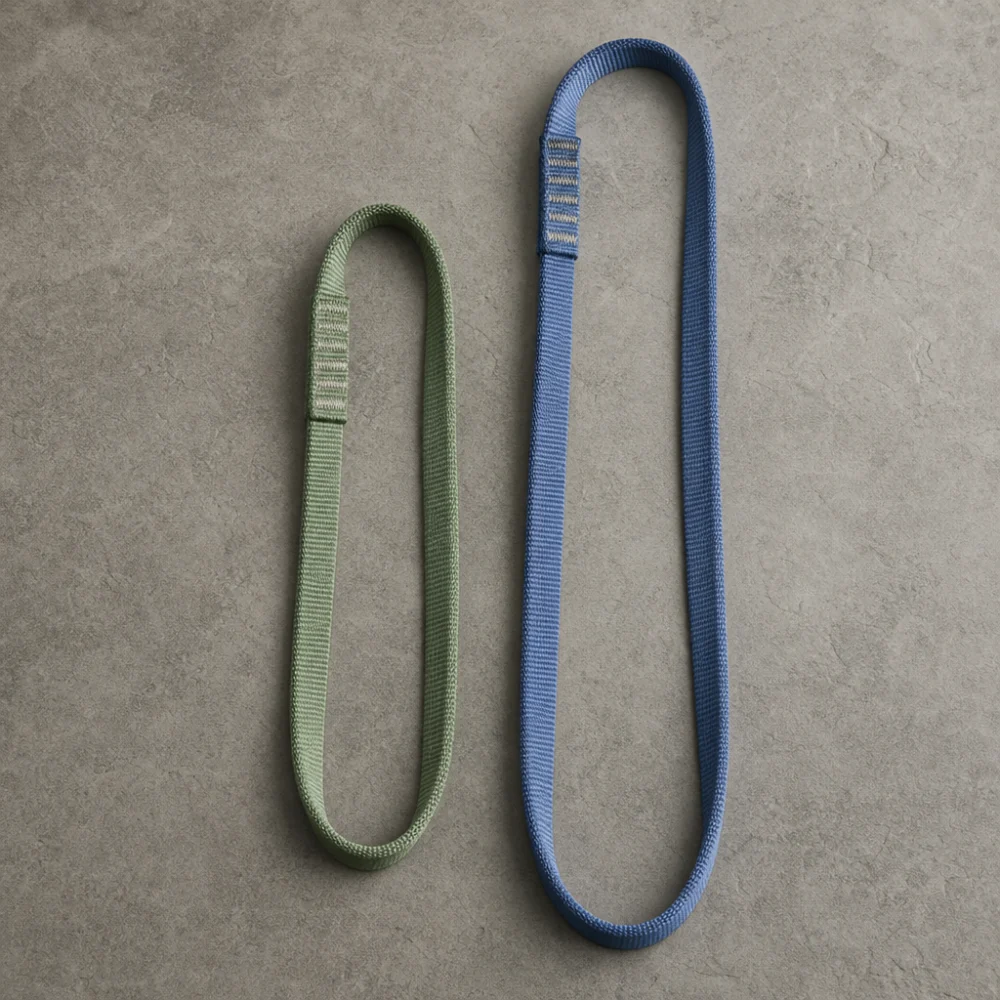
| Width / profile | How slim or broad the sling appears | Can affect handling, stacking, and how easily it organizes on a harness or anchor | Compare the product photos and listed dimensions if provided |
| Intended application | The use the sling is designed to support | Helps you avoid choosing a type that is awkward for your setup | Read the product description for the stated purpose |
Key decision criteria
Intended use
Start with the job you want the sling to do. A sling used for extending protection may prioritize length and ease of handling, while one used as part of an anchor may need to fit a different system layout. The same sling can sometimes work in more than one role, but it is easier to choose well when you know the primary use first.
Length
Length is one of the most important practical choices. Shorter slings are easier to manage and keep tidy, while longer slings provide more reach and flexibility. Too much length can add tangles or clutter, while too little can make the sling awkward for the setup you have in mind.
Material and handling
Material affects how the sling feels in hand and how it packs away. Some buyers prefer a flatter, easier-to-organize sling, while others care more about a balance of strength, abrasion resistance, and compactness. Because handling preferences vary, it helps to compare product descriptions alongside photos rather than relying on appearance alone.
Construction and finish
Construction influences how the sling behaves under load and how easy it is to clip, stack, or stow. Sewn constructions are common in this category, but you should still verify the exact design on the product page. Look closely at end finishing, stitching, and any stated intended use, since those details often matter more than marketing language.
Weight and bulk
Weight and bulk become more important when you carry several slings or keep a compact rack. A lighter or slimmer option may be convenient, but it should still be appropriate for the task and easy to manipulate with gloves or cold hands if that is part of your use case.
Common sling types and variants
Within this category, the main differences are usually about length, construction, and general purpose rather than dramatic style changes. Some slings are chosen for easier organization, while others are picked for greater reach or a different handling feel. If a product page highlights a specific type, compare that claim with your intended use rather than assuming every sling performs the same role equally well.
- Shorter slings: Often easier to keep organized and useful when you want a compact setup.
- Longer slings: Helpful when you need more reach or flexibility in building an anchor or extension.
- General-purpose slings: A practical choice when you want one piece of gear for several common climbing tasks.
Which sling suits which buyer?
| Buyer need | Helpful characteristics | Trade-off to watch |
|---|---|---|
| Minimal, tidy rack | Compact length and easy organization | Less reach if you later need a longer setup |
| More flexibility in setup | Longer sling and versatile construction | Extra material can be harder to keep neat |
| Simple replacement purchase | Close match to the sling you already use | Copying old choices may miss a better fit for your current needs |
| Gear for varied trip use | General-purpose design with clear product details | May not be ideal if you need a highly specific function |
Common mistakes and misunderstandings
- Choosing by appearance alone: A sling that looks similar may still differ in length, construction, or intended use.
- Assuming longer is always better: Extra length helps in some situations but can make gear management less efficient.
- Ignoring how it will be carried: A bulkier sling may be fine in isolation but inconvenient once you have several on your system.
- Overlooking the stated purpose: Always match the product description to the role you expect it to play.
Safety and suitability caveats
Climbing gear is use-specific, so it is important to buy for the exact kind of climbing, mountaineering, or system use you have in mind. Do not assume that one sling automatically fits every application just because it is sold in the same category. Check the product page for the stated construction and intended use, and make sure the sling fits the rest of your system.
Maintenance, storage, and lifespan considerations
General care can affect how long a sling remains pleasant to use, even though the exact lifespan depends on the specific product and how it is used. Keep slings clean, dry, and stored away from unnecessary wear, sharp edges, and heat sources. If a sling is heavily used or shows visible damage, it is sensible to reassess it before relying on it again.
How to compare options efficiently
- Decide what role the sling will play in your setup.
- Compare the length first, since that most directly affects usefulness.
- Check the material and construction for handling and packing preferences.
- Look at how bulky or tidy the sling will be when carried with the rest of your gear.
- Read the individual product details carefully before choosing.
Summary buyer decision checklist
- Have you matched the sling to its main job?
- Is the length appropriate for how you plan to use it?
- Does the material and construction suit your handling preferences?
- Will the sling fit comfortably into your overall gear setup?
- Have you checked the product page for any model-specific details?
Frequently asked questions
Are all climbing slings the same?
No. They can differ in length, material, construction, and intended use. Those differences affect how they handle, how much flexibility they give you, and how well they fit a specific climbing system.
What is the most important factor when buying a sling?
Intended use is usually the best place to start, because it narrows the rest of the decision. Once you know the role the sling must fill, length and construction become easier to compare.
Should I choose the longest sling available?
Not necessarily. Longer slings can be useful, but they may also add bulk and be harder to manage. The better choice is the length that fits your actual setup.
Is a lighter sling always better?
Not always. Lower weight can be attractive, especially on longer outings, but handling, packing, and suitability for the intended role may matter more than saving a small amount of bulk.
Can one sling replace several different uses?
Sometimes a general-purpose sling can cover more than one task, but not every sling is equally convenient in every situation. If you need frequent versatility, compare the product description carefully instead of assuming multi-use performance.
What should I check on the product page before buying?
Look at the stated length, material, construction, and intended use. If the product page gives additional dimensions or application notes, those can help you judge whether it will fit your setup.
How do I avoid buying the wrong type?
Start with your exact use case and compare only the details that affect that use. If a product description does not clearly fit your intended role, it is better to keep looking than to guess.
Check what kind of sling the product is
Products called slings can serve different roles. A climbing runner intended for a load-bearing application is not interchangeable with a gear sling designed to carry equipment, or a foot loop intended for use with an ascender. Names and appearance alone do not establish suitability: confirm the product’s stated purpose and any relevant strength or standards information before choosing it for a climbing system.
Are gear slings the same as climbing runners?
No. A gear sling is generally for organizing or carrying equipment, while a climbing runner is intended for a different role. Do not assume a product is suitable for protection or anchoring just because its name includes “climbing sling”; check its stated use and product information.
More Climbing Slings
See all 100 Climbing Slings →


As an Amazon Associate we earn from qualifying purchases.