
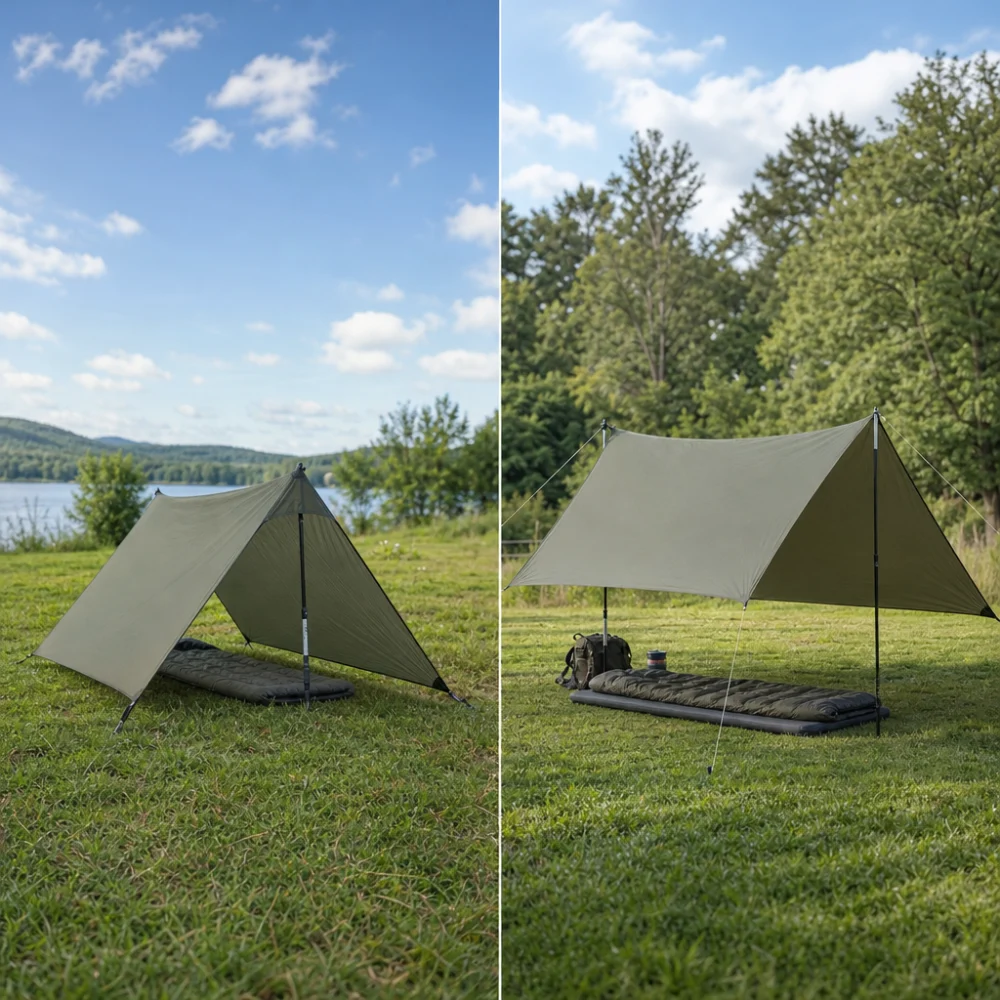
Open-air shelters are for campers who want overhead coverage without a fully enclosed tent. They can make a campsite more comfortable by providing shade, a place to gather, or a dry area to handle light weather and everyday campsite tasks.
Because this category can cover a range of shelter styles, it helps to focus on how you plan to use it rather than on looks alone. The right choice depends on how much coverage you want, how easy it needs to be to pitch, and how well it should handle the conditions you expect.
For buyers comparing options for the first time, the main decision is usually between more coverage and easier portability. Specifications vary by model, so always check the individual product page before buying.
What should you look for in an open-air shelter?
Start with the space you need, then compare how the shelter stands up to wind, sun, and light rain. After that, look at portability and setup because those details often matter more than the basic shape. A shelter that seems generous on paper may be awkward to carry, slower to pitch, or less convenient for the way you camp.
| Feature | What It Means | Why It Matters | What To Check |
|---|---|---|---|
| Coverage area | How much overhead shelter the product provides | Determines whether it fits one person, a small group, or a shared campsite area | General footprint, usable shaded space, and whether side coverage is minimal or more generous |
| Setup style | How the shelter is supported and pitched | Affects speed, simplicity, and how many people are needed to set it up | Number of poles, attachment points, and whether setup looks straightforward for your experience level |
| Weather tolerance | How suitable it is for sun, breeze, and light precipitation | Helps you match the shelter to expected campsite conditions | Described use conditions, fabric type, and any notes about wind or rain limitations |
| Packability | How easy it is to transport and store | Important for car camping, short walks to camp, and shared gear storage | Packed size, carry weight, and whether it fits your vehicle or storage space |
| Ventilation and openness | How open the shelter is around the sides | Influences airflow, shade, and how exposed the space feels | Whether the design is mostly open, partially screened, or more enclosed at the edges |
Key decision criteria
Coverage and footprint
Think about what the shelter needs to cover. Some buyers want a comfortable gathering spot, while others mainly want a simple overhead canopy for shade or meal prep. Bigger coverage can be more useful, but it usually means more bulk and a larger setup area.
Setup time and complexity
If you set up camp often or move between sites, ease of pitching can matter a lot. Simpler designs tend to be more convenient for casual use, while more involved setups may offer added stability or a more tailored shape. Check how many components are involved and whether the shelter is intended for one person or a team to assemble.
Exposure to weather
Open-air shelters are generally chosen for shade and light shelter rather than full storm protection. If your use includes breezy sites or occasional showers, look closely at the product page for the conditions it is intended to handle. Do not assume that a larger shelter is automatically more weather resistant.
Portability and storage
Car campers often have more flexibility than backpackers, but portability still matters if space is limited or the shelter will be moved often. A smaller packed size is easier to stow, while a larger one may be more comfortable at camp. The best balance depends on how you travel and where you keep your gear.
Common product types and variants
Within open-air shelters, the main differences usually come from how much overhead cover they provide and how open the sides remain. Some are aimed at relaxed campsite shade, while others are better suited to group hangouts or a protected work area.
- Simple open canopies: Useful when you want quick overhead coverage with minimal setup complexity. Their main limitation is reduced protection from angled weather.
- More structured open shelters: Better when you want a more defined camp area and possibly a steadier feel. Their trade-off is usually more setup effort and more packed bulk.
- Large shared shelters: Suited to groups or basecamp use where comfort and gathering space matter. Their limitation is that they can be less convenient to transport and pitch.
Which buyer needs point to which features?
| Buyer need | Likely priority | Why it matters | Watch for |
|---|---|---|---|
| Day use at camp | Shade and easy setup | Convenience often matters more than full weather coverage | Simple pitch, quick breakdown, and enough room for chairs or gear |
| Family or group camping | Space and comfort | Shared areas need room for sitting, moving around, and storing items | Coverage area, headroom, and whether the footprint fits the campsite |
| Frequent moves between sites | Portability | Carrying and repacking ease becomes a bigger factor | Packed size, weight, and how many separate pieces are involved |
| Light weather protection | Coverage and stability | Even open designs need to match expected wind or drizzle | Product-page notes about intended conditions and anchoring expectations |
Common mistakes and misunderstandings
- Choosing by footprint alone: Two shelters with similar dimensions can feel very different once you account for pole layout and usable space.
- Assuming open means weatherproof: Open-air shelters usually improve comfort, but they are not a substitute for full enclosure when conditions turn rough.
- Overlooking setup effort: A shelter that looks simple may still require more handling than you want at camp.
- Forgetting storage and transport: Bulk matters if the shelter has to fit with other camping gear or be moved often.
Safety and suitability caveats
Choose an open-air shelter that fits the conditions you actually expect to face. If you camp in exposed or unpredictable weather, check the product page carefully for the shelter’s intended use and limitations. Make sure the site, footprint, and anchoring approach suit your campsite and your level of experience.
Maintenance, storage, and lifespan considerations
General care can affect how long a shelter stays convenient to use. After trips, let it dry fully before storage when needed, keep it clean, and store it in a place where the fabric and supports are not crushed or bent unnecessarily. If the shelter uses separate poles, connectors, or carry components, check that they are easy to keep together and replace if needed.
How to compare options efficiently
- Decide what you want the shelter to do: shade, gathering space, light weather cover, or all three.
- Match the shelter type to your camping style, especially how often you set up and move gear.
- Compare the practical details: coverage, setup effort, portability, and exposure to weather.
- Check the product page for any model-specific limits, included parts, and setup expectations.
- Choose the option that fits your campsite and storage space without adding more complexity than you need.
Summary buyer decision checklist
- Does the shelter provide enough useful coverage for your group or gear?
- Is the setup style simple enough for your experience level?
- Will it fit your car, storage space, or carry plan?
- Is it suited to the kind of wind, shade, or light rain you expect?
- Does the open design match how you want to use the campsite?
- Have you checked the individual product page for model-specific details?
Frequently asked questions
Are open-air shelters the same as tents?
No. Open-air shelters usually provide overhead coverage with less enclosure than a tent, which makes them better for shade, gathering, or light protection. If you need full privacy or more shelter from changing weather, a tent-style option may fit better.
Who are open-air shelters best for?
They are a good fit for campers who want a more comfortable shared area without committing to a fully enclosed structure. They can work well for day use, car camping, and basecamp setups where convenience matters.
How much weather protection should I expect?
Usually less than you would get from a fully enclosed shelter. They are often chosen for sun coverage and light shelter, so check the product page for any stated limits before assuming they will handle wind or rain well.
Is a larger shelter always better?
Not necessarily. More space can improve comfort, but it can also mean more weight, more bulk, and more setup effort. The right size is the one that fits your typical use without making transport or pitching harder than necessary.
What matters more: setup ease or coverage?
That depends on how you camp. If you set up often or prefer quick stops, ease of pitching may matter most. If the shelter is a central camp area, coverage and comfort may be worth a bit more complexity.
What should I check on the product page before buying?
Focus on coverage, setup style, portability, and any notes about intended use or weather limitations. Specifications vary by model, so always check the individual product page before buying.