

Instant tents are aimed at campers who want a simpler setup without spending a lot of time threading poles and assembling a shelter piece by piece. They can be a good fit for weekend trips, family outings, backyard use, and anyone who values convenience at the campsite.
The trade-off is usually between faster pitching and other priorities such as packed size, weather resistance, interior space, and weight. Knowing which compromise matters most for your trips makes the choice much easier.
Compare Instant Tents


As an Amazon Associate we earn from qualifying purchases.
How should you choose an instant tent?
Start with how and where you camp. If setup speed is your main concern, look first at the tent’s pitch style and how much of the structure is already attached or preassembled. Then compare capacity, peak height, weather suitability, and packed size so the tent matches both your group and your vehicle or storage space.
Instant tents are often easiest to evaluate by balancing convenience against portability and seasonal use. The quickest option is not always the smallest, the lightest, or the most storm-ready, so it helps to decide which of those matters most before you compare models.
| Feature | What It Means | Why It Matters | What To Check |
|---|---|---|---|
| Setup style | How the tent opens, unfolds, or locks into shape | Determines how fast and easy camp setup will feel | Look for the pitching method and whether one person can reasonably manage it |
| Capacity | The number of people the tent is designed to fit | Affects sleeping space, gear room, and comfort | Check whether the stated capacity leaves room for bags or is a tight sleeping-only fit |
| Packed size | How much room the tent takes when stored and transported | Important for car cargo space and home storage | Compare the packed dimensions against your vehicle and storage limits |
| Weather suitability | The tent’s general ability to handle wind, rain, and ventilation needs | Helps match the tent to the conditions you expect | Review the canopy shape, seam coverage, and ventilation details on the product page |
| Interior comfort | Headroom, floor space, and livability features | Shapes how pleasant the tent feels beyond sleeping time | Check peak height, door placement, and whether the layout suits changing clothes or sitting up |
| Portability | How easy the tent is to carry and load | Matters if you move gear often or hike to camp | Compare total weight and carry convenience with the trip style you actually use |
Key decision criteria
Setup speed
The main appeal of an instant tent is reduced setup effort, but “instant” can mean different things from one product to another. Some designs open with a fast frame system, while others are simply quicker than a traditional pole-by-pole tent. If you camp often after dark or want a simpler arrival routine, this is one of the first things to compare.
Capacity versus real sleeping room
Tent capacity is useful, but it does not always tell the whole story. A tent labeled for a certain number of people may still feel tight once sleeping pads, duffels, or extra gear are inside. If you want more comfort, consider sizing up rather than treating the number on the label as exact living space.
Weather and season use
Instant tents are often chosen for convenience in fairer conditions, but buyers should still check whether the tent’s design matches their likely weather. The amount of mesh, coverage from the rainfly, and overall shape all affect comfort in wind or rain. Specifications vary by model, so always check the individual product page before buying.
Weight and packed size
Because the frame or opening mechanism may add bulk, instant tents are often a less compact choice than more minimalist designs. That is not a problem for car camping, but it can matter if you have limited trunk space or prefer lighter gear. Compare packed size carefully if storage and transport are part of your decision.
Ventilation and comfort
Good airflow matters in many tents, especially in warmer conditions or when several people share a small space. Look for the balance between mesh panels and weather coverage so you do not end up with a tent that is easy to pitch but uncomfortable to use. Doors, windows, and ceiling height also shape how livable the tent feels on a long weekend.
Common product types and variants
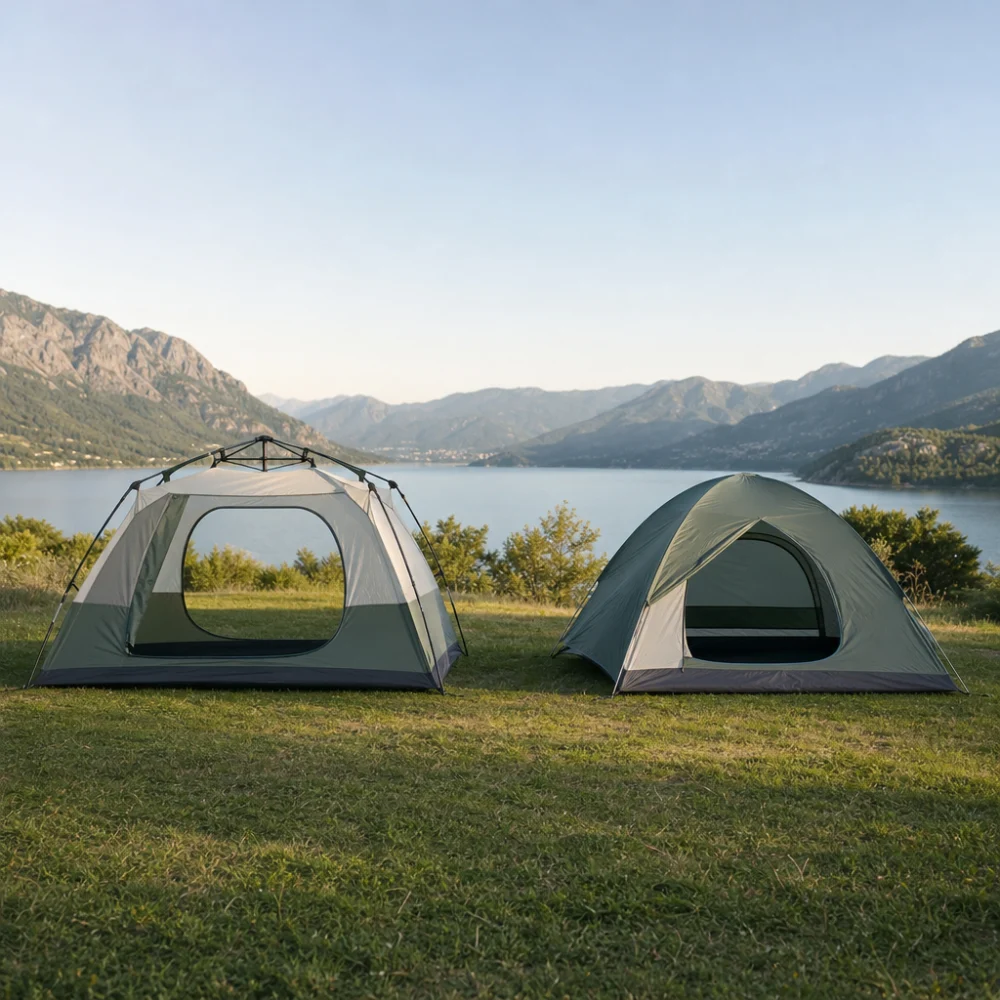
Within this category, the main differences usually come from how quickly the tent opens, how much interior room it offers, and how robust the shelter feel is. Some instant tents are aimed more at easy family or campground use, while others emphasize a smaller footprint or simpler solo pitching.
For most shoppers, the practical question is not which style is “best,” but which one fits the trip. A more spacious instant tent may suit a family base camp, while a more compact one may be easier to load and store for occasional outings.
Which instant tent fits your needs?
| Buyer need | What to prioritize | What to avoid overlooking |
|---|---|---|
| Weekend camper | Simple setup and dependable comfort | Enough ventilation and a packed size you can store easily |
| Family camper | Room to sleep and move around | Door layout, headroom, and whether the stated capacity feels realistic |
| Frequent traveler | Speed and repeatable setup | Carry weight, folded size, and how manageable the tent is alone |
| Car camper with limited storage | Convenient pitch with a manageable packed form | Trunk space and storage at home |
| Fair-weather camper | Ease of use and airflow | Enough coverage for the conditions you expect |
Common mistakes and misunderstandings
- Assuming capacity equals comfort. A tent’s labeled capacity may leave little extra room for bags or movement, so many buyers size up for a more relaxed fit.
- Focusing only on setup speed. Quick pitching is useful, but a tent still needs to suit your weather, space, and transport needs.
- Ignoring packed size. A tent that opens quickly can still be awkward to store or load if the folded package is bulky.
- Overlooking ventilation. Fast setup does not guarantee comfort if airflow and door placement do not match your camping conditions.
Safety and suitability caveats
Instant tents are a convenience-focused shelter choice, so it is worth checking where and how you plan to use them. A tent that works well for relaxed campground trips may not be the right fit for exposed weather, extended bad conditions, or trips where low weight matters most. The product page should be your source for the exact design details that affect suitability.
Maintenance, storage, and lifespan considerations
As with most tents, good care helps the tent stay usable for longer. Make sure the tent is dry before storage, keep it clean after trips, and store it where the fabric and frame will not be crushed or exposed to unnecessary heat or moisture. If the tent uses additional components such as a rainfly, guylines, or stakes, it is useful to keep them together so the shelter is ready when you need it again.
How to compare options efficiently
- Decide whether setup speed is your main priority or just one of several needs.
- Choose the size based on how many people and how much gear you actually expect to use.
- Compare packed size, weight, and storage convenience against your travel style.
- Check weather-related details such as coverage, ventilation, and overall shelter shape.
- Read the individual product page carefully before buying, especially where specifications vary by model.
Summary buyer decision checklist
- Does the setup style match how quickly you want to pitch camp?
- Is the tent sized for real sleeping comfort, not just the minimum number label?
- Will the packed size work for your car, storage area, or gear setup?
- Does the tent’s general weather suitability fit your usual camping conditions?
- Are ventilation and interior space comfortable enough for the way you camp?
- Have you checked the individual product page for model-specific details?
Frequently asked questions
Are instant tents good for beginners?
They often are, because the setup process is usually simpler than a traditional pole-by-pole design. That said, beginners should still compare size, packed bulk, and weather suitability instead of choosing only on setup speed.
Are instant tents only for car camping?
They are often a better fit for car camping because the frame and folded shape can be bulkier than more compact tents. If portability matters a lot, compare packed size and weight carefully before deciding.
Should I buy a bigger instant tent than I need?
Often, yes, if you want more comfort or plan to keep gear inside the tent. Sizing up can make sleeping and changing easier, but it may also increase packed size and setup footprint.
Do instant tents work in bad weather?
Some may handle changing conditions better than others, but weather performance depends on the specific design. Look at coverage, ventilation, and overall construction details rather than assuming all instant tents behave the same way.
What matters more: setup speed or ventilation?
That depends on your trips. If you arrive late or want a fast camp routine, setup speed may matter most; if you camp in warmer conditions, ventilation may have more day-to-day impact on comfort.
How do I compare two instant tents quickly?
Start with the size you need, then compare packed size, pitching style, and the tent’s likely comfort in your usual conditions. That short list is usually more useful than comparing minor details first.
How do instant tents differ from pop-up tents?
The terms can overlap in casual product descriptions, so the name alone may not tell you how a tent opens or packs away. Compare the actual setup and folding method, including what needs to be connected or secured, and check whether the packed shape and size suit your storage space. This is especially useful when comparing tents listed under different tent types.
More Instant Tents
See all 78 Instant Tents →



As an Amazon Associate we earn from qualifying purchases.