
Kids’ camping tables are a simple way to give younger campers their own surface for snacks, crafts, board games, and mealtime at camp or in the backyard. The right choice depends less on style and more on everyday usability: how easy it is for a child to sit at, move around, and use comfortably.
This guide focuses on the practical differences that matter before buying. It can help you compare size, height, stability, portability, and cleanup so you can narrow the field with less guesswork.
What should you look for in a kids’ camping table?
Start with the child’s age, the way the table will be used, and how often it will be carried or stored. A good kids’ camping table should feel appropriately sized, be easy to set up, and suit the trip type, whether that means car camping, picnics, or backyard use. The main trade-off is usually between convenience and sturdiness: lighter tables are easier to move, while sturdier designs may feel steadier in daily use.
| Feature | What It Means | Why It Matters | What To Check |
|---|---|---|---|
| Table height | The distance from the ground to the tabletop | Helps determine whether children can sit and use it comfortably | Look for a height that matches the intended chair or seating setup |
| Tabletop size | How much usable surface area the table provides | Affects room for food, crafts, or shared activities | Check whether one child or multiple children will use it at once |
| Stability | How firmly the table sits during normal use | Important for drinks, art supplies, and uneven outdoor ground | Review the leg design and whether the table is meant for outdoor surfaces |
| Portability | How easy it is to carry, fold, or store | Matters for travel, quick setup, and limited storage space | Consider folded size, carry comfort, and whether one adult can handle it easily |
| Surface cleanup | How easily the top can be wiped after use | Useful for sticky snacks, dirt, and outdoor messes | Look for a finish that seems easy to clean with normal care |
| Intended use | Whether the table is geared toward eating, play, or both | Helps avoid buying a table that is awkward for your main activity | Match the design to the most common use at camp or home |
Key decision criteria explained
Size and seating fit
For kids, comfort starts with proportions. A table that is too tall can be awkward for smaller campers, while one that is too low may feel cramped for older children. If the table will be used with camp chairs, benches, or low seating, check that the setup makes sense as a whole rather than focusing on the table alone.
Weight and portability
Portability matters because a table that stays in a vehicle or storage closet is easier to manage than one that must be carried long distances. Lightweight options are often appealing for short outings, while heavier designs may feel more stable once in place. Consider who will carry it, how far it will move, and whether setup speed matters on arrival.
Stability on real ground
Outdoor surfaces are not flat and smooth like a kitchen floor. A table that looks fine indoors may wobble on grass, dirt, or sand, so the leg design and stance matter. If children will use cups, snacks, or art materials on it, stability deserves extra attention.
Surface and cleanup
Outdoor family gear tends to get messy. A wipeable tabletop is easier to live with after snack time, sticky hands, or craft supplies. Materials and finishes vary by model, so always check the individual product page before buying.
Storage and packing space
Some families want a table that folds compactly and slides into a gear bin, while others can store a larger item at home. Think about where it will live between trips and whether you want something that is easy to tuck away with the rest of your camping gear.
Types and variants you may see
Compact folding tables
These are often the most practical choice for occasional trips because they are easier to pack and set up. They usually suit families who want a simple surface for snacks or play. Their main limitation is that compactness can mean less tabletop room.
Lower toddler-friendly tables
Lower tables may be easier for very young children to use with smaller chairs or floor seating. They can work well for short activities like coloring or snack breaks. The limitation is that they may outgrow faster as children get taller.
Tables intended for shared use
Some shoppers want a larger surface so more than one child can use the table at the same time. These can be helpful for siblings or group activities, but they may take more space and be less convenient to move.
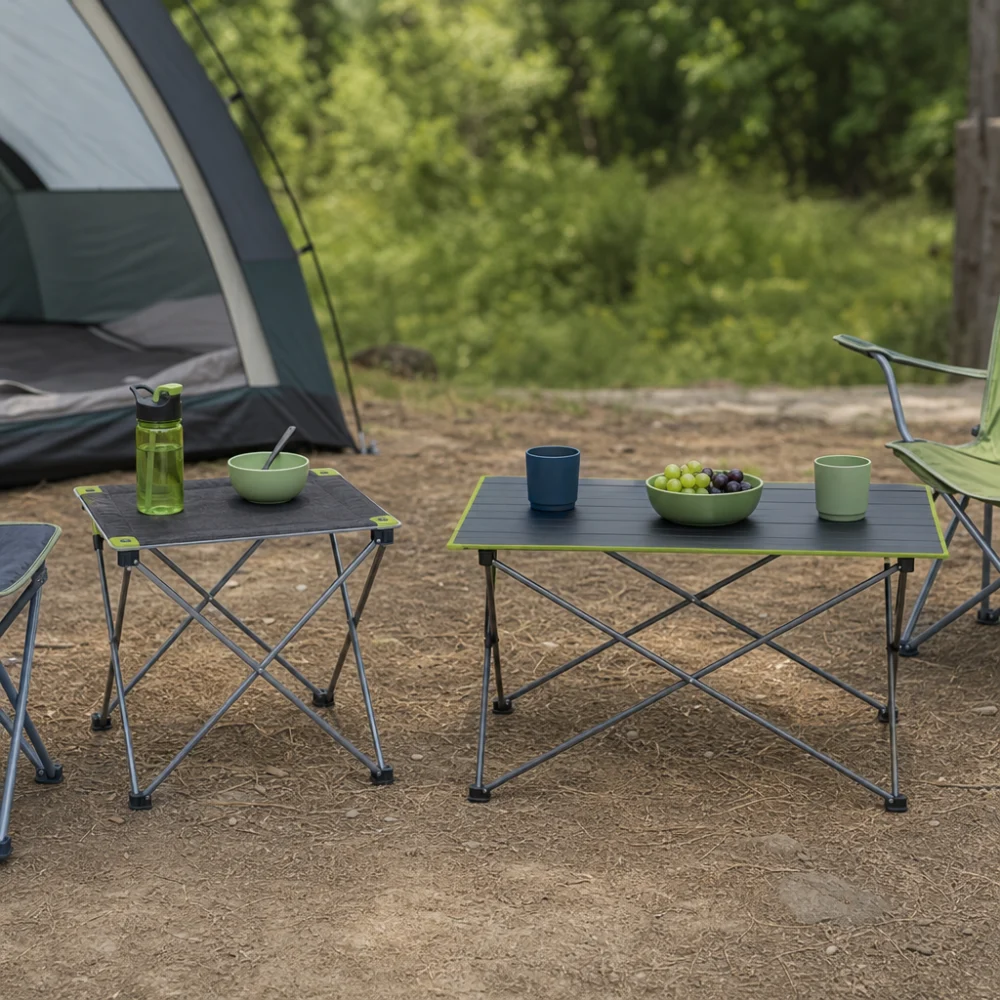
Which table type fits different needs?
| Buyer need | Helpful features | What to watch |
|---|---|---|
| Frequent car camping | Easy folding, manageable weight, simple setup | Make sure it still feels sturdy enough for regular use |
| Backyard or patio use | Comfortable height, easy-clean surface, stable stance | Portability may matter less than day-to-day convenience |
| Travel with limited space | Compact folded size, simple storage, light carry weight | Very compact designs may offer less tabletop area |
| Shared use by siblings | Longer or wider tabletop, stable legs, enough room for seating | Check whether the table still fits your available space |
| Occasional snack and activity station | Wipeable top, moderate size, easy setup | A highly specialized design may be more than you need |
Common mistakes to avoid
- Buying by age only. Age is a rough guide, but height and seating style matter more for comfort.
- Choosing the smallest option without thinking it through. Compact is convenient, but the surface may be too tight for meals or activities.
- Ignoring stability. A lightweight table can be easy to carry and still feel less secure on uneven ground.
- Overlooking storage between trips. A table that is awkward to pack away can become less useful over time.
- Assuming every kids’ table works the same way. The intended use can vary, so compare the product page carefully.
Safety and suitability checks
Choose a table that fits the child’s size and the way you plan to use it. Check that edges, leg positions, and the overall setup look appropriate for supervised outdoor use, especially if younger children will be around it. If the table will be used near heat, sharp tools, or rough ground, confirm that the design suits that setting rather than assuming it will work in every situation.
Maintenance, storage, and lifespan considerations
Most shoppers want a table that is easy to wipe down and simple to store between outings. If the table folds, think about how the moving parts will hold up to repeated use and whether the folded shape fits your storage space. Keep it clean after messy meals or muddy trips so it stays easier to use the next time.
How to compare options efficiently
- Decide where the table will be used most often.
- Match the table height and size to the child or children who will use it.
- Compare portability against stability and choose the balance that fits your trips.
- Check how easy it is to clean and store after use.
- Read the individual product page for the specific measurements and details you care about.
Buyer checklist
- Fits the child’s size and seating setup
- Has enough tabletop space for the intended use
- Feels stable enough for outdoor surfaces
- Is easy to carry, fold, or store
- Has a surface that looks easy to clean
- Matches whether you need snack use, crafts, or shared family use
- Leaves room for the way you actually camp or travel
Frequently asked questions
What makes a kids’ camping table different from a regular camp table?
Kids’ camping tables are chosen with younger users in mind, so size and ease of use matter more than maximum capacity. The goal is usually a surface that feels comfortable for children at camp, on a picnic, or in the backyard.
Should I choose a folding table?
A folding table is often easier to carry and store, which helps if you travel frequently or have limited space. If the table will stay in one place more often, folding convenience may matter less than overall stability and size.
Is a bigger table always better?
Not necessarily. A larger surface can be useful for siblings or shared meals, but it may be harder to store and move. The right size is the one that matches your space and how many children will use it.
What matters most for younger children?
Fit and stability usually matter most. A table that is too tall or too easy to wobble can be frustrating, even if it looks practical on paper.
How much should I care about cleanup?
Quite a bit, because kids’ tables tend to see snacks, dirt, and crafts. A surface that wipes down easily is usually simpler to live with over time.
Can one table work for both camping and home use?
Yes, many buyers want a table that works in both settings. In that case, choose a balanced option with practical size, simple storage, and a design that feels useful beyond one trip type.