

Camping screen houses are a practical add-on when you want a sheltered place to relax, eat, or gather without as much exposure to insects and sun. They are often chosen for car camping, backyard use, picnic areas, and group camps where comfort and coverage matter more than minimum packed size.
Because these shelters are used in different ways, the right choice depends on how much room you want, how easy you want setup to be, and how much weather protection you expect. Some buyers want a simple bug-free lounge area, while others need more headroom, better airflow, or more enclosed coverage around the edges.
Specifications vary by model, so always check the individual product page before buying.
Compare Camping Screen Houses


As an Amazon Associate we earn from qualifying purchases.
What should you look for in a camping screen house?
Start with the way you plan to use it: casual shade, insect protection, meal prep space, or a social area at camp. Then compare size, mesh coverage, canopy shape, entry style, setup method, and how well the shelter fits your group and your site. The best starting point is usually the space you need and the conditions you expect, because those two factors narrow the choices quickly.
The main trade-off is comfort versus convenience. Larger and more enclosed screen houses can feel roomier and more useful in buggy or sunny conditions, but they may take more space and effort to manage. Simpler designs are easier to handle but may offer less coverage from the elements.
| Feature | What It Means | Why It Matters | What To Check |
|---|---|---|---|
| Size and usable floor space | The amount of room inside for people, chairs, tables, or gear | Determines whether it feels cramped or comfortable for your group | Interior dimensions, wall angle, and how much space remains once furniture is inside |
| Screen coverage | How much of the shelter is protected by mesh panels | Affects insect protection and airflow | Panel placement, door coverage, and whether gaps are likely around entry points |
| Shade and roof style | The way the top blocks sun and sheds light rain | Impacts comfort during long daytime use | Roof shape, coverage depth, and whether the design is meant more for shade than storm protection |
| Setup style | How the shelter is assembled and supported | Influences convenience, especially at the campsite | Pole design, hub system, and whether one person can reasonably set it up |
| Portability | How easy it is to carry and store | Matters if you have limited vehicle space or move camps often | Packed size, carry bag shape, and whether the shelter is suited to your transport method |
| Weather tolerance | The amount of wind, drizzle, or sun exposure the design can reasonably handle | Helps set expectations for where it will work well | Anchoring points, side coverage, and whether the product is described for fair-weather use only |
Key decision criteria explained
Space and layout
Think beyond the number of people the shelter is meant to hold. A screen house that technically fits your group may still feel tight once chairs, a table, coolers, or gear are inside. Look for enough usable floor area and a shape that leaves practical room near the edges.
Bug protection and airflow
The main purpose of a screen house is usually keeping insects out while letting air move through. Mesh coverage, door design, and panel overlap all affect how well it works in real use. If you camp in buggy areas, pay close attention to openings and closures rather than only the overall size.
Shade and comfort
Screen houses can provide welcome shade, but they are not all designed for the same amount of sun exposure. Some are best for daytime lounging, while others are more like airy shelters for meals and short breaks. If shade is important, check how far the roof extends and whether the design leaves people protected from the angle of the sun.
Setup effort
Some buyers want the easiest possible setup for weekend use, while others are comfortable spending a bit more time for a sturdier or roomier shelter. Look at the pole structure, the number of components, and whether the design appears to be better for quick trips or more settled base-camp use.
Anchoring and site fit
Even a simple screen house needs a suitable place to stand securely. Consider the ground surface, available footprint, and whether the shelter seems suited to open campsites, yards, or picnic areas. A larger footprint can be a benefit, but only if your site can accommodate it comfortably.
Common product types and variants
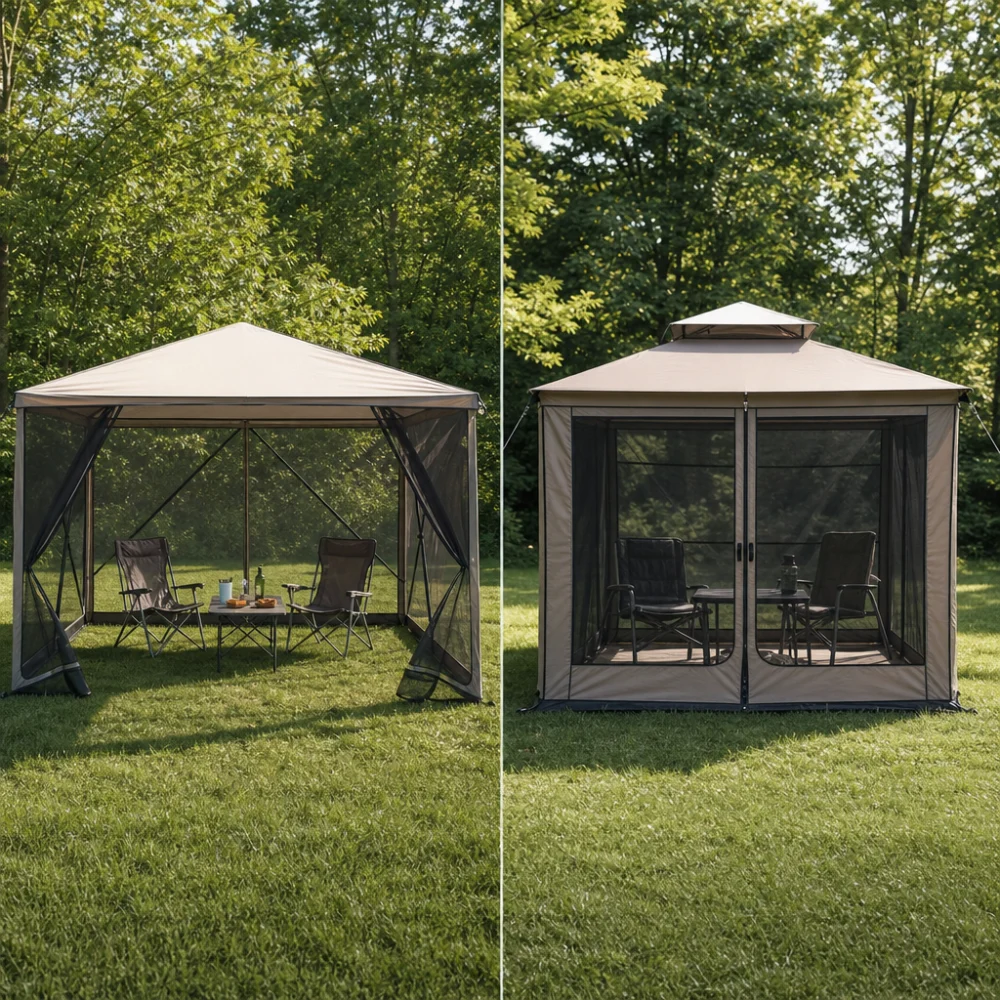
Screen houses in this category usually differ more by structure and coverage than by specialty use. The main thing to compare is how open or enclosed the design feels.
- Open-air screen houses: These focus on insect protection and shade while keeping the space airy. They suit relaxed group use, but they may feel less sheltered in breezy conditions.
- More enclosed screen houses: These offer more perimeter coverage and a more protected feel around the sides. They can be more comfortable for buggy locations, though they may feel less open.
- Quick-setup styles: These emphasize convenience and faster camp routines. They suit buyers who value speed, but they may give up some roominess or adjustability.
- Roomier gathering shelters: These are aimed at sitting space, shared meals, or a camp common area. They are useful for families and groups, but they usually need more space to use well.
Which screen house fits which kind of buyer?
| Buyer need | Features to favor | Why that helps |
|---|---|---|
| Family camping | More usable space, easy entry, and good room for chairs or a table | Makes the shelter more comfortable as a shared hangout area |
| Bug-heavy campsites | Better mesh coverage and fewer exposed openings | Improves comfort when insects are a major concern |
| Shade for daytime use | Broader roof coverage and a shape that keeps the interior shaded longer | Helps make the shelter more useful during hot parts of the day |
| Occasional or casual use | Simpler setup and a straightforward carry size | Makes the shelter easier to bring out without much hassle |
| Group meals and camp hosting | More interior room and a layout that supports tables or multiple seats | Creates a better shared space for eating and gathering |
Common mistakes and misunderstandings
- Assuming bigger is always better: Larger screen houses can be more comfortable, but only if you have room to transport, pitch, and secure them.
- Focusing only on the number of people: A headcount does not tell you how usable the interior will feel once gear or furniture is added.
- Overlooking mesh and entry details: Small design choices can make a big difference in bug control and day-to-day convenience.
- Expecting storm-level protection: Many screen houses are meant for comfort, shade, and insect relief rather than harsh weather.
- Ignoring site space: A shelter that looks ideal on paper may be awkward if your campsite or yard is tight.
Safety and suitability caveats
Choose a screen house with the intended use in mind. If you expect wind, rain, or long exposure, check the product page carefully for the level of coverage the design is meant to provide. A screen house can improve comfort, but it is not the same as a fully enclosed shelter or a weather-rated tent.
Also consider who will use it and how often it will be set up. A model that looks simple in photos may still require more room or handling than expected once it is unpacked and positioned. The most suitable option is the one that fits your campsite, your group, and your normal level of effort.
Maintenance, storage, and lifespan considerations
General care usually comes down to keeping the shelter clean, dry, and packed away properly between trips. Dirt, moisture, and rough storage can all make any shelter less pleasant to use over time. If you camp often, it helps to think about how easy the screen house will be to dry, fold, and store after use.
It is also worth considering how often you will move it and how much handling it will get. A design that is easy to pack and unpack may be more practical for frequent short trips, while a roomier shelter may make more sense for occasional base-camp use.
How to compare options efficiently
- Decide what the screen house is mainly for: shade, bug protection, dining space, or group lounging.
- Narrow the type by the amount of room, openness, and setup effort you want.
- Compare the practical features that matter most: mesh coverage, layout, roof shape, and packed size.
- Notice the trade-offs between comfort, portability, and weather tolerance.
- Check the individual product page for the exact dimensions, setup details, and intended use.
Summary buyer decision checklist
- Does the interior space fit your people and your gear?
- Is the mesh coverage suitable for the insects you expect?
- Does the roof and side coverage match the amount of shade you want?
- Will the setup style fit your patience, time, and campsite routine?
- Can you transport and store it without difficulty?
- Is it appropriate for the weather and campsite conditions you expect?
Frequently asked questions
Is a camping screen house the same as a tent?
No. A screen house is usually chosen more for shade, airflow, and insect protection than for sleeping. It is often better thought of as a camp living space or shelter rather than a primary sleeping shelter.
Can a screen house be used for meals?
Yes, many buyers use them as a protected eating area. Just make sure the layout leaves enough space for your table and chairs, and check whether the design is open enough for the kind of seating you want.
How much weather protection does it provide?
That depends on the model, but screen houses are generally more about comfort than full weather defense. Some offer more shade and perimeter coverage than others, so it is important to check the product information closely.
What matters more: size or setup style?
It depends on how you plan to use it. If you want a shared hangout space, size may matter most; if you want something easy to manage for short trips, setup style may matter more.
Do I need a fully enclosed design?
Only if you want more protection around the sides or expect very buggy conditions. A more open screen house can feel airier and easier to use, but a more enclosed one may feel more comfortable in less forgiving environments.
Should I choose the lightest option I can find?
Not necessarily. Portability matters, but a very compact shelter may give up the room or comfort you want. It is usually better to balance carry convenience with the amount of usable space you actually need.
More Camping Screen Houses
See all 142 Camping Screen Houses →


As an Amazon Associate we earn from qualifying purchases.