
Carbon arrows are a common choice for archers who want a lightweight, durable arrow option for target practice, field shooting, or general recreation. The right choice depends less on the word “carbon” alone and more on the details that affect fit, consistency, and intended use.
If you are replacing arrows, upgrading from another material, or buying your first set, it helps to compare the parts of an arrow that actually affect performance. Small differences in spine, length, point setup, and construction can matter more than the label on the shaft.
This guide is meant to help you sort through those choices without overcomplicating the decision.
What should you look for when choosing carbon arrows?
The best starting point is to match the arrow to your bow setup and your main shooting goal. Carbon arrows are valued for their balance of stiffness, weight, and durability, but the useful choice is the one that fits your draw length, draw weight, and preferred use. Specifications vary by model, so always check the individual product page before buying.
The main trade-off is that a good arrow choice is usually about fit and consistency rather than one single feature. A simpler, more forgiving setup may suit casual practice, while a more specific setup may be better for experienced archers who already know what they want to fine-tune.
| Feature | What It Means | Why It Matters | What To Check |
|---|---|---|---|
| Spine | How much the shaft flexes under load | It affects how well the arrow matches the bow and how it behaves in flight | Look for a spine rating that is suitable for your bow setup |
| Arrow length | The usable length of the shaft | Length affects safety margin, setup, and how the arrow matches your draw | Confirm the listed length and whether trimming is intended or allowed |
| Weight | How heavy the arrow setup is | Weight influences feel, speed, and the style of shooting it suits | Check whether weight information refers to the bare shaft or a finished arrow |
| Diameter | The shaft width | It can affect target use, clearance, and overall feel | Compare shaft diameter with your expected setup and accessories |
| Construction | The way the shaft is built | It can influence durability and consistency from arrow to arrow | Look for details on shaft construction and whether components are included |
| Included components | Whether nocks, points, or fletching are part of the product | It changes how much extra setup you need after purchase | Check exactly what comes with the arrow and what must be added separately |
Key decision criteria
Bow match matters most
Carbon arrows should be chosen with the bow in mind first. The wrong match can make tuning harder and can make the arrow feel inconsistent. If you are not sure, focus on the information that connects the arrow to draw length, draw weight, and intended use rather than just the product name.
Spine and length work together
Spine is often discussed on its own, but it does not act alone. Arrow length, point choice, and bow setup all influence how the shaft performs in practice. A buyer who understands that relationship is less likely to choose an arrow based on one appealing number without checking the rest of the setup.
Durability versus precision
Many buyers want an arrow that feels sturdy, but the most durable option is not always the most suitable for every use. A more robust shaft may be attractive for repeated practice, while a more specialized arrow may be better for archers who care more about consistency and tuning. The key is deciding which trade-off matters more to you.
Finished arrow or shaft-only purchase
Some buyers want a ready-to-use arrow, while others prefer to build or tune their own setup. That difference affects how much extra work is involved after purchase and what components you still need. Check whether the product includes nocks, inserts, points, and fletching, or whether it is sold as a component only.
Common carbon arrow types and variants
Within carbon arrows, the most important distinctions are usually about how complete the arrow is and how specific the setup is intended to be.
- Bare shafts: useful for buyers who want to assemble or tune arrows themselves, but they require more parts and more attention to setup.
- Finished arrows: convenient for buyers who want less setup, though you still need to confirm the exact component package and fit.
- General-purpose arrows: a practical starting point for casual use, but they may not be optimized for every bow or style.
- More specialized arrows: better for buyers with a clear setup target, though they usually require more careful checking before purchase.
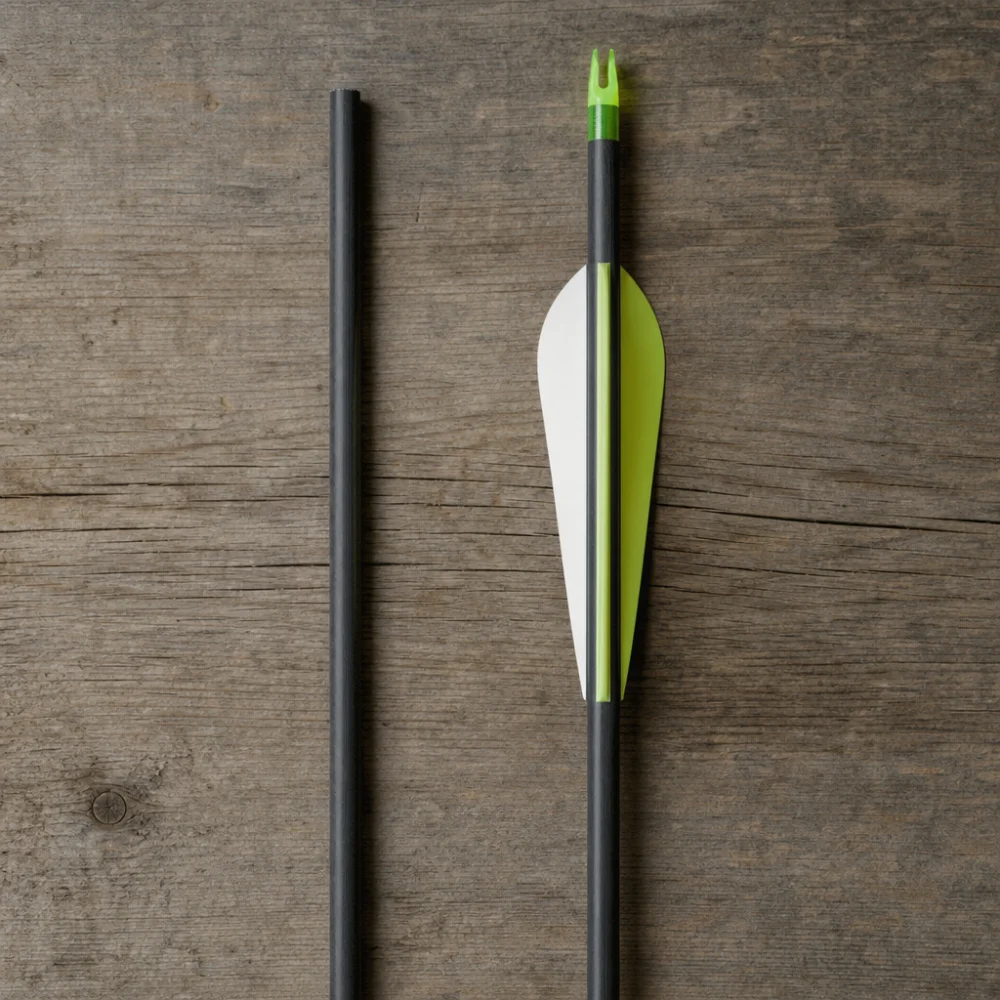
Which carbon arrows fit different buyer needs?
| Buyer need | What to prioritize | What to watch for |
|---|---|---|
| Beginner or casual shooter | Straightforward setup, clear product details, and a forgiving match to the bow | Unclear spine information or missing component details |
| Replacement purchase | Consistency with the arrows already in use | Differences in length, spine, or included parts |
| Arrow-building buyer | Bare shafts or clearly described components | Assuming a product includes everything needed for assembly |
| Target-focused buyer | Consistent shaft specifications and a setup that matches the bow | Mixing general-purpose details with a precision goal |
| Gift buyer | Clear, understandable product information and a low-confusion purchase | Buying without checking the recipient’s bow setup |
Common mistakes to avoid
- Choosing by material alone: carbon is only one part of the decision; fit and setup matter just as much.
- Ignoring spine: a shaft can look right on paper but still be a poor match if the spine does not suit the bow.
- Overlooking length: arrow length affects fit and should be checked carefully before buying.
- Assuming components are included: some listings may cover only the shaft or only part of the finished arrow.
- Buying for the wrong use case: a general practice arrow may be a fine choice for one buyer and the wrong choice for another with a more specific setup.
Safety and suitability notes
Arrow selection should stay within the limits of the bow and the shooter’s intended use. If you are unsure about fit, compatibility, or assembly, treat the product page details as essential rather than optional. For equipment used in archery, small setup differences can matter, so it is worth checking the individual listing carefully before you buy.
Maintenance, storage and lifespan considerations
Carbon arrows are usually chosen partly for their practical handling, but they still deserve routine inspection and careful storage. Buyers should think about whether they need replacement components, whether the arrow setup is meant to be reused, and how easy it will be to keep the arrows organized and protected between uses. Avoid assuming every arrow in the category has the same construction or care needs.
How to compare carbon arrow options efficiently
- Start with your bow setup and intended use.
- Check the listed spine, length, and included components.
- Compare how complete each product is and whether it matches your needs.
- Weigh convenience against flexibility and tuning control.
- Read the individual product page closely before making a final choice.
Summary buyer decision checklist
- Does the arrow suit your bow setup and intended use?
- Have you checked spine, length, and component details?
- Do you know whether you are buying bare shafts or finished arrows?
- Are you comparing products on the same basis?
- Have you confirmed any setup details that matter to your purchase?
Frequently asked questions
Are carbon arrows a good choice for beginners?
They can be, as long as the buyer focuses on clear product information and a sensible match to the bow. Beginners often benefit from simple, well-described options rather than highly specialized setups.
What matters more: spine or length?
Both matter, and they work together. A shaft can have the right general feel but still be a poor match if the length or spine does not suit the bow setup.
Do carbon arrows always come ready to shoot?
No. Some listings may be complete arrows, while others may be shafts or partially assembled products. Check the component details carefully so you know what still needs to be added.
Should I match carbon arrows to the arrows I already own?
If you are replacing arrows, matching the existing setup is often the easiest route. Even then, verify the listed length, spine, and included parts so you do not end up with a near match that behaves differently.
Are lighter carbon arrows always better?
Not necessarily. Lighter arrows can feel different in use, but the better choice depends on your bow, your goal, and the kind of shooting you do most often.
What should I check if I am buying arrows as a gift?
Try to confirm the recipient’s bow setup and whether they need finished arrows or components. Gift buyers often do best with clear, general-purpose information and a careful check of the product details.