
Boat Cleats
Boat cleats are the hardware used to secure ropes on a boat, dock, or marina setup. This category is useful for comparing cleat styles and sizes that suit different mounting locations and line-handling needs.
When reviewing options, look at the shape of the cleat, the mounting method, and how it fits the rope size and available space. Some listings are meant for compact installs, while others are designed for easier tie-off and repeated use.
Showing 1–12 of 214 results
-
Boat Cleats
316 Stainless Steel Brass Boat Cleats 6 Inch 2-Pack with Fasteners
$32.99 View on Amazon


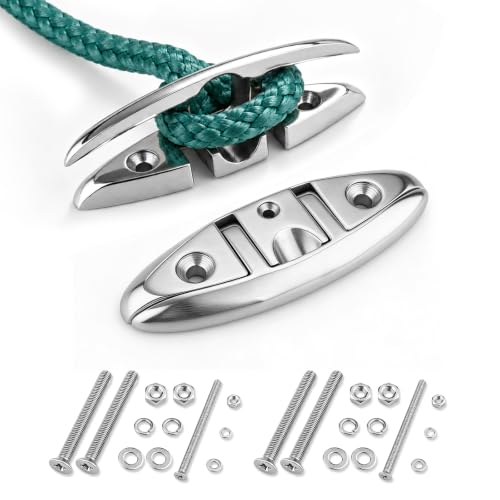


Boat cleats are a basic part of marine hardware for fastening lines quickly and securely. They are commonly used to tie off docking lines, mooring lines, or other ropes where a fixed attachment point is needed. Because boats and mounting surfaces vary, the right cleat often depends on where it will be installed and how the line will be used.
Choosing the right cleat style
Different cleat designs can suit different boating setups. Some are shaped for straightforward tie-off and easy release, while others are intended for lower-profile mounting or tighter spaces. Compare the overall shape, base size, and how the cleat is meant to be secured so it matches the surface and layout of the boat or dock.
Mounting and fit considerations
Installation details matter in this category. Check the product page for the mounting method, required hardware, and any guidance about compatible line sizes or spacing. A cleat that fits well should leave enough room for the rope to wrap or secure cleanly without crowding nearby fittings. If you are replacing an existing cleat, comparing footprint and hole pattern can help avoid unnecessary drilling or adjustments.
Use with dock and boat lines
Boat cleats are often selected alongside other docking hardware, so it helps to think about the full setup. The cleat should work naturally with the line you plan to use and the location where it will be installed. For many shoppers, the main comparison points are ease of tie-off, mounting style, and how comfortably the hardware fits the available space on deck or at the dock.
Material and intended use
Material and finish are also worth comparing, particularly for hardware exposed to weather or saltwater. Check the product details for the material, care guidance, and any stated use limitations rather than assuming every cleat has the same corrosion resistance. For lines that may experience significant tension, consult the manufacturer’s guidance and make sure the cleat and its installation are appropriate for the intended use.