

A disc brake rotor is the metal braking surface attached to a bicycle wheel and used by a disc brake caliper. Choosing one is mainly a matter of matching the rotor to the wheel, brake system, and bicycle’s permitted setup—not simply selecting a size or style that looks similar.
This guide covers the details to compare when replacing a worn or damaged rotor or selecting one for a compatible setup. The individual product information and your bicycle and brake manufacturer’s specifications are essential, since similar-looking rotors are not automatically interchangeable.
Which disc brake rotor should you choose?
Start by confirming the rotor’s mounting interface, diameter, thickness, and compatibility with your brake system. Then check whether the bicycle and brake manufacturer permit that size and setup for the intended wheel position. A rotor that matches at the hub may still be unsuitable for the caliper or bicycle, so verify every point rather than relying on appearance alone.
Disc brake rotor comparison
| Feature | What It Means | Why It Matters | What To Check |
|---|---|---|---|
| Mounting interface | How the rotor attaches to the hub | The rotor must fit the wheel hub securely using the intended interface. | Confirm the hub and rotor use the same mounting standard and that the listed hardware is appropriate. |
| Diameter | The rotor’s overall size | Size affects how the rotor works with the brake and must fit the bicycle’s approved setup. | Check the existing rotor and the limits stated for the brake, frame, fork, and wheel position. |
| Thickness | The width of the rotor at its braking surface | It needs to be suitable for the caliper and brake system; similar diameters do not ensure a fit. | Compare the product’s stated thickness with the brake manufacturer’s requirements. |
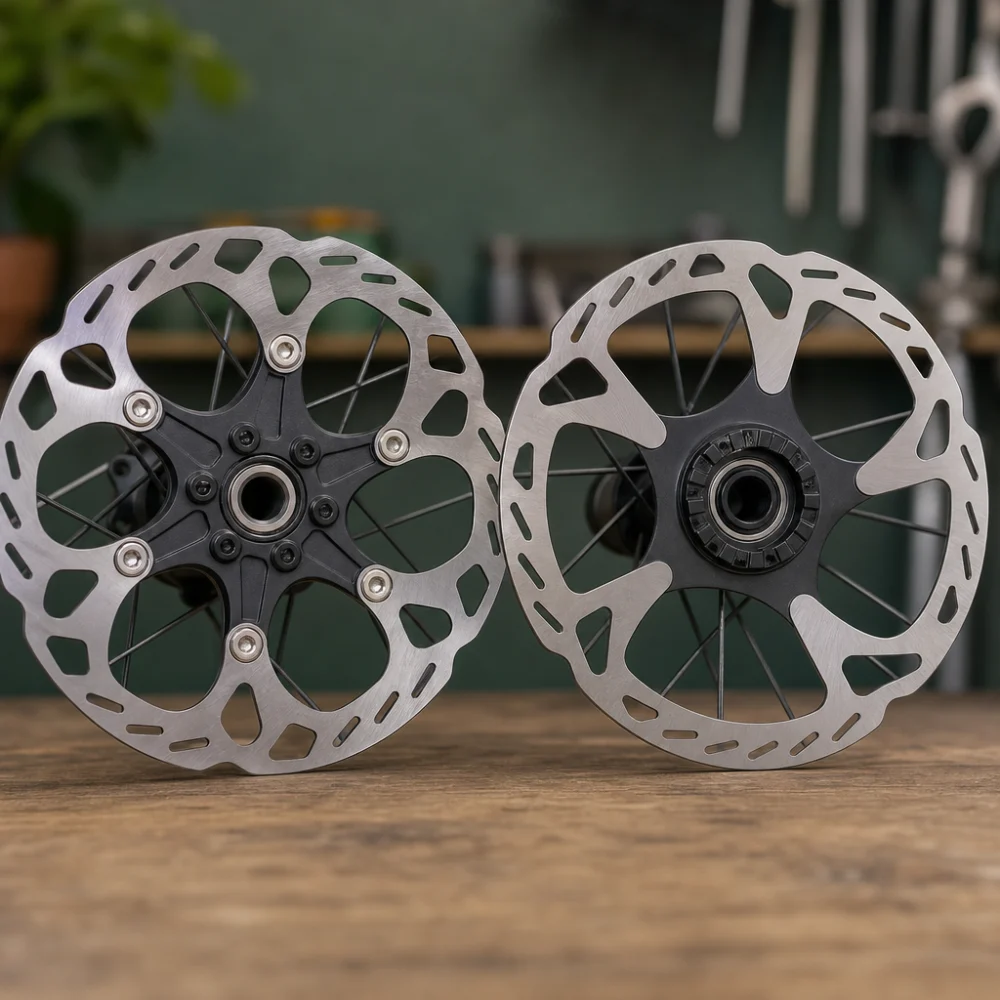
| Construction | For example, a one-piece rotor or a rotor with a separate carrier | Design can affect weight, feel, and intended use, but does not establish compatibility on its own. | Review the specified construction and confirm it is approved for your brake setup. |
| Braking surface | The part of the rotor that contacts the brake pads | Surface design and material need to work with the selected brake system and pads. | Check the product’s material and pad-compatibility information where stated. |
What to check before choosing a rotor
Mounting interface
Common bicycle rotor interfaces include six-bolt and Center Lock designs. They are different attachment systems, so identify the interface on your hub and confirm that the rotor is specified for it. Do not assume a rotor will fit because its diameter matches the one already installed.
Diameter and approved setup
Rotor diameter must suit the brake system and the bicycle. A different diameter can change how the brake system works, and the frame, fork, or brake may restrict which sizes are approved. Compare the proposed size with the bicycle and brake documentation, and check the intended front or rear position.
Thickness and brake compatibility
Rotors can differ in thickness, and a caliper designed for one specification may not be suitable for another. Check the rotor’s stated thickness against the brake manufacturer’s guidance. If replacing only the rotor, also consider whether the existing pads and brake setup are compatible with it.
Construction and intended use
Some rotors use a one-piece construction, while others combine a braking track with a separate carrier. The design may involve trade-offs in weight, stiffness, or how the rotor manages heat, but a particular construction is not a guarantee of better performance for every rider. Choose based on the brake maker’s compatibility guidance and your intended riding, rather than construction alone.
Product information
Specifications vary by model, so always check the individual product page before buying. Confirm the listed interface, diameter, thickness, construction, and any stated brake or pad compatibility; if a required detail is unclear, seek confirmation before selecting it.
Rotor types and design variations
- One-piece rotors: A single-piece design may suit buyers seeking a straightforward replacement, provided its mounting and dimensions match the system. Its construction does not remove the need to check compatibility.
- Rotors with a separate carrier: These use a distinct center carrier and braking track. They may appeal to buyers comparing construction or weight, but the product still needs to meet the same hub, brake, and bicycle requirements.
- Different rotor sizes and surface designs: These are variations within rotor selection rather than universal upgrades. Follow the bicycle and brake manufacturer’s limits and compatibility advice.
Choosing for your situation
- Replacing an existing rotor: Use the existing setup as a reference, then verify the mounting interface, diameter, thickness, and brake compatibility. A visual match alone is not enough.
- Changing the rotor size: First check the limits for the brake, frame, fork, and intended wheel position. If the approved setup is uncertain, get advice from the bicycle or brake manufacturer or a qualified bicycle mechanic.
- Comparing construction options: Consider any stated weight or design differences in light of your riding needs, but give compatibility and manufacturer guidance priority.
- Buying for a different wheel or bicycle: Identify that wheel’s hub interface and the new bicycle’s approved rotor specification independently. Do not assume parts from one setup transfer to another.
Common rotor-buying mistakes
- Choosing by diameter alone: Matching size does not confirm mounting, thickness, or caliper compatibility. Verify all of them.
- Confusing mounting interfaces: Six-bolt and Center Lock rotors attach differently. Check the hub and product specifications before selecting a replacement.
- Assuming a larger rotor is automatically an upgrade: The bicycle and brake system may have limits, and the change may not suit the intended setup. Follow the manufacturer’s approved specifications.
- Overlooking pad compatibility: A rotor and pads need to be suitable for each other and the brake system. Check the brake manufacturer’s guidance rather than assuming existing pads will work with every rotor.
- Comparing only construction or appearance: Design details cannot make up for an incorrect fit. Confirm the essential dimensions and interfaces first.
Safety and suitability
Brakes are safety-critical bicycle components. Select a rotor specified for the brake system and approved for the bicycle and wheel position; do not infer suitability from a similar-looking part or a general category description. If the specifications conflict or you cannot confirm compatibility, consult the manufacturer or a qualified bicycle mechanic before buying.
Care, replacement, and storage considerations
Rotors and brake pads are wear components, and their condition can affect braking. When comparing products, check any manufacturer guidance about wear limits, cleaning, and replacement, and consider whether the pads in your current setup need attention as well. Keep a replacement rotor protected from contamination or damage during storage, and follow the product maker’s care instructions.
A practical buying process
- Identify the bicycle, wheel position, hub interface, and current brake system.
- Check the bicycle and brake manufacturer’s permitted rotor diameter and specifications.
- Compare candidate rotors for interface, diameter, thickness, construction, and stated compatibility.
- Consider design or weight trade-offs only among options that meet the required fit.
- Review the individual product information and seek qualified advice if a key specification is unclear.
Disc brake rotor buyer checklist
- Does the rotor’s mounting interface match the hub?
- Is the diameter approved for the brake, bicycle, and intended wheel position?
- Does the rotor thickness meet the brake manufacturer’s requirements?
- Is the rotor compatible with the caliper, brake system, and pads?
- Have you reviewed the individual product information and any relevant manufacturer guidance?
- If a fit detail is uncertain, have you confirmed it before buying?
Frequently asked questions
Can I choose a rotor based only on its diameter?
No. You also need to confirm the hub interface, thickness, and compatibility with the brake and bicycle. A matching diameter by itself does not establish fit.
Are six-bolt and Center Lock rotors interchangeable?
They use different hub attachment interfaces, so a rotor must match the hub or an explicitly compatible setup. Check the hub and rotor specifications rather than relying on visual similarity.
Can I use a different rotor diameter from the one currently fitted?
Only if the bicycle and brake manufacturers permit that size for the relevant wheel position and the brake system is compatible with it. Confirm the approved limits before choosing a different diameter.
Does a different rotor thickness affect compatibility?
It can. The rotor thickness needs to meet the brake system’s specifications, so compare the stated dimension with the brake manufacturer’s guidance.
Do I need to replace the brake pads when replacing a rotor?
Not necessarily in every situation, but pad condition and compatibility matter. Check the brake manufacturer’s guidance and the rotor’s stated pad compatibility before deciding whether the existing pads are suitable.
Is a rotor with a separate carrier always a better choice?
No construction is the best choice for every rider or bicycle. Compare the design’s stated characteristics against your needs, while treating correct fit and approved compatibility as essential.