
Target faces are the printed or marked aiming surfaces used on archery targets. They help you practice grouping, sight adjustment, and scoring without changing the target’s core structure.
Because target faces are usually chosen to match a target backing, distance, and style of practice, the main buying question is not just which design you like. It is whether the face fits your target setup and the way you shoot.
This guide focuses on the practical differences buyers compare most often: size, layout, intended use, durability, and compatibility with the backing or frame you already have.
What should you look for in a target face?
The best starting point is to match the target face to your intended practice. If you want simple sighting practice, a plain scoring face may be enough. If you are training for a specific round or tournament style, you may want a face that mirrors that format more closely. The trade-off is usually between clarity, realism, and how long the face stays usable before it needs replacement.
| Feature | What It Means | Why It Matters | What To Check |
|---|---|---|---|
| Face size | The overall printed area on the target | It affects aiming visibility and whether the face suits your target backing | Check the stated dimensions and compare them with your existing target setup |
| Scoring layout | The pattern of rings, colors, or aiming zones | It changes how easy the face is to aim at and score consistently | Look for the layout that matches your practice or competition style |
| Intended use | General practice, scoring, or a specific archery format | Some faces are better for casual repetition, while others are meant for round-specific training | Read the product page for the intended application rather than assuming universal use |
| Durability | How well the face holds up to repeated arrow impacts and weather exposure | More durable faces may last longer, but not every face is built for the same conditions | Check the material description and whether the face is meant for indoor or outdoor use |
| Compatibility | How the face attaches to or fits the target backing | A face that does not fit the backing is inconvenient even if the design is right | Confirm the mounting method, backing type, and any size limits before buying |
Key decision criteria
Size and visibility
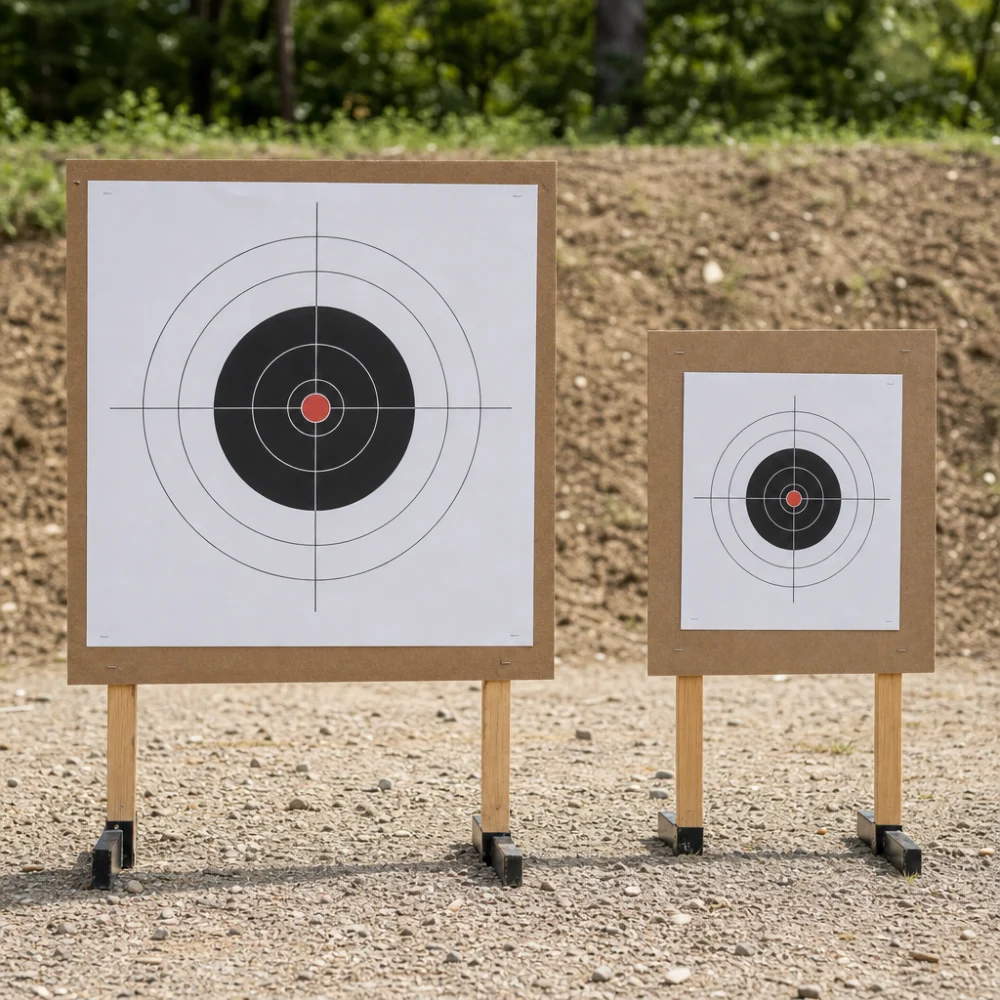
Target face size affects how easy it is to see your aiming point from your normal shooting distance. Larger faces can feel more forgiving for practice, while smaller ones may give a tighter aiming challenge. The trade-off is that smaller faces can be harder to read quickly, especially at longer distances or in lower light.
Layout and scoring style
Some faces are designed to support basic practice, while others mirror scoring formats used in certain archery rounds. If you are training for a known format, the layout matters because it shapes how you aim and how you evaluate groups. If you only want general practice, a simpler layout may be more practical.
Material and wear
Target faces are consumable items in many setups, so durability matters even when the face looks simple. Heavier use, repeated impacts, and outdoor exposure can all shorten usable life. Specifications vary by model, so always check the individual product page before buying.
Attachment and fit
Some faces are meant to be pinned, taped, clipped, or otherwise secured to a backing. That makes fit just as important as the printed design. If you already own a target stand or backing, check how the face is attached and whether the size aligns with the surface you plan to cover.
Common types and variants
Target faces are usually grouped by the style of aiming or scoring area they present. A simpler face may suit casual practice and beginners who want clear visual reference points. A more specialized face may suit archers who are preparing for a particular round or want a more exact training target.
Another practical difference is whether the face is meant for indoor or outdoor use. Outdoor use can bring more wear from weather, so buyers often need to pay closer attention to material and replacement expectations. The right choice depends on where you shoot most often and how often you expect to replace the face.
Which target face fits your needs?
| Buyer need | What to prioritize | Why |
|---|---|---|
| Beginner practice | Clear aiming zones, simple layout, easy visibility | It helps you build confidence and shot consistency without unnecessary complexity |
| Score-oriented practice | Layout that matches the round or scoring style you use | It makes practice feel more like the format you are training for |
| Home backyard shooting | Easy attachment, compatibility with your backing, reasonable durability | Convenience matters when you are setting up and taking down repeatedly |
| Frequent practice | Durability and replacement convenience | High-use buyers usually care more about how often the face needs replacing |
| Gift purchase | Broad compatibility and straightforward design | It is safer to choose something easy to understand if you are not sure about the recipient’s setup |
Common mistakes to avoid
- Buying by image alone: a face can look right in a thumbnail but still be the wrong size or scoring style for your setup.
- Ignoring the backing: the face is only useful if it fits the target surface or frame you already have.
- Assuming all faces last equally long: wear depends on use, conditions, and how often arrows hit the same area.
- Choosing a specialized layout too soon: a round-specific face may be unnecessary if you only want basic practice.
Safety and suitability notes
Target faces are only one part of an archery setup, so suitability depends on the full target system and where you shoot. Check whether the face is intended for your shooting distance, backing type, and indoor or outdoor setting. It is also sensible to confirm that the face matches the style of practice you actually do, rather than choosing a more specialized option you will not use.
Care, storage, and replacement
Many target faces are treated as wear items, so replacement is part of normal ownership. Keeping them dry, flat, and stored away from unnecessary bending can help them stay usable longer. If you shoot outdoors, expect weather and repeated impacts to shorten the life of the face sooner than a protected indoor setup.
How to compare options efficiently
- Start with how you shoot most often, including your usual distance and practice style.
- Choose the face type or layout that fits that use instead of shopping by appearance alone.
- Check size, attachment method, and backing compatibility on the product page.
- Compare durability expectations against how often you plan to practice.
- Pick the simplest option that meets your real needs.
Summary buyer checklist
- Does the target face match your practice style or scoring format?
- Is the size appropriate for your target backing and shooting distance?
- Do you understand how the face attaches or mounts?
- Is the face meant for indoor or outdoor use?
- Are you comfortable with how often it may need replacing?
- Does the layout look clear enough for your level of practice?
Frequently asked questions
What is the main purpose of a target face?
A target face gives you a visible aiming and scoring surface on an archery target. It helps organize practice and makes it easier to judge shot placement. The best face is usually the one that matches your target setup and practice goal.
Are all target faces interchangeable?
No, not always. Some faces differ in size, mounting method, and intended use, so a face that works well on one backing may not fit another. It is worth checking the product details before assuming compatibility.
Do I need a specialized face for casual practice?
Usually not. Many buyers only need a simple, clear face that gives them a consistent aiming point. Specialized formats are most useful when you are training for a particular round or scoring style.
How do I know what size to buy?
Start with your target backing or frame and the distance you usually shoot from. A larger face may be easier to see, while a smaller face can create a tighter practice challenge. The right size is the one that fits both your target system and your shooting needs.
Can target faces be used outdoors?
Some can, but outdoor use can add wear from weather and repeated exposure. If you plan to shoot outside often, check whether the face is described for that setting. Material and mounting method both matter more when conditions vary.
How often will I need to replace a target face?
That depends on how often you shoot, where you shoot, and how quickly the face wears. Some buyers replace them regularly as part of normal practice maintenance. It is better to expect them as consumable items than to assume they will last indefinitely.
What should I check before ordering one?
Check size, layout, attachment method, and whether it suits your target backing. If the product page gives use guidance, read that carefully as well. Those basics usually matter more than the artwork or general appearance.