
Foam block targets are a common choice for archers who want a portable practice target that is easy to move, set up, and use for repeated shooting. They are especially useful for backyard practice, tuning sessions, and archers who want a compact target format without a bulky range setup.
Choosing one is less about chasing a long list of features and more about matching the target to your bow type, draw weight, arrow type, and how often you plan to shoot. A good fit can make practice more consistent, while the wrong fit can wear out quickly or be frustrating to pull arrows from.
Because foam block targets vary by build and intended use, it helps to compare the details that actually affect day-to-day shooting rather than relying on broad product names alone.
What should you look for in a foam block target?
The best starting point is to match the target to the kind of practice you do most often. Foam block targets usually offer a balance of portability, easy arrow removal, and space-saving design, but they are not all meant for the same bow speeds or arrow setups. The main trade-off is between convenience and durability: a lighter, easier-to-move target may be simpler to use, while a denser or larger block may handle practice better over time. Specifications vary by model, so always check the individual product page before buying.
| Feature | What It Means | Why It Matters | What To Check |
|---|---|---|---|
| Target density | How tightly the foam is built | Can affect stopping performance and arrow removal | Look for the target’s intended use and whether it suits your bow type |
| Target size | The overall shooting surface and block dimensions | Determines how forgiving the target is for practice sessions | Check whether the size fits your space and shooting distance |
| Arrow compatibility | The kinds of arrows and setups the target is meant to handle | Helps avoid excess wear or difficult arrow removal | Confirm compatibility with your arrows and bow setup on the product page |
| Portability | How easy the target is to move and store | Useful if you practice in different places or have limited space | Consider weight, handle features, and whether you will move it often |
| Replaceable sections or faces | Whether worn areas can be refreshed | Can extend useful life and reduce replacement needs | Check if the target is designed for replacement parts or reversible use |
Key decision criteria
Bow type and shooting speed
Different bows place different demands on a target. A foam block that works well for a lower-energy setup may not be the right fit for a faster or more powerful setup. If you shoot multiple bow types, look for the broadest supported use case listed by the manufacturer rather than assuming one target handles everything equally.
Arrow removal and target wear
Many buyers focus on stopping arrows, but ease of removal matters too. If arrows are difficult to pull, practice becomes tiring and the foam can wear unevenly. A target that removes arrows more cleanly can be more pleasant for repeated shooting, especially during longer sessions.
Practice distance and aiming style
Think about how you actually shoot. If you practice with close-range group work, a target with a clear, defined face or larger face area can make sense. If you prefer broad practice over many points of aim, you may value a target that gives you multiple aiming zones or better surface longevity.
Portability and storage
Foam block targets are often chosen because they are easier to handle than larger fixed-style targets. If you need to store the target after each session, check whether the shape, size, and weight fit your space. A compact target is easier to manage, but a smaller profile may also mean less forgiving aim area.
Types and variants within this category
Even within foam block targets, there are a few common variations that can affect suitability.
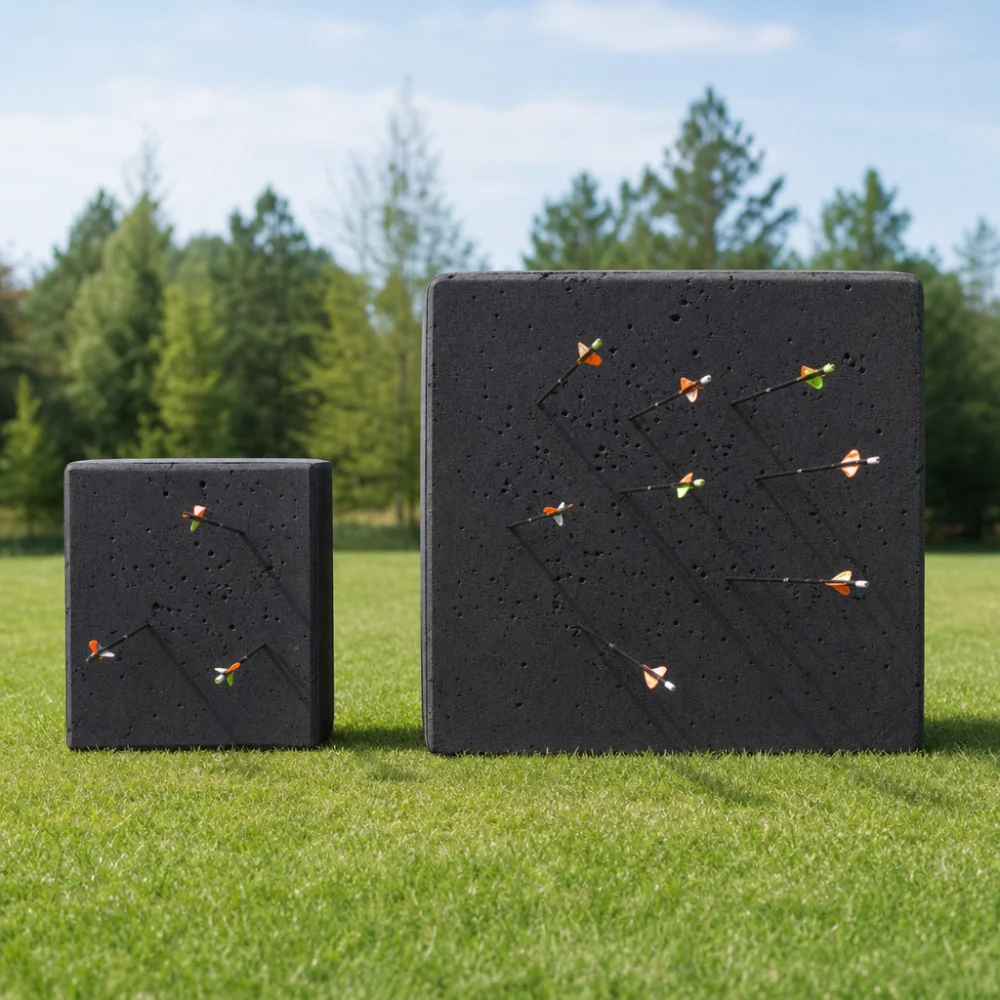
- Compact block targets: Best for limited spaces, casual practice, and easy storage. Their main limitation is a smaller shooting surface.
- Larger block targets: Better if you want more aim area or plan to shoot more often. Their main trade-off is size and convenience when moving them.
- Multi-sided or multiple-face designs: Useful when you want to spread wear across different areas. Their limitation is that they still need the right arrow and bow match.
- Replaceable or reversible designs: Helpful for extending useful life. They can be a smart value choice, but only if the replacement setup fits your needs.
Who each type tends to suit
| Buyer need | Helpful characteristics | Why it helps | Trade-off to watch |
|---|---|---|---|
| Backyard practice | Compact, easy-to-move target with a sensible shooting face | Makes setup and storage simpler | May offer less forgiving aim area |
| Frequent practice | Durable build and wear-friendly design | Helps the target stay useful longer | May be heavier or bulkier |
| Arrow tuning or repetition work | Consistent arrow removal and clear aiming surface | Supports repeated shots and observation | May need more attention to compatibility |
| Limited storage space | Smaller footprint and manageable weight | Easier to put away between sessions | Less room for error when shooting |
Common mistakes and misunderstandings
- Choosing by size alone: A larger block is not automatically the right one. The better question is whether it matches your shooting style and space.
- Ignoring compatibility: Arrow type and bow setup matter. Always check what the target is intended to handle.
- Focusing only on stopping power: Easy arrow removal and long-term wear are just as important for regular practice.
- Assuming all foam is the same: Foam block targets can vary in density, construction, and durability, which changes how they feel to shoot.
Safety and suitability caveats
Foam block targets are designed for archery practice, but you still need to make sure the target suits your equipment and your shooting area. Check that you have enough safe space behind the target and that the target is intended for the kind of arrows and bow setup you use. If a product page gives usage limits or setup guidance, follow those details closely.
Maintenance, storage, and lifespan considerations
Foam block targets usually need only basic care, but how you store and use them can affect how long they stay useful. Rotating the shooting face or changing where you aim can help spread wear if the target design allows it. Keeping the target dry and storing it out of harsh weather can also help preserve the foam and any outer layers or markings.
If a target includes replaceable sections or reversible faces, that can be useful for longer ownership. If not, wear will depend more heavily on how often you shoot and what type of arrows you use.
How to compare options efficiently
- Decide how you will use the target most often: casual practice, tuning, frequent sessions, or limited-space shooting.
- Check whether the target is suited to your bow type and arrow setup.
- Compare size, portability, and ease of arrow removal.
- Look for features that help manage wear, such as multiple faces or replaceable sections.
- Read the individual product page carefully for any usage notes, limits, or care guidance.
Summary buyer decision checklist
- Does the target fit your bow type and arrow setup?
- Is the target size appropriate for your space and practice style?
- Will the target be easy enough to move, store, and set up?
- Does the design support reasonable arrow removal and wear management?
- Are there any product-page details about intended use, care, or replacement parts?
Frequently asked questions
Are foam block targets good for beginners?
They can be, especially if you want something simple to set up and use at home. Beginners should still check that the target is appropriate for their bow and arrows, since ease of use does not replace compatibility.
What is the main advantage of a foam block target?
The main advantage is the balance of portability and practical practice use. Many buyers choose them because they are easier to move and store than larger target setups.
Do foam block targets work with every bow?
Not necessarily. Different bows and arrow setups place different demands on a target, so it is important to verify the product’s intended use before buying.
How do I know if a target is the right size?
Think about your practice distance, space, and how forgiving you want the shooting area to be. A larger target can be more forgiving, while a smaller one may be easier to store.
What affects how long a foam block target lasts?
Target lifespan depends on how often you shoot, what kind of arrows you use, and whether you spread wear across the surface. Storage conditions and whether the design supports replacement or rotation also matter.
Should I choose the lightest target I can find?
Not always. Lighter targets are easier to move, but a heavier or denser design may be better suited to frequent practice or a more demanding setup.
Can one foam block target work for multiple users?
Yes, if it is sized and specified well for the range of users and equipment in the group. The key is making sure the target is suitable for the bows and arrows being used, not just the number of people shooting.