
Bike kickstands are a simple accessory, but the right choice depends on how you use your bike, where you park it, and whether your frame can accept one cleanly. Some riders want a practical stand for quick stops, while others need a sturdier option for commuting, errands, or loaded bikes.
This guide focuses on the buying decisions that matter most: fit, mounting style, stability, and how much support you actually need. It can help you narrow the choice before you compare individual product pages.
Specifications vary by model, so always check the individual product page before buying.
What should you look for in a bike kickstand?
The best starting point is whether the kickstand matches your bike’s frame and the way you park it. After that, compare mounting location, adjustability, and how much load the stand is meant to support. A lighter stand may be fine for occasional stops, while a more substantial design may suit everyday use or a bike that carries bags. The main trade-off is usually between simplicity and stability.
| Feature | What It Means | Why It Matters | What To Check |
|---|---|---|---|
| Fit and frame compatibility | Whether the stand matches the bike’s frame design and mounting point | A kickstand that does not fit securely is not a good buy, even if the style looks right | Frame clearance, mounting area, and any notes on compatibility on the product page |
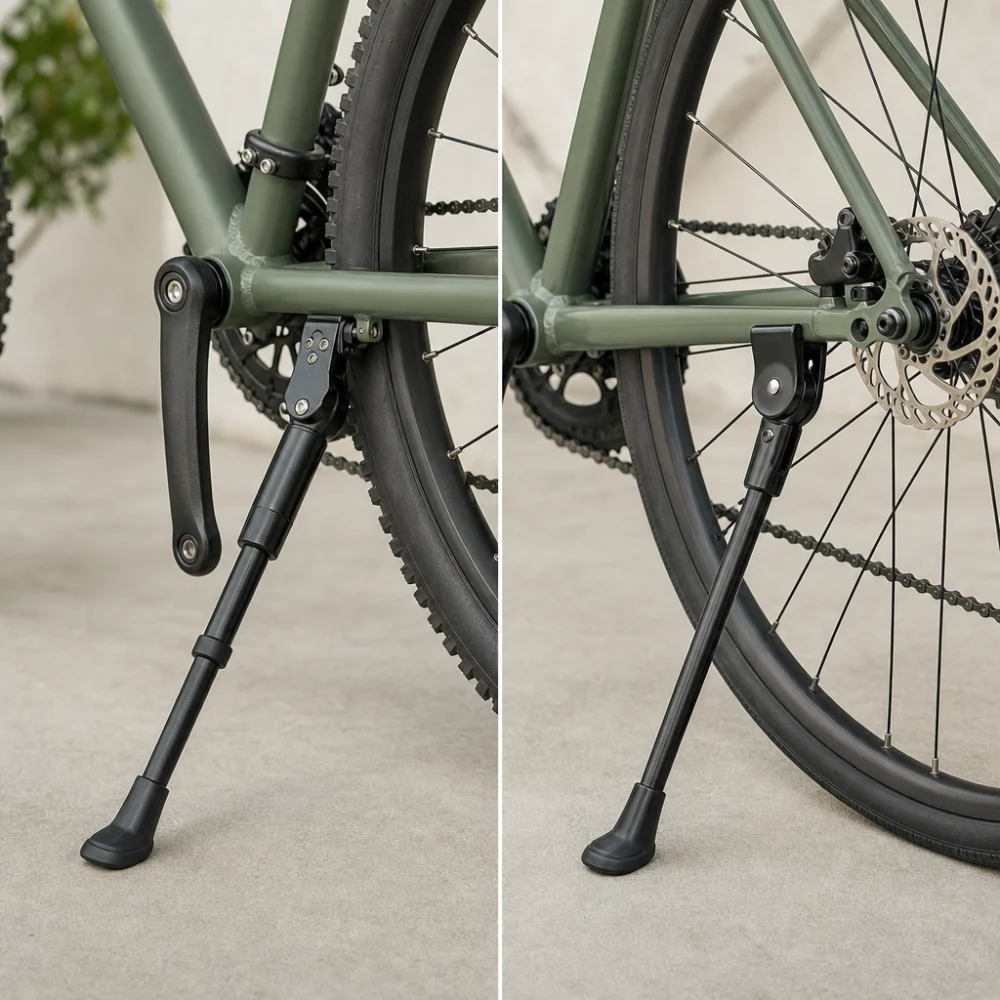
| Mounting style | Where the stand attaches on the bike | Different mounting styles can affect ease of installation and how stable the bike feels when parked | Whether it mounts near the rear axle, center of the bike, or another intended point |
| Adjustability | Whether the stand length can be changed | Adjustability helps the bike sit at a better angle and can make setup easier | Length range, adjustment method, and whether tools are needed |
| Stability | How well the bike stays upright when stopped | Stability matters more if you carry cargo, use a child seat, or park on uneven surfaces | Stand design, foot size, and any guidance about intended use |
| Bike type | The style of bike the stand is intended for | Road, hybrid, commuter, mountain, and kids’ bikes may have different clearance and balance needs | Product notes that mention the intended bike category or wheel size range |
| Weight and simplicity | How much added bulk the stand brings | Some riders prefer a minimal stand, while others want a more robust setup | General product description and whether the design prioritizes lightness or strength |
Main factors that affect the choice
Compatibility comes first
A kickstand only helps if it fits the bike safely and in the right place. Some frames leave plenty of space for a stand, while others have shapes, drivetrains, or rack setups that make certain mounts less practical. Check the product page carefully for compatibility notes, especially if your bike has an unusual frame design.
Choose the mounting style that suits your bike
Different mounting styles can change both installation and day-to-day use. Some buyers want the cleanest possible fit, while others care more about convenience or flexibility. If your bike already carries bags, a rack, or fenders, the available space around the rear triangle or bottom area may influence which style makes sense.
Think about parking conditions
A bike that is mostly parked on level pavement has different needs from one that is left on gravel, grass, or a sloped sidewalk. Stability is often about the whole situation, not just the stand itself. A wider foot or more supportive design may be useful if you regularly stop in less predictable places.
Consider how much the bike carries
Extra cargo changes the balance of the bike. If you ride with panniers, a rear bag, or other added weight, the stand should be chosen with that use in mind. A stand that works well for a light city bike may not feel as secure on a heavily loaded setup.
Common kickstand types and variants
Bike kickstands are usually compared by where they mount and how they support the bike rather than by dramatic feature differences. That makes the fit discussion especially important.
- Center-mounted stands: Often chosen for a balanced feel, but they need appropriate frame space and may not suit every bike.
- Rear-mounted stands: Common on many bikes and often straightforward, but they should still be checked for frame and wheel clearance.
- Adjustable stands: Useful when you want to fine-tune the bike’s parked angle, though you still need the right basic fit.
- Heavy-duty styles: May appeal to riders who want extra support, especially for commuting or cargo use, but they can add bulk.
Which kickstand suits different riders?
| Buyer need | What tends to matter most | Why |
|---|---|---|
| Daily commuting | Reliable fit, stability, simple use | A commuter usually needs quick parking and predictable support |
| Errands and short stops | Ease of use, practical parking support | Frequent stops make convenience more important |
| Loaded riding | Support, sturdier feel, compatibility with the bike setup | Added weight changes how the bike balances when parked |
| Occasional recreational use | Lightweight simplicity | Some riders only need a basic, unobtrusive stand |
| Kids’ or family bikes | Simple operation, stable parking | Ease of use matters when several people may handle the bike |
Common mistakes to avoid
- Buying by appearance alone: A kickstand that looks sturdy still needs to match the bike’s frame and mounting point.
- Ignoring cargo needs: If you carry bags or accessories, account for the added weight and balance change.
- Overlooking clearance: Make sure the stand will not interfere with pedals, cranks, wheels, or other accessories.
- Assuming all bikes are similar: Two bikes that look alike may still need different stand styles because of frame geometry.
Safety and suitability caveats
A kickstand is a parking aid, not a guarantee that a bike will stay upright in every situation. Slopes, soft ground, wind, and added cargo can all affect stability. Before buying, check the product information for the intended bike type and any fit limitations, especially if your bike has an unusual frame or accessory setup.
Maintenance, storage, and long-term use
Most buyers only need to think about basic upkeep, but that still matters. A kickstand may need occasional cleaning, and adjustable parts can loosen over time depending on use. If you ride in wet or dirty conditions, look for a design that seems practical to keep clean and inspect periodically for secure attachment.
How to compare options efficiently
- Start with your bike type and frame layout.
- Decide where the kickstand will mount and whether that area has enough clearance.
- Compare adjustability, stability, and how much support you need for your usual riding.
- Check whether the stand is intended for light use, commuting, cargo, or another specific use case.
- Read the individual product page for compatibility notes before you choose.
Summary buyer decision checklist
- Does the kickstand fit your bike’s frame and mounting area?
- Will it clear pedals, wheels, bags, racks, or fenders?
- Does the mounting style suit how you use the bike?
- Is the stand stable enough for your parking surfaces and typical load?
- Do you need adjustability or a simple fixed design?
- Have you checked the product page for model-specific compatibility notes?
Frequently asked questions
Do all bikes use the same kickstand?
No. Bike geometry, mounting space, and accessory layout can vary a lot, so compatibility matters. A stand that works well on one bike may not fit another, even if both are similar in size.
Is an adjustable kickstand worth it?
It can be, especially if you want to fine-tune how the bike stands when parked. The benefit is convenience and flexibility, but you still need the right overall fit and mounting style.
What matters more: strength or light weight?
That depends on how you use the bike. Riders who park often or carry cargo may care more about support, while riders who want minimal added bulk may lean toward a lighter design.
Can a kickstand work with bike bags or racks?
Sometimes, but not always. Extra accessories can limit space or change how the bike balances, so it is important to check the product page and think about your full setup.
Why do some bikes skip kickstands entirely?
Some bikes are built around performance, reduced weight, or a cleaner frame design. In those cases, a kickstand may not be included, and not every frame is shaped to accept one easily.
How do I know if the stand will be stable enough?
Look at the intended bike type, mounting style, and any product details about support or adjustment. Stability also depends on where you park and whether the bike is carrying extra weight.