
Fly tying tools are the bench essentials that help you hold, wrap, trim, measure, finish, and handle materials while building flies. For many buyers, the hard part is not deciding whether they need tools, but choosing the right mix of tools for the patterns they tie and the way they like to work.
This guide focuses on practical selection: which tools matter most, where quality usually shows up, and which features are easy to overthink. It is meant for beginners setting up a first tying station as well as experienced tiers replacing worn tools or refining a kit.
Because fly tying tool sets and individual tools can vary widely, it helps to think in terms of function first and brand second. Specifications vary by model, so always check the individual product page before buying.
What should you look for in fly tying tools?
The best starting point is to match the tool to the jobs you do most often. If you tie a wide range of patterns, you may want a more complete bench setup; if you focus on a smaller set of flies, a simpler selection may be enough. The main trade-off is usually between all-in-one convenience and choosing separate tools that feel better in hand.
| Feature | What It Means | Why It Matters | What To Check |
|---|---|---|---|
| Core function | The job the tool performs, such as holding, cutting, finishing, or measuring | Different patterns place different demands on the bench | Choose tools that match the flies you tie most often |
| Ergonomics | How the tool feels and handles during repeated use | Comfort matters during longer tying sessions | Look for a shape and grip style that suits your hands |
| Precision | How well the tool supports fine, controlled work | Small details can affect consistency and ease of use | Check whether the tool is intended for general use or more delicate tasks |
| Durability | How well the tool stands up to regular bench use | Tools that wear quickly may need earlier replacement | Review materials, finish, and construction details on the product page |
| Kit versus individual purchase | Whether the item is sold alone or as part of a set | Sets can simplify buying, while separate tools can be more selective | Compare what is actually included and whether every piece is useful to you |
Key decision criteria
Choose the tools that match your tying style
Some tiers want a compact setup with only the basics, while others prefer a broader bench kit for more control and flexibility. A smaller tool selection can be easier to learn and organize, but a more complete setup may support a wider range of patterns and techniques.
Pay attention to handling and comfort
Fly tying often involves repetitive, close work. A tool that feels awkward at first can become tiring during longer sessions, even if it looks fine on paper. Comfort is personal, so consider how the handle shape, balance, and size fit your hand.
Compare precision and ease of use
Some tools are designed for everyday utility, while others are aimed at finer or more specialized work. If you are newer to tying, a straightforward tool may be easier to use consistently. If you already know exactly what you want to improve, more specialized tools can make sense.
Think about set value carefully
Tool sets can be convenient, especially for a first bench setup, but not every included item will be equally useful. A set is a good fit when the included tools match your actual tying needs. If not, buying individual pieces may be a better long-term fit.
Common tool types and how they differ
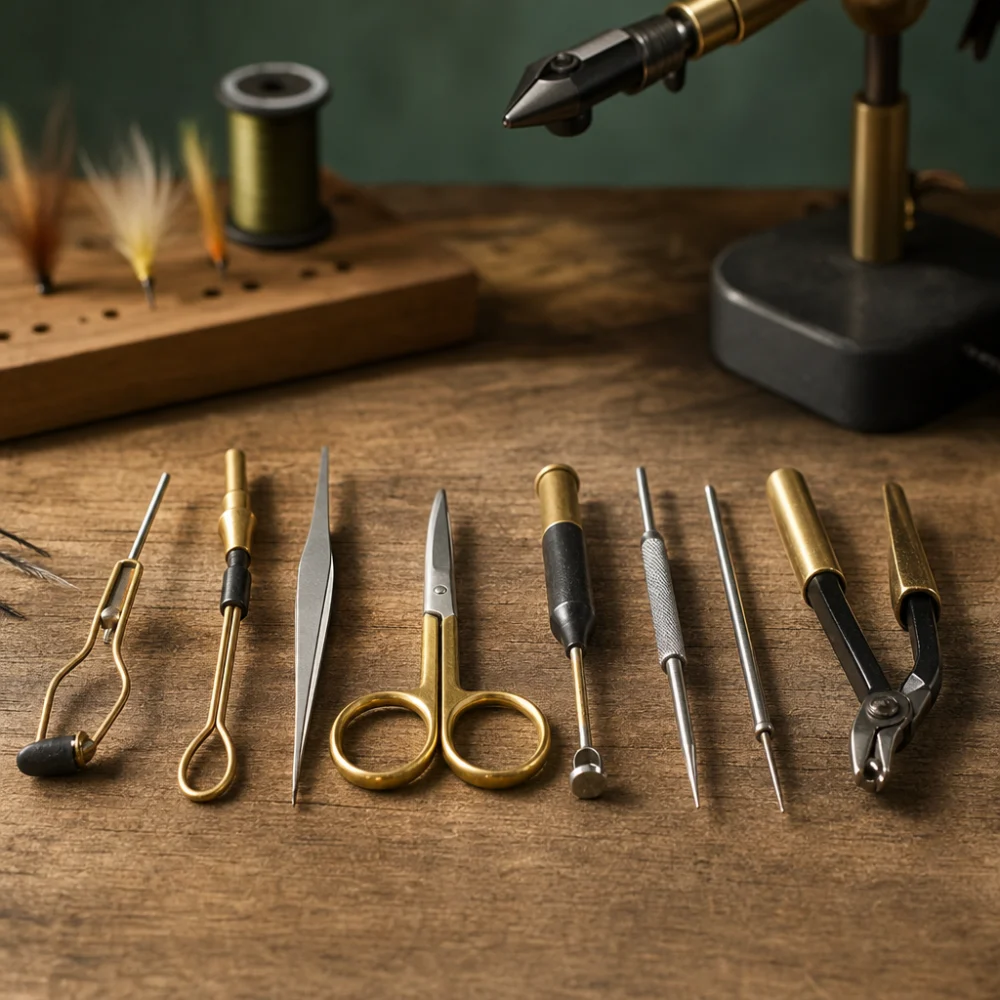
Fly tying tools in this category are best understood by function rather than by one universal spec. Even when two tools perform the same general job, they may feel very different in use.
- Basic utility tools: Good for general tying tasks and often the simplest place to start.
- More specialized tools: Useful when you want more control for particular steps or finer work.
- Tool sets: Helpful for building a bench quickly, though the mix of included pieces matters.
The main limitation is that a tool that works well for one tying style may not feel ideal for another. It is usually better to buy for the flies you actually make than to assume every bench tool should do everything.
Which tools fit different buyers?
| Buyer need | What to prioritize | Why |
|---|---|---|
| First-time tier | Simple, easy-to-understand basics | Clear function and manageable learning curve matter most |
| Frequent hobby tier | Comfort, consistency, and a broader useful tool mix | Longer sessions make handling and efficiency more important |
| Gift buyer | Widely useful tools or a balanced set | It is harder to know the recipient’s exact tying preferences |
| Experienced tier replacing gear | Specific upgrades based on what feels lacking | Replacing a worn or awkward tool is often more practical than starting over |
Common mistakes to avoid
- Buying a large set without checking the contents: A bigger set is not automatically better if several pieces will go unused.
- Choosing only by appearance: A tool that looks refined may still feel poor in hand or be less useful for your tying style.
- Ignoring comfort: For repetitive bench work, comfort can matter as much as the tool’s basic function.
- Assuming one tool covers every task: Different tying steps often benefit from different tools.
Safety and suitability caveats
These are bench tools, so the main buying concern is suitability rather than complex safety risk. Still, it is wise to check whether the tool matches your intended use, whether any set includes items you actually need, and whether the size and handling feel appropriate for your workspace. If a product page includes care or use notes, review them before buying.
Maintenance, storage, and lifespan
Most fly tying tools benefit from simple care and sensible storage. Keeping tools clean and dry, storing sharp or fine-point items safely, and separating frequently used pieces from the rest can help them stay usable longer. If a tool has moving parts or a finish that may wear with use, that is worth checking on the product page.
How to compare options efficiently
- Start with the flies you expect to tie most often.
- Decide whether you need only a few basics or a broader bench setup.
- Compare handling, comfort, and the specific function of each tool.
- Check whether a set includes items you will actually use.
- Review the individual product page for model-specific details before buying.
Summary buyer decision checklist
- Do the tools match the patterns and tying tasks you do most often?
- Is the setup comfortable enough for longer tying sessions?
- Would a set help, or would individual tools be a better fit?
- Are the tools simple enough for your current skill level?
- Have you checked the individual product page for model-specific details?
Frequently asked questions
Do I need a full set of fly tying tools to get started?
Not always. Many beginners are better served by a small, practical selection that covers the basics first. A full set can be convenient, but only if the included tools are genuinely useful for the flies you plan to tie.
Is it better to buy tools as a set or individually?
It depends on whether you want convenience or selectivity. Sets can simplify the first purchase, while individual tools let you focus on comfort and function one piece at a time.
What matters most for comfort?
Handle feel, balance, and how the tool sits in your hand over time are usually the biggest factors. Comfort becomes more noticeable during longer tying sessions, when a poor fit can slow you down.
How do I know if a tool is too specialized for me?
If you are not yet sure how often you will use a certain function, a simpler tool is often the safer choice. Specialized tools make more sense once you know the task they will support.
Should beginners avoid more advanced tools?
Not necessarily, but beginners usually benefit from clear, easy-to-use tools first. More advanced tools can wait until you know what aspect of tying you want to improve.
What should I check before buying a gift?
Choose tools that are broadly useful rather than highly niche. If possible, think about whether the person is just starting out or already has a bench full of essentials.