
Rod holders are a simple accessory, but the right choice depends on where you fish and how you like to keep your rod positioned. Some anglers want a hands-free hold while waiting, while others need a secure place to stage multiple rods or keep gear organized between casts.
This guide focuses on the buying decisions that matter most: mounting style, adjustability, stability, and how the holder fits your fishing setup. It also helps you avoid common mistakes like choosing a style that works in theory but does not match the space, surface, or rod use you actually have.
What should you look for in a rod holder?
The best starting point is to match the holder to your fishing environment and how you want to use the rod. A stable mount and a practical angle range matter more than flashy extras for most buyers. If you are shopping across different styles, focus first on where it attaches, then on how securely it holds the rod and how easy it is to adjust during use.
| Feature | What It Means | Why It Matters | What To Check |
|---|---|---|---|
| Mounting style | How the holder attaches to a boat, rail, dock, chair, kayak, or bank setup | It determines whether the holder will fit your fishing space at all | Attachment method, usable surface, and whether your setup has enough room |
| Adjustability | How much the angle or position can be changed | Different fishing situations may call for different rod positions | Range of movement, locking method, and whether adjustment is easy to reach |
| Retention | How the rod is held in place | It affects how secure the rod feels when you are waiting or moving lightly | How the rod seats in the holder and whether the fit seems appropriate for your rod style |
| Stability | How well the holder stays steady under use | A wobbly holder can be inconvenient and may not suit heavier setups | Mount rigidity, support design, and the type of surface it relies on |
| Portability | How easy the holder is to move, pack, or reposition | Useful for anglers who fish in different places or store gear between outings | Weight, size, and whether the mounting system is quick to remove or relocate |
| Material and finish | The general construction and surface treatment | Outdoor gear is exposed to sun, water, and dirt | Look for construction that suits your environment and maintenance expectations |
Key decision criteria
Where you plan to use it
Location is the biggest filter. A rod holder for a boat may need a very different mounting approach than one used from shore, a dock, or a kayak. Some holders are meant to stay in one place, while others are better when you need to move gear often. Check whether the holder is intended for the surface you have, not just the rod you want to place in it.
How securely it needs to hold the rod
Some buyers mainly want a convenient resting place, while others want more confidence that the rod stays put while they wait. The tighter and more supportive the hold, the more important it becomes to match the holder to the rod and the fishing style. Specifications vary by model, so always check the individual product page before buying.
Adjustability versus simplicity
More adjustment can be helpful when you want to change rod angle or direction, but extra moving parts can also add complexity. A simple holder may be easier to use and set up, while an adjustable one may be better if conditions change often. Think about whether you value quick setup or more positioning flexibility.
Space and clearance
Rod holders can look compact in photos but still take up useful room on a rail, seat area, or deck edge. If your fishing area is already crowded, compact placement matters as much as the holder itself. Measure the available mounting area and consider how the rod will sit when angled, especially if you plan to use more than one holder.
Types and variants within this category
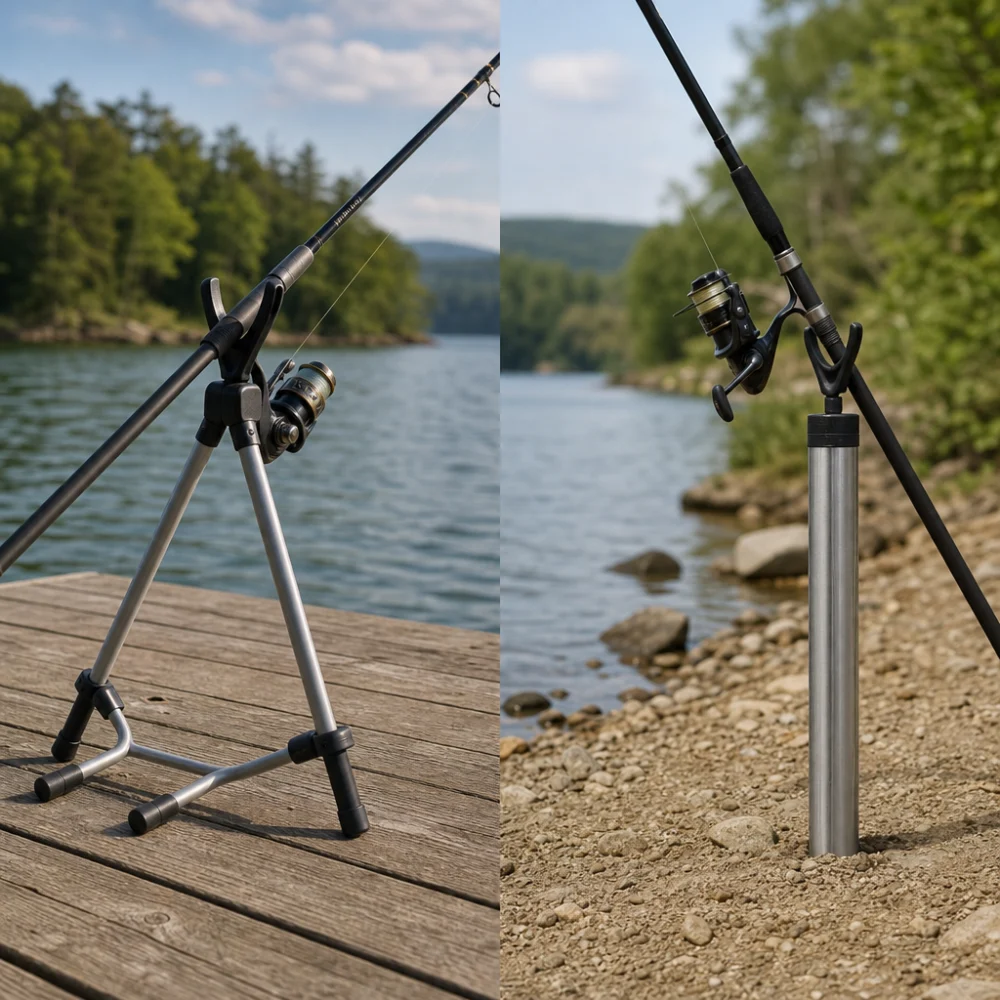
Rod holders are usually chosen by mounting approach and intended use rather than by one universal standard. Common buying differences include holders that mount to a fixed surface, holders that clamp or attach temporarily, and holders meant for portable use. The right type depends on whether you want a semi-permanent setup or something you can move and store more easily.
A more permanent-style holder may suit a dedicated boat or dock setup, while a portable option can be better for anglers who switch locations often. The trade-off is usually convenience versus rigidity: easier movement can mean less permanent stability, while a more fixed setup can be less flexible when you travel or change fishing spots.
Which setup suits which kind of buyer?
| Buyer need | What to prioritize | Why it helps |
|---|---|---|
| Boat or dock angling | Secure mounting and a stable hold | These setups often benefit from a holder that stays firmly in place |
| Portable or travel-friendly use | Easy attachment and simple removal | It is easier to carry and reuse the holder across different spots |
| Limited space | Compact footprint and sensible rod angle | It helps avoid crowding the fishing area |
| Hands-free waiting | Reliable rod retention and a comfortable viewing angle | It makes it easier to pause between casts or bites |
| Multiple rods or organized staging | Placement flexibility and enough clearance | It helps keep gear separated and manageable |
Common mistakes to avoid
- Choosing a holder for the rod before checking the mounting surface. The mounting point usually matters first.
- Overlooking clearance around the rod. An angled rod can interfere with nearby gear, seating, or movement.
- Assuming every holder suits every rod style. Check the holder shape and product details for fit notes.
- Prioritizing extra adjustment when a simpler setup would be easier to use. More movement is not always more useful.
- Ignoring portability when you plan to move the holder often. A very secure option can be inconvenient if it is not meant to travel well.
Safety and suitability caveats
Rod holders should be chosen for the type of fishing you actually do and the space where they will be used. A holder that seems secure in one setup may be awkward or unsuitable in another if the attachment point, angle, or rod position does not match your layout. It is also wise to confirm whether the holder is intended for the environment you fish in, especially when exposure to water and weather is routine.
Maintenance and storage considerations
For most buyers, the practical questions are cleaning, drying, and storing the holder so it stays ready for the next trip. Outdoor accessories often benefit from a quick rinse or wipe-down after use, especially if they have been exposed to dirt, salt, or standing water. If the holder has moving parts or a clamp-style attachment, make sure the design still feels easy to open, close, and store between outings.
How to compare options efficiently
- Start with your fishing setup: boat, dock, bank, kayak, or portable use.
- Pick the mounting style that fits that setup before comparing anything else.
- Compare stability, rod retention, and adjustment range for your fishing style.
- Check clearance and spacing so the rod position will work in real use.
- Review the individual product page for fit notes and any model-specific details.
Summary buyer decision checklist
- Does the mounting style match where you will use it?
- Will the holder fit the space you have available?
- Is the rod position comfortable and practical for your fishing style?
- Does the holder seem stable enough for the way you plan to use it?
- Is the design simple enough to set up, move, and store as needed?
- Have you checked the individual product page for model-specific details?
Frequently asked questions
What is the main purpose of a rod holder?
A rod holder gives you a place to secure or rest your rod while you wait, organize gear, or keep hands free for other tasks. It can improve convenience and help keep the rod positioned consistently. The exact benefit depends on the mounting style and how you fish.
How do I know which mounting style to choose?
Start with the surface or structure you will attach it to. A holder that works well on a boat rail may not be suitable for a dock edge, kayak area, or bank setup. Matching the mount to the location is usually the most important step.
Are adjustable rod holders worth it?
They can be useful if you like changing rod angle or fishing in different conditions. The trade-off is that added adjustment may also add complexity. If you prefer a simple, set-and-use setup, a less adjustable design may be easier to live with.
Can one rod holder fit every rod?
Not always. Fit can vary based on the holder shape and the rod style you use. It is better to check the product information for fit guidance than to assume universal compatibility.
What should I compare if I plan to move the holder often?
Look at attachment style, ease of removal, and overall size. Portability matters when the holder will be carried between locations or stored after each outing. A very robust setup may be less convenient if mobility is your priority.
Do I need a very heavy-duty holder for casual fishing?
Not necessarily. If your fishing is casual and you want a simple place to rest the rod, a straightforward holder may be enough. The key is choosing a design that matches the use case rather than assuming more complexity is always better.