
Throwable flotation devices are a simple but important part of boating safety gear. They are meant to be thrown to a person in the water so they have something buoyant to hold onto until help arrives or they can be brought alongside.
Because boats, crews, and operating conditions vary, the right choice is less about a single “best” option and more about fit for your vessel, storage space, handling preferences, and any other safety gear you already carry.
This guide helps you compare the main buying considerations without turning the decision into jargon. It is especially useful if you are replacing old gear, setting up a new boat, or trying to understand how throwable flotation devices fit alongside life jackets and other boating safety items.
What should you look for in a throwable flotation device?
Start with the device’s intended use, how quickly it can be reached, and how easily it can be thrown accurately in an urgent moment. The main trade-off is usually between compact storage and quick handling, since a device that is easy to store is not always the easiest to deploy. Specifications vary by model, so always check the individual product page before buying.
| Feature | What It Means | Why It Matters | What To Check |
|---|---|---|---|
| Visibility | How easy the device is to spot on the water | Faster visual location can help when seconds matter | Color, shape, and whether it is easy to identify quickly |
| Handle or grip design | How the device can be held, thrown, or grasped by a person in the water | A usable grip can make the device easier to deploy and use | Whether the design looks easy to hold with wet hands |
| Storage form | How the device is stowed on board | Accessibility is important if a response needs to be fast | Whether it fits your usual storage location and stays easy to reach |
| Buoyancy type | The general flotation style and how it supports a person in the water | Different designs suit different handling preferences and boat setups | The overall style and the product description on the listing |
| Durability of outer materials | How well the covering or construction stands up to marine use | Exposure to sun, spray, and storage conditions can affect lifespan | Material description and any care guidance from the product page |
Key decision criteria explained
Accessibility
A throwable flotation device is only useful if people can reach it quickly. Look at where you plan to store it and whether the design is easy to grab without unpacking or unfastening several layers of gear. If the device is meant for a small cockpit, a crowded helm, or a storage locker that opens awkwardly, convenience matters as much as buoyancy.
Ease of throwing and handling
Some buyers prioritize a shape that is easy to toss accurately, while others want a form that is simple to hold or pass to someone else. Think about who on board may need to use it and whether the design seems manageable with cold, wet, or gloved hands. A simpler shape can be easier to deploy under stress.
Visibility in the water
Clear visibility can help with locating and tracking the device after it is thrown. That matters on busy waterways, in choppy conditions, or whenever the water surface makes small objects hard to see. Compare the product photos and description for cues about how visible the device is likely to be in use.
Fit with your boat setup
Different boats create different storage and retrieval challenges. A compact runabout may need a device that stores neatly and stays out of the way, while a larger vessel may have space for a more accessible setup. The best choice is the one that fits your actual boat layout, not just the one that looks convenient in isolation.
Common types and variants
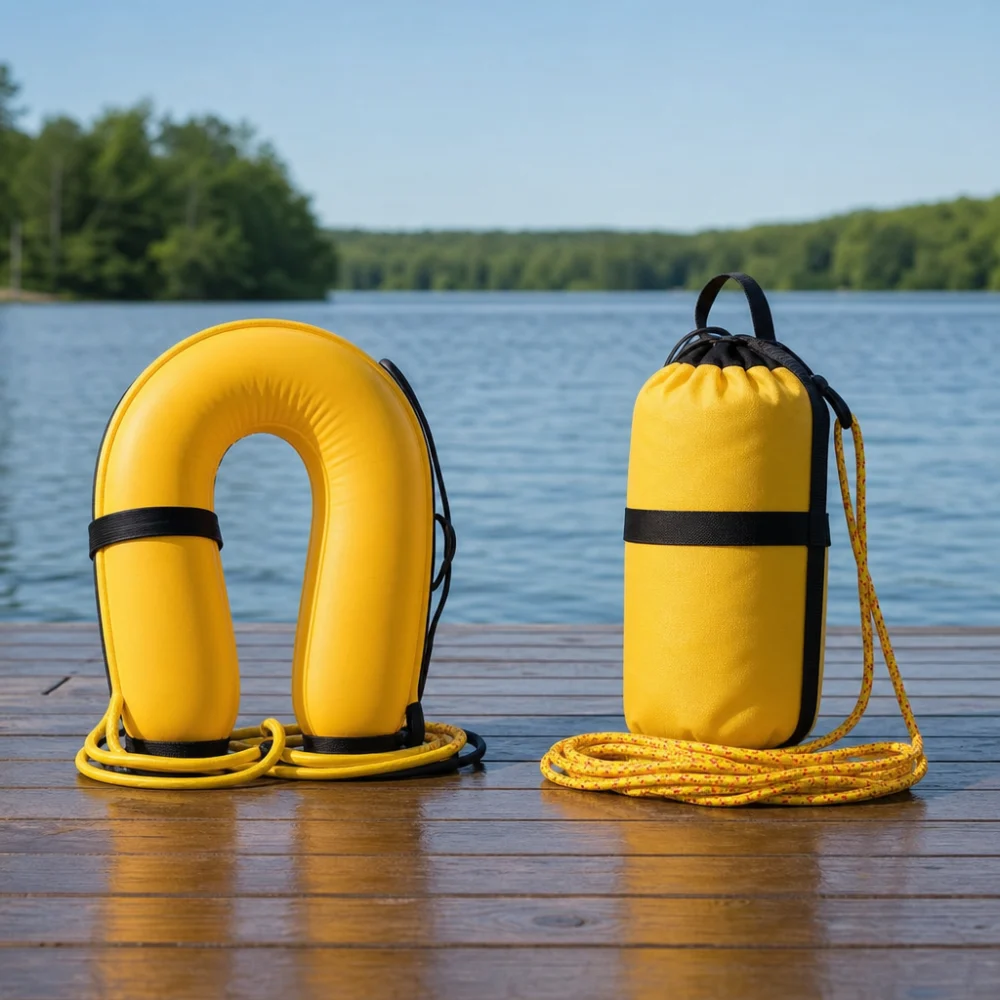
Throwable flotation devices are usually compared by form and handling rather than by highly specialized feature sets. Some are designed to be very compact for storage, while others emphasize easier gripping or faster deployment. The main question is which shape and handling style feels practical for your boat and crew.
If you are comparing more than one style, focus on how it would be used in a real moment: can it be reached quickly, tossed confidently, and recognized easily once it is in the water? That practical view is often more useful than trying to judge the item by appearance alone.
Which buyer needs point to which features?
| Buyer need | What to prioritize | Why it helps |
|---|---|---|
| Small boat or limited storage | Compact storage and easy reach | Keeps the device accessible without crowding the deck |
| Family or casual cruising | Simple handling and clear visibility | Makes the device easier for different people to use |
| Frequent passengers on board | Easy throw and obvious grab points | Supports quick response by non-experts |
| Replacement for older gear | Condition, storage method, and ease of inspection | Helps confirm the new option fits your current setup |
Common mistakes and misunderstandings
- Choosing by appearance alone. A device can look sturdy or compact without being the easiest one to reach or use on your boat.
- Ignoring storage location. If it is hard to access, it may not help when a quick response matters.
- Forgetting who may use it. A setup that seems obvious to an experienced boater may not be as easy for guests or family members.
- Assuming all throwable flotation devices feel the same. Shape, grip, and handling can change how quickly you can deploy one.
Safety and suitability caveats
Throwable flotation devices are only one part of a boating safety plan, and they should be matched to the size and layout of your vessel as well as the people on board. Check the product page for any model-specific details about intended use, storage, and care. Do not assume a device is suitable for every boating situation just because it is broadly described as flotation gear.
Maintenance, storage, and lifespan considerations
For this category, the biggest ownership questions are usually where the device will be stored and how easy it is to inspect over time. Marine exposure, sun, damp storage, and rough handling can all affect condition, so a design that is easy to check and keep accessible can be more practical long term. If the product includes care guidance, follow the listing’s instructions and replace anything that no longer looks ready for use.
How to compare options efficiently
- Confirm who will need to use the device and where it will be stored.
- Compare the shape, handling, and visibility of each option.
- Check whether the device looks easy to reach and easy to throw from your boat.
- Review product-page details for any model-specific care or use notes.
- Choose the option that balances quick access, practical handling, and fit with your setup.
Summary buyer decision checklist
- Is the device easy to reach from the places where it will be used?
- Does the shape look simple to throw or pass to someone else?
- Will it fit your boat’s storage space without creating clutter?
- Is the device easy to see and easy to identify at a glance?
- Does the product page give enough detail for your intended use?
- Does the design seem practical for the people most likely to handle it?
Frequently asked questions
How is a throwable flotation device different from a wearable life jacket?
A throwable flotation device is meant to be thrown to someone in the water, while a wearable life jacket is worn on the body. They serve related but different roles, and many boaters consider them complementary rather than interchangeable. For many boats, the practical question is not which one replaces the other, but how each fits the overall safety setup.
What matters most when choosing one?
Accessibility usually matters most, followed by how easy the device is to handle in a real emergency. If it is awkward to reach or difficult to throw, it may be less useful than a simpler option that stays ready on board. Look for a design that fits your storage space and can be used quickly.
Do I need a compact design or a larger one?
That depends on your boat and how the device will be stored. Compact designs may be easier to stow, while larger or more open shapes may be easier to grasp or throw. The right balance is the one that stays accessible without getting in the way.
Are all throwable flotation devices used the same way?
No, the basic purpose is the same, but the handling and storage of individual products can differ. Some are easier to grab quickly, while others are designed to tuck away more neatly. Always compare the product page details rather than assuming every option will feel identical.
How often should I inspect one?
It is wise to check it regularly as part of routine boat gear review, especially if it is stored in a place exposed to sun, dampness, or frequent handling. Look for visible wear, damage, or anything that makes it harder to reach or use. If the item no longer seems ready for quick deployment, consider replacing it.
Can one throwable flotation device suit every boat?
Not always. The best choice depends on storage space, boat layout, and who may need to use it. A device that works well on a larger boat may be less convenient on a smaller one, so fit matters as much as the general category.