
Beach tents are a practical way to add shade, a place to store gear, and a little relief from wind or glare during a day at the shore. The right choice depends less on a single feature and more on how you plan to use it: a quick solo setup, a family shelter, or a compact option that fits easily in the car.
Because designs vary, shoppers often have to balance coverage, stability, and portability. A larger tent may feel more comfortable once it is up, but it can also take more effort to carry and pitch.
If you are comparing beach tents for the first time, focus on the features that affect real use on sand: shade area, airflow, ease of setup, anchoring, and packed size. Specifications vary by model, so always check the individual product page before buying.
What should you look for in a beach tent?
The best starting point is the kind of day you want to have. If you need fast shade for two people, a simpler design may be enough. If you are buying for kids, gear, or a longer stay, you may want more room, better ventilation, and stronger anchoring. The main trade-off is usually between convenience and comfort: easier-carrying tents often give up space or weather tolerance.
| Feature | What It Means | Why It Matters | What To Check |
|---|---|---|---|
| Shade coverage | How much area the tent protects from direct sun | Determines how many people or items can stay comfortably shaded | Interior space, doorway shape, and how the shaded area is used |
| Ventilation | Openings that let air move through the shelter | Helps reduce heat buildup and stuffiness | Mesh panels, windows, or open-sided design details |
| Setup style | How the tent is pitched and secured | Affects convenience, especially on a windy beach or with kids nearby | Number of steps, pole style, and whether extra anchoring is needed |
| Stability | How well the tent resists shifting in sand or wind | Important for comfort and safe placement on open beaches | Stake or sand-anchor approach and the overall shape |
| Packed size and carry weight | How much space the tent takes when folded | Influences whether it is easy to bring along with chairs, coolers, and toys | Storage bag size, transport method, and how often you will carry it |
| Privacy and enclosure | How closed-in the shelter feels | Useful for changing, naps, or keeping sand out of resting areas | Door coverage, side panels, and whether the design is open or more enclosed |
Key decision criteria explained
Size and usable room
Beach tent size is not just about the number of people listed in a title. The useful question is how much space remains once everyone sits down, bags are inside, and a bit of airflow is still possible. A tight fit can work for short breaks, but it may feel cramped on a long beach day.
Ventilation and heat management
Even in shade, a tent can trap warm air if it is too closed in. Buyers who expect hot afternoons should pay attention to vents, mesh, or open panels that encourage airflow. More ventilation usually improves comfort, but it can also reduce privacy or make the shelter feel less enclosed.
Anchoring and wind handling
On sand, holding power matters as much as the canopy shape. Look for the anchoring method described on the product page and consider whether it suits the beach conditions you usually face. A tent that is easy to move around may be less secure in breezy conditions, while a more grounded design may take longer to set up.
Portability and packing
If you carry chairs, food, toys, and towels, compact storage can matter more than extra room. Think about whether the tent will live in the trunk, be carried from a parking lot, or travel on foot. A lighter package can be easier to manage, but it may also come with a simpler frame or fewer comfort features.
Privacy and openness
Some beach tents feel more like airy shade shelters, while others offer a more enclosed space. The right balance depends on whether you want a place to rest, change clothes, or keep belongings out of sight. More enclosure can be useful, but it may also reduce airflow and make the tent warmer.
Common beach tent types and variants
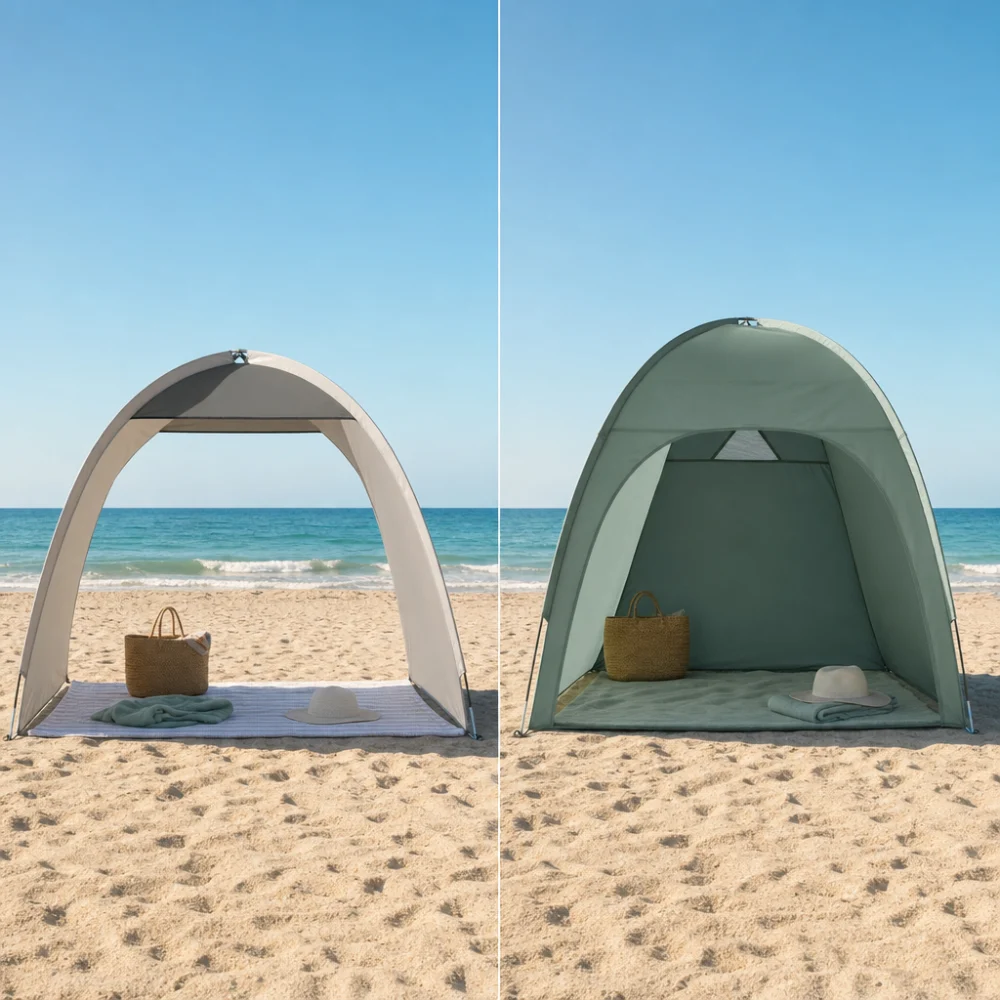
Within this category, the most important differences are usually design style and how much enclosure the shelter provides. Some beach tents prioritize quick shade and open airflow, while others emphasize a more protected, room-like feel.
- Open shade shelters: Good for people who want airflow and a lighter feel. Their limitation is reduced privacy and less protection from blowing sand.
- More enclosed beach tents: Better for changing, naps, or keeping belongings together. Their limitation is that they can feel warmer if ventilation is limited.
- Compact travel-friendly designs: Useful when carrying gear matters most. Their limitation is usually less interior space.
- Roomier family-oriented designs: Better for groups or longer stays. Their limitation is that they can be bulkier and take more effort to manage on the beach.
Which beach tent suits which buyer?
| Buyer need | Helpful features | Possible trade-off |
|---|---|---|
| Quick day trips | Simple setup, compact packing, easy carry | Less room or fewer comfort features |
| Families with children | More shade area, better airflow, stable anchoring | More parts to manage and larger packed size |
| Changing or privacy needs | More enclosed sides and door coverage | Can feel warmer and less airy |
| Frequent beach visitors | Durable-feeling construction, straightforward setup, practical storage | May not be the smallest option available |
| Minimal car space | Compact folded size and lighter carry weight | Less interior room and potentially simpler design |
Common mistakes and misunderstandings
- Assuming capacity always equals comfort: A tent that fits a certain number of people may still feel tight once bags and gear are inside. Check usable floor space, not just the headline size.
- Ignoring airflow: Shade alone does not guarantee comfort. In hot conditions, ventilation can matter as much as the amount of coverage.
- Overlooking anchoring: On sand, a shelter needs a way to stay put. The anchoring method should match the beach conditions you expect.
- Choosing by packed size only: A small carry bag is convenient, but it may mean less headroom or fewer features. Decide what matters more on the beach itself.
- Forgetting the intended use: A tent chosen for a short solo outing may not be right for a full family day. Match the design to the way you actually spend time at the beach.
Safety and suitability considerations
Beach tents are mainly about comfort and shade, but suitability still matters. Check how the tent is meant to be secured, whether it is appropriate for the beach conditions you expect, and whether the layout suits the people using it. If you are buying for children, guests, or anyone with special comfort needs, give extra attention to ventilation, stability, and how easy the tent is to enter and exit.
Maintenance, storage, and lifespan considerations
Beach use can expose a tent to sand, salt air, and frequent packing and unpacking. Before buying, think about how easy it will be to shake out sand, wipe surfaces clean, dry the tent before storage, and keep track of any loose parts. A shelter that is easy to store neatly may be more pleasant to use repeatedly, even if it is not the lightest option.
How to compare beach tents efficiently
- Start with your main use case: quick shade, family comfort, privacy, or portability.
- Compare the usable space and ventilation before looking at extra features.
- Check how the tent is anchored and whether that seems practical for your usual beach conditions.
- Review packed size and carry method to make sure it fits your travel routine.
- Look at the individual product page for the details that matter most to your situation.
Beach tent buyer checklist
- Will the shaded space suit the number of people and gear you plan to bring?
- Does the ventilation seem appropriate for warm weather use?
- Is the setup style simple enough for your routine?
- Does the anchoring approach seem suitable for sand and breeze?
- Is the packed size realistic for your car, bag, or walk to the beach?
- Do you want a more open shelter or a more private enclosure?
- Have you checked the product page for any model-specific details that affect use?
Frequently asked questions
Are beach tents better than beach umbrellas?
They solve slightly different problems. A beach tent usually offers more enclosed shade and a more sheltered feel, while an umbrella is often simpler and more open. If you want room for people and gear, a tent may be the better fit; if you want a lighter, less involved setup, an umbrella may be enough.
Do beach tents need special anchoring?
They usually need some form of anchoring suitable for sand, because beach conditions can be breezy and unstable. The important question is whether the product page explains how the tent stays in place and whether that method matches your intended use.
How much ventilation should I look for?
Enough to keep the shelter from feeling stuffy in warm weather. More openings can improve comfort, but they may reduce privacy or make the tent feel less enclosed. Think about whether you value airflow or coverage more.
What size beach tent should a family choose?
Choose based on how much room you want after chairs, bags, and movement are considered, not just on a headline person count. Families often benefit from a little extra space so the shelter feels usable rather than crowded.
Are enclosed beach tents always warmer?
Not always, but more closed designs can trap heat if they do not vent well. If you want privacy, look for ways the design balances enclosure with airflow.
What is the biggest trade-off in a beach tent purchase?
Usually it is space versus portability. Bigger shelters can be more comfortable, but they may take up more room in transit and take more effort to set up and secure.