
Beach carts can make it much easier to move coolers, chairs, umbrellas, toys, and other gear from the car to the shoreline. The right choice depends less on a single feature and more on how you plan to use it, how much you need to carry, and how far you typically roll it over sand or boardwalks.
If you are comparing options for family beach days, fishing trips, picnics, or repeated weekends at the shore, it helps to think about stability, wheel design, and how easily the cart folds or stores between uses. A cart that looks convenient in a listing may still be awkward if it is hard to lift, narrow to load, or bulky when packed away.
What should you look for in a beach cart?
The best starting point is the balance between load, terrain, and portability. A cart that handles your gear comfortably should also be manageable when you lift it into a vehicle or store it at home. Wheel design, frame style, and handle comfort often matter more than decorative details. Specifications vary by model, so always check the individual product page before buying.
| Feature | What It Means | Why It Matters | What To Check |
|---|---|---|---|
| Wheel style | The shape and surface contact of the wheels | Affects how easily the cart rolls on sand and uneven ground | Look for details about wheel size, width, and intended terrain |
| Load capacity | How much gear the cart is designed to carry | Helps you avoid overloading and instability | Compare the stated capacity with the weight of your typical beach load |
| Cart size | The overall footprint and basket or platform space | Determines what fits and how easy the cart is to maneuver | Check dimensions against coolers, chairs, and other bulky items |
| Foldability | Whether it collapses or nests for storage | Important for car trunks, closets, and compact homes | Review folded size and how the cart locks in the closed position |
| Handle design | How you pull, steer, or control the cart | Can affect comfort, leverage, and handling over soft ground | Look for handle length, grip style, and whether it feels adjustable |
Key decision criteria explained
Wheel performance on sand
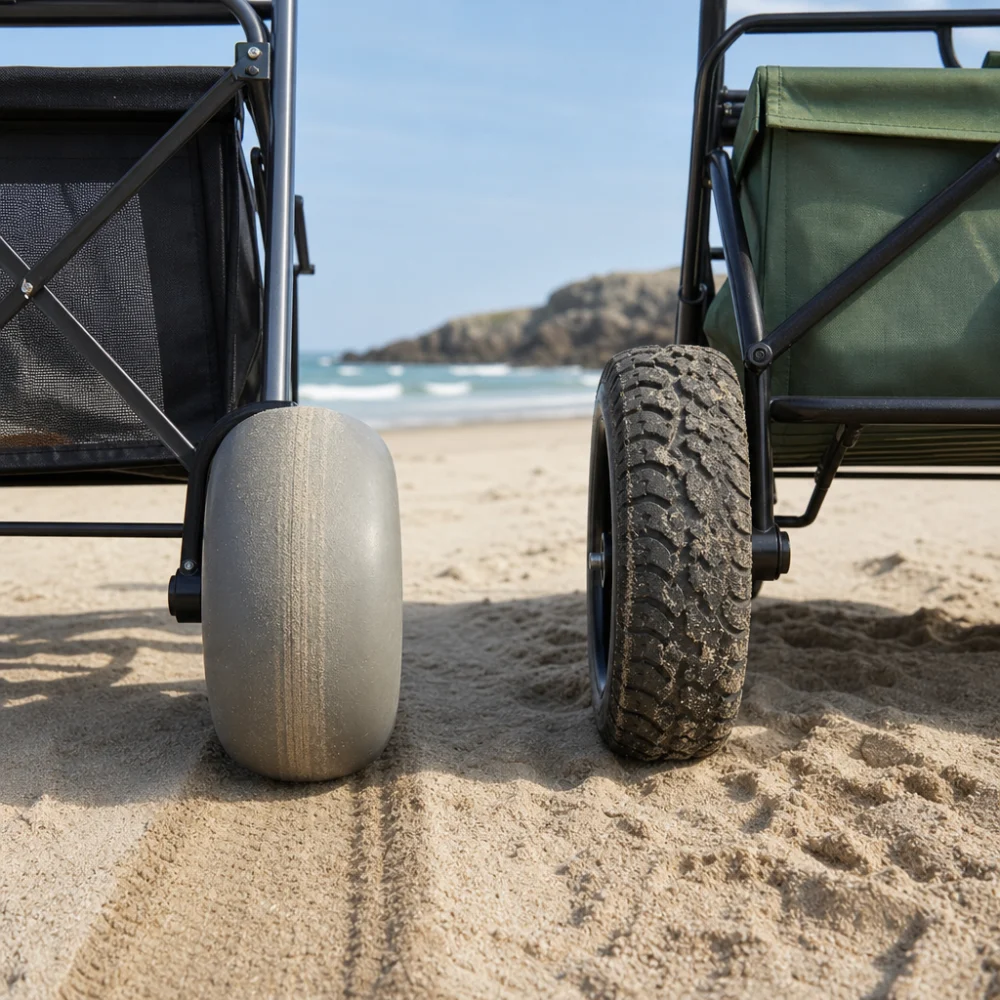
Beach carts are often chosen for their ability to move over soft or uneven surfaces, so wheel design deserves close attention. Wider wheels may help spread the load, while different tread or surface designs can influence how much effort it takes to pull the cart. If you expect mostly packed sand or boardwalk paths, your needs may differ from someone crossing soft dunes or loose shoreline sand.
Capacity and stability
It is easy to focus on how much a cart can hold, but stability matters just as much. A cart that is overloaded or unevenly packed can be harder to steer and may tip more easily on sloped ground. When comparing options, think about the mix of items you usually carry, not just a single maximum number.
Portability and storage
Many buyers want a cart that is useful at the beach but not cumbersome the rest of the time. Folding design, overall weight, and packed size become especially important if the cart must fit in a small trunk or closet. A simpler frame may be easier to lift and store, while a larger cart may offer more hauling space.
Ease of loading
The shape of the cart affects how quickly you can place gear into it and secure it for the walk. Open platforms, baskets, and side walls each create a different loading experience. Think about whether you want loose items to be easy to toss in or whether you need more support around awkward items such as chairs or umbrellas.
Product types and variants
Within the beach cart category, shoppers usually compare by structure and intended use rather than by dramatic feature differences. Some carts emphasize a more open hauling surface, while others prioritize a basket-like layout or a compact folding form. The right variant depends on whether you want easier loading, a smaller stored footprint, or a more controlled way to keep gear together.
A more open style may suit larger or awkward items, while a more enclosed style can help keep smaller items organized during transport. The trade-off is that added structure can sometimes mean more weight, more bulk, or less flexibility when loading oversized gear.
Which beach cart suits different needs?
| Buyer need | What tends to matter most | Why it matters |
|---|---|---|
| Family beach trips | Capacity, stability, and easy loading | You may be carrying several items at once and need a cart that stays manageable when fully packed |
| Light, occasional use | Compact storage and simple handling | A cart that is easy to fold and store may be more convenient than a larger hauling setup |
| Longer walks from parking areas | Wheel behavior and pulling comfort | Rolling effort becomes more important when you travel farther over sand or uneven paths |
| Mixed gear sizes | Open space and flexible layout | Bulky beach items often fit better when the cart is not overly compartmentalized |
| Shared household use | Adjustable handling and easy cleanup | A cart that is simple to use and rinse off may be more practical for repeated outings |
Common mistakes to avoid
- Choosing only by capacity number and ignoring wheel design, which can matter more in soft sand.
- Forgetting to check the folded size, which can make storage or transport inconvenient.
- Assuming every cart is equally easy to load, even though the shape and side structure can change how gear fits.
- Buying a cart that is too large for routine use, when a simpler design would be easier to handle.
- Overlooking the total weight of the cart itself, which affects lifting and carrying before you ever load it.
Safety and suitability caveats
Beach carts are general-purpose hauling tools, so suitability depends on the ground conditions, the load, and the person using them. If you expect soft sand, slopes, or crowded paths, it is wise to compare stability and handling carefully rather than assuming every cart will feel easy to pull. Do not rely on a product page alone for compatibility with every beach setup or every type of gear.
Maintenance, storage, and lifespan considerations
Beach use can expose a cart to sand, moisture, and repeated folding, so easy cleaning and simple storage matter. It is helpful to think about how quickly sand can be rinsed or brushed off, whether the cart dries easily, and whether moving parts seem straightforward to keep clean. A cart that stores neatly and does not feel awkward to fold is often more pleasant to own over time.
How to compare beach carts efficiently
- Start with your typical beach load and decide how much gear you actually need to move.
- Choose the broad style that fits your space, such as more open hauling or a more structured cart.
- Compare wheel behavior, folded size, and handle comfort before looking at secondary details.
- Check the product page for dimensions, capacity, and any use notes that affect your setup.
- Favor the cart that best balances hauling ease, storage convenience, and stability for your outings.
Beach cart buying checklist
- Does the cart fit the amount and shape of gear you usually carry?
- Will the wheel style suit the ground you expect to cross most often?
- Is the folded size practical for your vehicle and storage space?
- Does the handle feel comfortable for pulling and steering?
- Is the cart easy to load, rinse, and put away after use?
- Does the design seem stable enough for your normal beach setup?
Frequently asked questions
Are beach carts and beach wagons the same thing?
They are related, but shoppers often use the terms to mean slightly different hauling styles. A beach cart may emphasize a simpler frame or more direct pulling setup, while a wagon usually suggests a different body shape or storage style. Because naming can vary by listing, check the product photos and dimensions rather than relying on the label alone.
What matters more on sand: wheel size or carrying capacity?
For many buyers, wheel behavior matters first because a cart that is hard to pull can become frustrating quickly. Capacity still matters, but a high number is less useful if the cart does not move comfortably over your usual terrain. The right balance depends on whether your load is heavy, your route is long, or the sand is especially soft.
Should I choose a folding beach cart?
A folding design is often helpful if storage space is limited or if you need to fit the cart into a car with other gear. The trade-off is that folding mechanisms can add complexity, so it is worth checking how the cart opens, closes, and locks. If you use it often, convenience in storage may be worth that extra complexity.
How do I know what size cart I need?
Start with the bulkiest items you plan to carry, not just their weight. Coolers, chairs, and umbrellas can take up more room than people expect, especially if you want everything to stay balanced. If your load changes from trip to trip, a little extra space can be helpful, but too much cart can become harder to maneuver.
Can one beach cart handle both sand and pavement?
Some can, but performance may feel better on one surface than another. A cart that rolls well on sand might also be fine on pavement, yet steering, vibration, and turning behavior can still differ. If your route includes sidewalks, parking lots, or boardwalks, check how the cart is described for those mixed conditions.
What should I check before buying a cart for family use?
Look at how much gear it can hold, how stable it seems when loaded, and whether it is manageable for the person who will pull it most often. Family use can involve chairs, snacks, toys, and other irregular items, so loading flexibility matters. It also helps to consider how quickly the cart can be folded and stored after the day is over.