
Beach games are a broad category, so the right choice depends on who will be playing, how much space you have, and whether you want something casual or more active. Some options are best for quick, low-effort fun on the sand, while others are better when you want a more structured game for a group.
This guide helps you narrow the field without getting lost in product details that do not matter for your situation. It focuses on the practical questions buyers usually ask: how portable it is, how easy it is to set up, how many people can use it, and how well it fits beach conditions.
Because beach settings are informal and variable, the smartest purchase is usually the one that matches your group and travel style rather than the most feature-heavy option.
What should you look for in beach games?
The best starting point is to match the game to the setting and the players. If you want something for kids, casual family play, or a small space near a blanket or umbrella, look for simple setup and easy carry. If you want a game for a larger group, compare how much room it needs and whether it works well on uneven sand.
For most buyers, the main trade-off is between convenience and structure. Simpler games tend to be easier to pack and use anywhere, while more organized games may be more engaging but need clearer boundaries or more setup.
| Feature | What It Means | Why It Matters | What to Check |
|---|---|---|---|
| Setup | How much assembly or arranging is needed before play | Quick setup is easier for casual beach days | Look for simple parts, clear instructions, and whether it needs anchors or defined space |
| Portability | How easy it is to carry with other beach gear | Light, compact items are less of a burden on the way to the sand | Check packed size, carry method, and whether pieces store together |
| Group size | How many people can comfortably take part | The wrong size can make a game feel too crowded or too limited | Match the game to solo play, pairs, family play, or larger groups |
| Space needed | How much open area the game uses | Beach crowds and soft sand can change how a game feels | Consider whether it needs a small play area or a wider open stretch |
| Age and skill fit | How accessible the game is for different players | Easy-to-learn games are better for mixed-age groups | Check whether the game depends on speed, accuracy, coordination, or teamwork |
| Durability in sand | How well the item handles gritty, outdoor use | Sand can be hard on moving parts and small pieces | Look for simple designs that are easy to clean and less likely to trap grit |
Key decision criteria
Who will use it most
Beach games can be chosen for children, teens, adults, or mixed groups, and the right type often changes with the audience. A family-friendly game usually needs to be easy to understand and forgiving if players are new. A more competitive game may be better for older players who want a challenge.
How much space you have
Some games work well in a small patch of sand near your towel setup, while others need a wider lane or clearer boundaries. If you expect a crowded beach, a smaller, less intrusive game is often easier to enjoy. Specifications vary by model, so always check the individual product page before buying.
How portable it needs to be
If the game must travel with chairs, coolers, and other gear, compact storage matters a lot. Pieces that nest together, fold down, or pack neatly are easier to manage than loose parts. Portability can be more important than having the most elaborate play style.
How much setup you want to handle
Some buyers want something they can start using almost immediately, while others do not mind a little setup if the game is more engaging. If your beach trips are short or spontaneous, simplicity usually wins. If you stay longer and play repeatedly, more setup may be acceptable.
Common beach game types
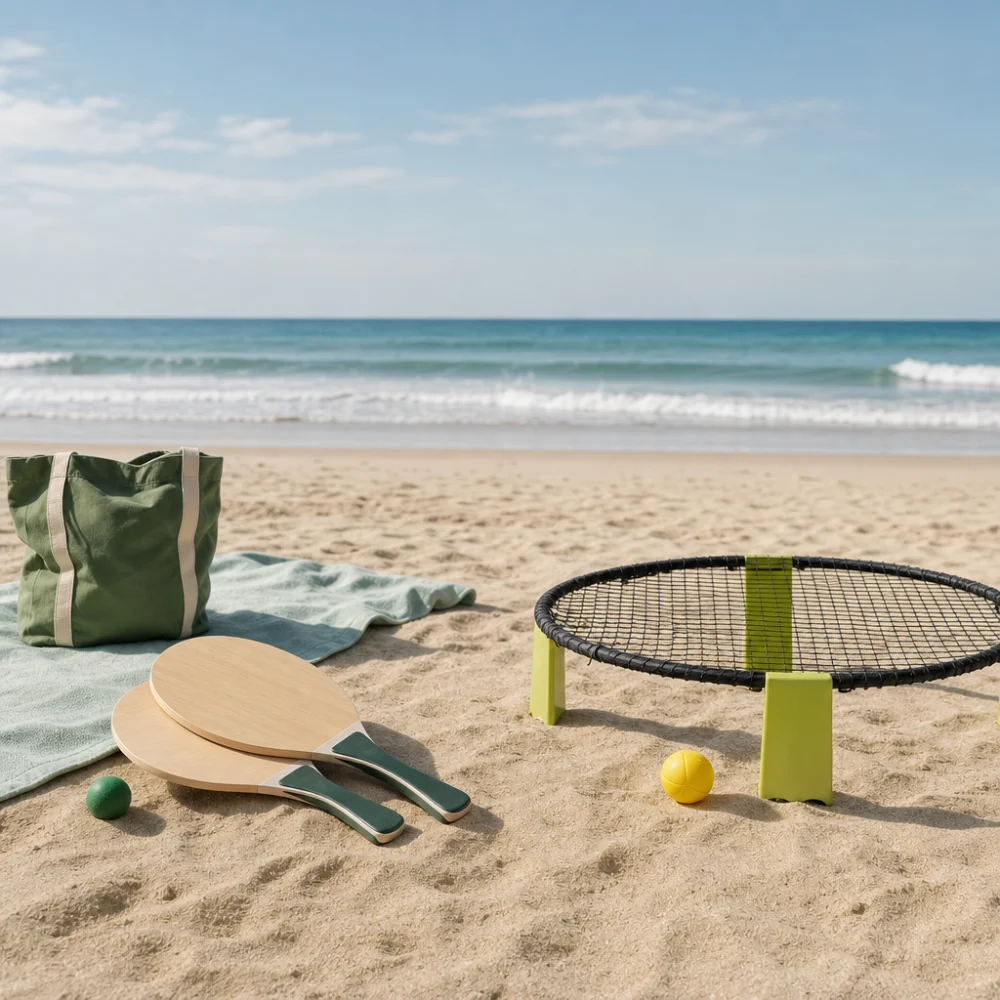
Within this category, the useful differences are often about play style rather than technical complexity. Some options are made for tossing, some for striking or volley-style play, and some for simple family games that work with minimal rules.
If you are comparing nearby categories, it can help to keep the boundary clear. For example, items that are mainly toys, paddle sets, or volleyball setups may overlap in how they are used, but they serve different play styles and group sizes.
Casual toss-and-catch games
These are usually the easiest for mixed ages and spontaneous play. They are a good fit when you want low setup and simple rules. Their limitation is that they may not stay interesting if your group wants a more active or competitive experience.
Net or court-style games
These suit buyers who want more structure and longer play sessions. They can be more engaging for groups, but they also ask for more space and a little more planning. If your beach visits are relaxed and unstructured, this may feel like more game than you need.
Simple family activity games
These are a practical middle ground when you want something easy to learn but still fun for a group. They are often the best choice for varied ages and skill levels. Their main limit is that they may be less challenging for experienced players.
Which beach game fits your needs?
| Buyer need | What usually matters most | Why that choice works |
|---|---|---|
| Family beach day | Easy rules, broad age fit, quick setup | Lets everyone join in without much explanation |
| Travel-light outing | Compact storage and simple parts | Reduces what you have to carry and keep track of |
| Active group play | Enough space, clear structure, repeat play value | Helps the game stay engaging over a longer session |
| Casual downtime near a towel or umbrella | Small footprint and low fuss | Works without turning the whole beach setup into a game area |
| Gift buying | Simple use, broad appeal, easy gifting format | Makes it easier to choose without knowing every preference |
Common mistakes and misunderstandings
- Choosing for the beach in general instead of your beach setup. A game that works well on an open stretch may feel awkward in a crowded area or near other families.
- Ignoring storage and carry size. A game can seem appealing until it has to fit with the rest of your beach gear.
- Overlooking age and skill differences. A more demanding game can leave younger or less competitive players out of the fun.
- Assuming all sand conditions feel the same. Soft, uneven, or windy conditions can change how easy a game is to use.
- Buying the most structured option when you want casual play. More setup and rules are not always better for a relaxed day out.
Safety and suitability caveats
Beach games are generally low-risk, but it still helps to think about who will use them and where. Choose a game that fits the players’ age, attention span, and coordination level, and make sure the playing area is suitable for the activity. If the game uses small parts, moving pieces, or repeated throwing or striking, check that it is appropriate for the setting you have in mind.
Beach conditions can also affect comfort and enjoyment. Wind, crowded surroundings, hot surfaces, and uneven sand may make some games less practical than they seem indoors or in a backyard.
Maintenance, storage, and lifespan considerations
Beach gear tends to last better when it is rinsed or cleaned after use and stored dry. Sand can work its way into joints, seams, and connectors, so simpler designs are often easier to care for than elaborate ones. If a game includes multiple pieces, keeping them together after each outing helps prevent missing parts.
Before buying, consider whether the item will live in a car, beach bag, garage, or closet between trips. That choice can affect how quickly it is ready for the next outing and how well it stays organized over time.
How to compare beach games efficiently
- Start with your main use case: casual family fun, active group play, or a lightweight option for travel.
- Choose the play style that fits the people and the space you usually have.
- Compare setup, storage, and how easy it is to carry with the rest of your gear.
- Check whether the game suits mixed ages or a more specific type of player.
- Review the individual product page for any details that affect fit, assembly, and use.
Summary buyer decision checklist
- Does the game match your usual group size?
- Will it fit the amount of open space you normally have?
- Is it easy enough to carry with the rest of your beach gear?
- Does the setup level match how relaxed or structured you want the game to be?
- Is it appropriate for the ages and abilities of the people who will use it?
- Will it be easy to clean and store after a day in the sand?
Frequently asked questions
What makes a beach game different from a regular backyard game?
Beach games usually need to work in sand, with informal space and easy transport in mind. That often means simpler setup, fewer loose parts, and a layout that makes sense on uneven ground. A backyard game may not feel as practical if it depends on a flatter, more controlled surface.
Are beach games good for mixed-age groups?
Many are, especially the ones with simple rules and low setup. The key is to choose something that does not depend too heavily on speed or precision if you want everyone to join in. Games with easier entry points are usually better for family use.
Should I choose something compact or something more structured?
That depends on how you use the beach. Compact options are easier for casual outings and travel, while structured games can offer more replay value if you have the space and time to use them. The right choice is usually the one that fits your routine, not the one with the most features.
How much beach space do I really need?
It depends on the game style and how many people are playing. A small casual game can work near your seating area, while more active or court-like play needs a broader, clearer area. Check the product page for any space-related details before buying.
What should I check if I am buying a gift?
Look for broad appeal, simple use, and a format that does not require much explanation. Gift-friendly beach games are usually the ones that work for a wide range of ages and do not need a very specific group to be enjoyable. Think about portability as well, especially if the recipient already carries a lot of beach gear.
How do I keep beach games in good condition?
Rinsing or cleaning off sand and storing the item dry after use can help it stay in better shape. Games with fewer moving parts and fewer small pieces are often easier to maintain. It also helps to keep everything together so nothing is lost between trips.