
Choosing a putter is mostly about fit and feel. The right option can help you set up comfortably, aim with confidence, and match the stroke style you already use.
Because putters vary more in shape, balance, and visual alignment than many other clubs, it helps to focus on a few practical questions before you compare product pages. That approach makes it easier to separate personal preference from features that actually affect how the club behaves.
This guide stays focused on buying decisions within the putter category, not on swing instruction or course strategy. The goal is to help you compare options in a clear, realistic way.
What should you look for in a golf putter?
The most useful starting point is how the putter fits your setup and stroke, then how it looks at address, and finally how it feels in your hands. Many buyers narrow the choice too quickly by appearance alone, but the shape of the head, the balance, and the length can all influence confidence and consistency. Specifications vary by model, so always check the individual product page before buying.
| Feature | What It Means | Why It Matters | What To Check |
|---|---|---|---|
| Head shape | The overall design of the putter head | Changes how the putter looks at address and how stable it feels | Whether the shape matches your eye and setup |
| Balance style | How the head is weighted relative to the shaft | Affects how the putter wants to rotate through the stroke | Whether the design suits your preferred stroke motion |
| Alignment aid | Visual markings or shaping that help aim | Can make setup feel simpler or more consistent | Whether the alignment view is clear to you at address |
| Length | The overall shaft length of the putter | Influences posture, eye position, and comfort | Whether the length supports a balanced setup |
| Grip feel | The shape and size of the grip | Changes hand comfort and how much wrist action you feel | Whether the grip size feels secure and natural |
| Insert and face feel | The way the face is built and how it feels at impact | Can affect feedback and preference on short putts | Whether you prefer a softer or firmer sensation |
Key decision criteria for putters
Head shape and visual confidence
Putters come in different head shapes, and the right look can matter as much as the technical details. Some buyers prefer a more compact shape, while others like a fuller view behind the ball. The main trade-off is simple: a shape that looks clean to one golfer may feel distracting to another.
Balance and stroke match
Balance affects how the putter behaves through the stroke. If you want a putter that feels like it opens and closes more naturally, balance becomes a key filter. If you prefer a more controlled, face-forward motion, you may look for a different balance style. The important point is to compare the putter’s intended feel with your own stroke, not just the product name.
Length and setup position
Length should help you stand naturally without feeling cramped or stretched. A putter that is too long or too short can make posture awkward, which can affect aim and comfort. When checking a product page, look for the stated length and think about how it fits your normal setup rather than assuming one size suits every golfer.
Alignment help
Alignment features can be very helpful if you want a stronger visual guide at address. Some golfers want a simple top line, while others prefer more visible shaping or markings. More alignment help is not automatically better; it can also feel busy if you like a cleaner look.
Grip and hand feel
Grip size and shape influence comfort and how much your hands feel involved in the stroke. A larger grip may feel steadier to some buyers, while a slimmer grip may feel more familiar to others. The best choice is usually the one that lets you hold the club comfortably without tension.
Common putter types and variants
Within the putter category, the most useful distinctions are usually based on head shape and balance rather than dramatic performance categories. Blade-style putters tend to appeal to golfers who like a compact look, while mallet-style putters often offer a larger visual footprint. Some designs emphasize forgiveness or alignment help more than others, but those benefits still depend on how the putter fits the individual golfer.
If you are comparing variants, focus on how each design sets up behind the ball and how much confidence it gives you at address. That will often matter more than broad marketing language.
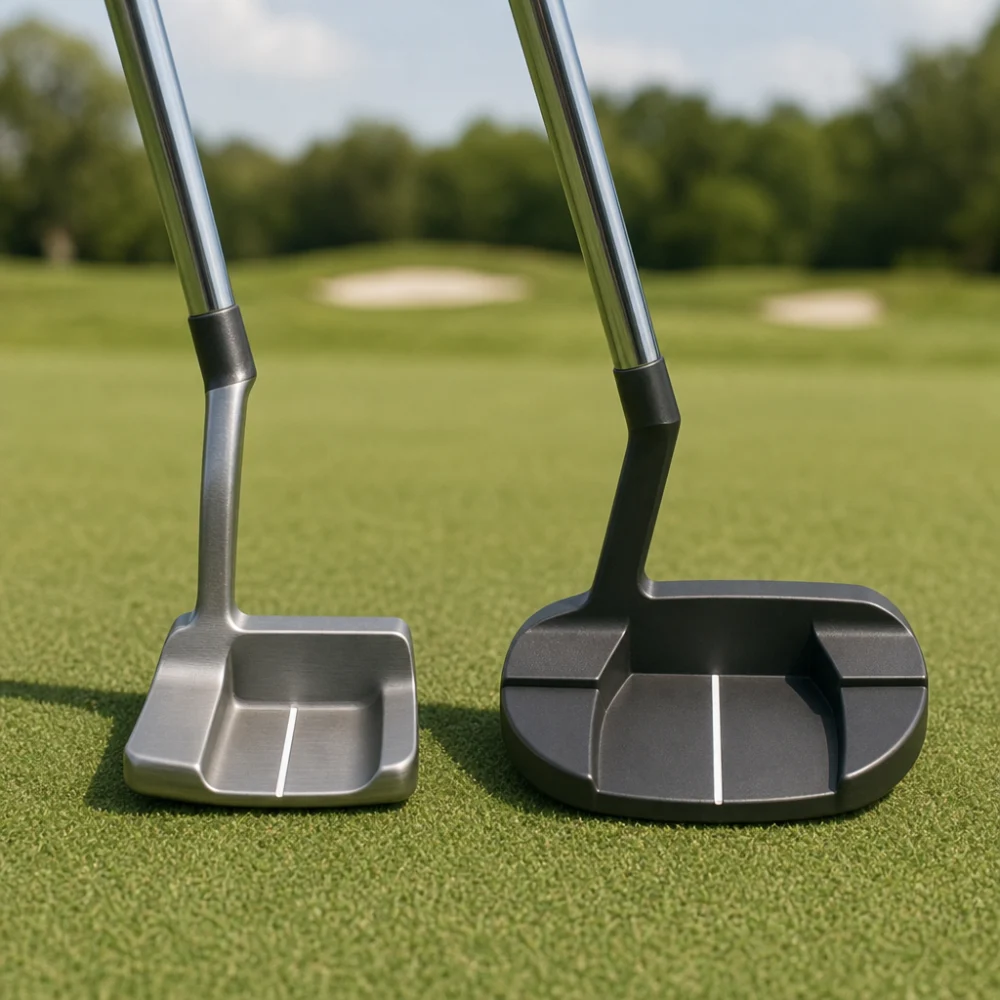
Which putter style suits different buyers?
| Buyer need | What may matter most | What to pay attention to |
|---|---|---|
| Beginner or casual golfer | Simplicity and easy aiming | Clear alignment, comfortable length, and a setup that feels natural |
| Golfer comparing feel | Face feedback and grip comfort | How the face feels at impact and whether the grip feels secure |
| Golfer focused on aiming | Visual guidance | Top line, shaping, and how easily the head frames the ball |
| Golfer replacing an old putter | Similarity to current setup | Length, head shape, and balance that feel familiar |
| Gift buyer | Broadly comfortable, neutral choice | A versatile look and standard features rather than a highly specialized design |
Common mistakes to avoid
- Choosing by appearance alone. A putter can look appealing but still feel awkward in your setup. Compare the shape and balance with how you actually stand over the ball.
- Ignoring length. If the putter is not comfortable at address, the rest of the design matters less. Check the stated length and think about your usual posture.
- Assuming more alignment aid is always better. Some golfers like strong visual guides, while others putt more confidently with a cleaner look.
- Overlooking grip feel. A grip that feels too thick, too slim, or simply unfamiliar can change how stable the putter feels in the hands.
- Expecting one style to suit every stroke. The right putter is often the one that matches your setup and preferences, not the one with the biggest claims.
Safety and suitability notes
Putters are not complex or hazardous in the way some sporting equipment can be, but it is still worth checking practical fit and intended use. Make sure the length, grip, and overall shape suit the golfer who will use it, especially when buying for someone else. If you are choosing a junior or beginner option, confirm that the club is appropriate for the intended user before deciding.
Care, storage, and long-term use
Putters generally reward simple care. Keeping the head and grip clean, storing the club dry, and avoiding unnecessary wear on the finish can help it stay comfortable to use over time. If a model uses a special insert or finish, check the product page for any care notes that may affect upkeep.
How to compare putters efficiently
- Start with the golfer’s setup and comfort needs, especially length and grip feel.
- Compare head shape and alignment features to see which designs look easiest at address.
- Check the balance style and decide whether it suits the intended stroke preference.
- Look for the main trade-off: more visual help, more feel, or a cleaner, simpler look.
- Review the individual product page before buying so you can confirm the listed details.
Summary buyer checklist
- Does the putter length support a comfortable setup?
- Does the head shape look confident and easy to aim?
- Does the balance style suit the stroke you want to use?
- Does the grip feel comfortable in your hands?
- Do the alignment features help rather than distract?
- Is the overall design appropriate for the intended golfer?
Frequently asked questions
What is the main difference between a blade and a mallet putter?
The biggest difference is usually shape and visual presence at address. Blade putters tend to look more compact, while mallet putters often have a larger profile and may offer more visible alignment help. The better choice depends on which look gives you the most confidence.
How important is putter length?
Length matters because it affects posture, hand position, and eye line. A putter that is too long or too short can make the setup feel awkward even if everything else is appealing. It is one of the first details to check on the product page.
Do alignment aids really help?
They can help, but only if the visual guide suits your eye. Some golfers like a strong aiming reference, while others prefer a cleaner top line. It is worth comparing the address view rather than assuming more markings are better.
Should I choose a putter based on feel or forgiveness?
Both matter, but the right balance is personal. Some buyers want a softer or firmer impact feel, while others care more about how stable the head looks and moves. A practical choice usually starts with comfort and confidence, then narrows to the feel you prefer.
Is a larger grip always better?
Not necessarily. A larger grip can feel steady for some golfers, but it may feel unfamiliar to others. The best grip is the one that feels secure without creating tension in your hands.
Can a putter be a good gift?
Yes, but it is usually better to choose a neutral, broadly usable style if you are unsure of the golfer’s preferences. Length, head shape, and grip feel matter a lot, so a very specialized choice can be harder to get right. A simple, balanced option is often the safer starting point.