
Single camping hammocks are a compact shelter and rest option for one person, but the right choice depends on how you plan to use it. Some buyers want a lighter setup for backpacking, while others want a comfortable camp lounge for short trips or overnight stays.
This guide focuses on the decisions that matter before you compare product pages: size, support, suspension, weather add-ons, and how much convenience you want to trade for portability. Specifications vary by model, so always check the individual product page before buying.
What should you look for in a single camping hammock?
The best starting point is your intended use. If you want something for hiking or longer carries, portability and packed size matter more. If you care most about relaxing at camp, comfort and easy setup may matter more than shaving off every ounce.
The main trade-off is usually between minimal weight and added features. A simpler hammock can be easier to carry and set up, while a more feature-rich one may offer better coverage, comfort, or bug protection when paired with the right accessories.
| Feature | What It Means | Why It Matters | What to Check |
|---|---|---|---|
| Intended use | Whether the hammock is meant for backpacking, campground use, lounging, or occasional overnights | Different uses favor different balances of weight, comfort, and setup speed | Think about how far you will carry it and how often you will set it up |
| Size and fit | How much room the hammock gives you as a single-user setup | Fit affects comfort, position, and whether the setup feels cramped or roomy | Check the listed dimensions and any guidance on who the product is designed for |
| Suspension and setup | The straps, straps-style attachment, and adjustment method used to hang the hammock | Setup style affects ease of use, tree protection, and how quickly you can adjust tension | Review what is included and whether extra suspension parts are needed |
| Weather protection compatibility | How well the hammock can work with a bug net, tarp, or underquilt | Many campers need more than the hammock alone for changing weather or insects | Confirm whether compatible accessories are included or sold separately |
| Packability | How small and convenient the hammock is to carry when stowed | Smaller packed size is helpful for hiking and minimalist travel | Look at packed dimensions and the storage method if listed |
| Durability cues | Material choices, stitching, and construction details that suggest long-term use | Durability affects confidence for repeated trips and heavier everyday use | Read the product description carefully for material and construction details |
Key decision criteria
Comfort versus minimal carry weight
Comfort in a hammock often comes from having enough room to settle in naturally, but more material can add bulk. Minimalist options are easier to carry, yet some buyers find them less forgiving for longer lounging sessions. Decide whether you value a lighter pack or a more relaxed feel once you are set up.
Setup simplicity
A hammock that is easy to hang and adjust can make camping more pleasant, especially for new users. Some setups are straightforward because they rely on simple suspension parts, while others may require additional accessories to create the full sleep system. Check exactly what is included so you know what you still need.
Weather and bug protection planning
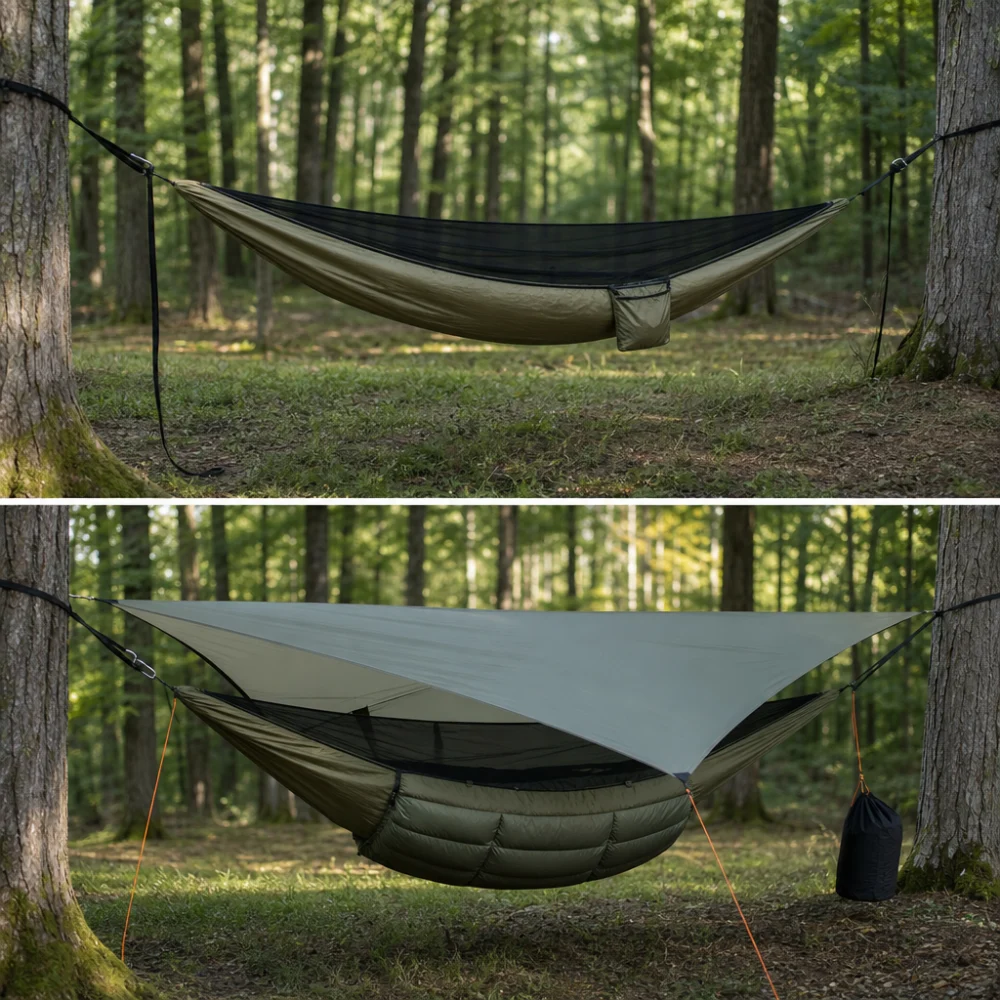
The hammock itself is only part of the campsite system for many users. Depending on where and when you camp, you may also want protection from insects, rain, or cooler nighttime conditions. Consider whether the hammock works cleanly with the accessories you expect to use most.
Durability and care
A single camping hammock may be used casually or often, so it helps to think about wear from repeated packing, hanging, and storage. Look for construction details that suggest reliable everyday use and review care guidance on the product page. Avoid assuming that one hammock will suit every campsite or season.
Types and variants you may see
Within single camping hammocks, the differences are usually about how the hammock is built and how complete the setup is rather than a large number of separate styles.
- Basic hammock only: A simple option for buyers who already have compatible accessories or want to build a setup gradually.
- Hammock with suspension pieces: Useful for buyers who want a more complete starting point and fewer separate purchases.
- Accessory-friendly setups: Good for campers who plan to add bug protection, weather coverage, or insulation as needed.
The main limitation of a simpler variant is that it may require more add-ons for real camping use. The main limitation of a more complete setup is that it can add weight, bulk, or cost.
Which single camping hammock suits which buyer?
| Buyer need | What to prioritize | Why |
|---|---|---|
| Backpacking or long carries | Lower carry weight and compact packing | Every bit of bulk matters when you are carrying your shelter |
| Relaxed campground use | Comfort, easier setup, and flexible accessories | You may care more about convenience than minimizing pack size |
| New hammock user | Simple suspension and clear setup information | A straightforward setup reduces guesswork and frustration |
| Bug-prone or variable weather camping | Compatibility with nets and rain cover options | Conditions often determine whether a basic hammock is enough |
| Value-focused buyer | Only the features you will actually use | It is easy to pay for extras that do not improve your camping style |
Common mistakes to avoid
- Choosing by price alone: A low-cost hammock can still require extra pieces to work the way you need.
- Ignoring the full setup: The hammock may be only one part of your sleep system or campsite comfort plan.
- Overlooking packed size: A hammock that seems simple online can still be awkward to carry if it is bulky.
- Assuming all accessories fit together: Check compatibility instead of assuming every net, tarp, or suspension system matches.
- Forgetting your real use case: A travel hammock, a weekend campground hammock, and an overnight camping setup may not need the same features.
Safety and suitability caveats
For camping use, the most important checks are suitability and compatibility rather than dramatic performance claims. Make sure the hammock is intended for the kind of hanging setup you plan to use, and confirm any weight, fit, or accessory information provided on the product page. Conditions at the campsite, including available anchor points and weather, can change what is practical.
Maintenance, storage, and lifespan considerations
Most single camping hammocks benefit from simple care: keep them clean, dry them before long storage when needed, and avoid unnecessary abrasion during use and packing. If a model includes straps or other add-ons, those parts may need attention too. Good storage habits often matter as much as the original material choice when you want the hammock to stay comfortable and usable.
How to compare options efficiently
- Start with your main use: backpacking, campground lounging, or occasional overnight camping.
- Decide whether you want a basic hammock or a more complete setup with helpful extras.
- Compare the features that matter most to you, such as size, packability, and accessory compatibility.
- Look for the trade-offs that fit your style instead of chasing every feature.
- Check the individual product page carefully before buying.
Summary buyer decision checklist
- Does the hammock fit your main use case?
- Is the size appropriate for one person and your comfort preferences?
- Do you know what suspension parts are included?
- Will you need a bug net, tarp, or underquilt separately?
- Is the packed size practical for how you travel?
- Have you checked the product page for the details that vary by model?
Frequently asked questions
Is a single camping hammock only for sleeping?
No. Many buyers use one for sleeping, lounging, or relaxing at camp. The most useful choice depends on whether you want an overnight setup or simply a comfortable place to sit and rest outdoors.
Do I need extra accessories with a single camping hammock?
Not always, but many campers do. Depending on weather, insects, and how you plan to hang it, you may want additional items such as suspension pieces, a tarp, or bug protection. Check what is included before assuming the setup is complete.
How do I know if the size will feel comfortable?
Look at the listed dimensions and the product’s intended use. Comfort is affected by how much room you want to stretch out, how you prefer to position yourself, and whether you plan to use the hammock mainly for lounging or overnight rest.
Are lighter hammocks always better?
Not necessarily. Lower weight is helpful for carrying, but the lightest option may not offer the comfort, coverage, or convenience you want. It is usually better to match the hammock to your camping style than to focus on weight alone.
What matters most for a first-time buyer?
Simple setup, appropriate size, and clear accessory needs are usually the most important factors. A beginner-friendly choice is often one that makes the full setup easy to understand before you get to camp.
Can I use a single camping hammock without a stand?
Many camping hammocks are designed to hang from anchor points rather than a stand, but the exact setup depends on the product. Check the product page for support and suspension details before assuming it will work in every location.
How should I think about weather protection?
Think of the hammock as part of a larger setup. In many camping situations, weather protection comes from pairing the hammock with the right accessories rather than from the hammock alone.