
Sailboat winches are one of the main control points on a sailing rig, so the right choice affects how easily you can trim sheets and manage load at the deck. If you are replacing an old winch or choosing hardware for a refit, the important question is not just what looks similar, but what suits the line loads, mounting space, and number of people likely to use it.
This guide focuses on the buying decisions that matter before you compare individual products. It keeps the scope on sailboat winches themselves, so you can sort through the practical differences without drifting into rigging, blocks, or other deck hardware.
What should you look for in a sailboat winch?
Start with how the winch will be used: the loads it needs to handle, how often it will be used, and who will be operating it. From there, compare the winch type, size, material, handle style, and mounting requirements. The best starting point is usually the winch’s intended job on the boat, because that narrows down the choice faster than comparing features in isolation.
Specifications vary by model, so always check the individual product page before buying.
| Feature | What It Means | Why It Matters | What To Check |
|---|---|---|---|
| Winch type | The overall mechanism and operating style | Different types suit different control needs and handling preferences | Whether it matches your sailing setup and expected use |
| Size or capacity class | The general size range of the winch | Affects how much line can be managed and how easy it is to crank under load | That the model is appropriate for the boat and line duties |
| Speed or gearing feel | How the winch gains mechanical advantage | Influences effort, control, and the pace of trimming | Whether the action feels suited to solo use or crewed handling |
| Material and finish | The construction materials and surface treatment | Can affect durability, corrosion resistance, and upkeep | Suitability for the marine environment and maintenance expectations |
| Mounting pattern | How and where the winch attaches to the deck | Compatibility matters if you are replacing an existing unit | Hole pattern, footprint, and available installation space |
| Handle compatibility | The style of winch handle that fits and feels comfortable | Influences leverage and day-to-day ease of use | Whether the handle style you plan to use is supported |
Key decision criteria explained
Intended line load and task
Not every winch is meant for the same job. Some are chosen for occasional adjustment, while others are selected for repeated, higher-effort trimming. The useful question is whether the winch will mainly support light adjustment, routine sail handling, or a more demanding control point. That choice affects how much leverage and ease of use you should prioritize.
Single-speed or multi-speed behavior
Winches differ in how they translate hand force into control. A simpler setup may suit straightforward use, while a more involved mechanism can make heavier trimming feel more manageable. The trade-off is usually between simplicity and the amount of control or mechanical advantage you want. If you are unsure, compare how the product is described for handling loads rather than assuming more complexity is automatically better.
Construction and corrosion resistance
Because these parts live in a marine environment, material choice matters. Buyers often focus on appearance, but finish and corrosion resistance are often more important for long-term ownership. Look for construction details that fit the level of exposure your boat sees, especially if the winch will be used in wet, saltwater conditions.
Installation fit
Replacement buyers should pay close attention to footprint, base shape, and mounting pattern. Even a winch that seems close in size may not be a straightforward swap if the deck layout is different. Check whether the product page gives enough information to compare dimensions, fastener layout, and clearances before you commit to a purchase.
Ease of operation
Comfort matters more than many shoppers expect. A winch that is technically suitable but awkward to use can slow down sail handling, especially for smaller crews. Consider the feel of the handle, the amount of effort expected, and whether the people using it are experienced enough to work it confidently.
Common winch types and how they differ
Category pages may include a mix of winch designs, but the practical comparisons usually come down to how much control, effort reduction, and installation compatibility you need.
- Manual winches suit sailors who want direct control and a straightforward setup. Their main advantage is simplicity; the limitation is that they rely on physical effort.
- Different size classes help match the winch to the task and the boat. A larger unit may offer easier handling under load, but it can also take more space and may be unnecessary for lighter duties.
- Replacement-focused choices are often selected to fit an existing mounting area. These are useful when installation compatibility matters more than redesigning the deck layout.
If a listing does not clearly explain the operating style or fit details, treat that as a sign to verify the product page carefully before buying.
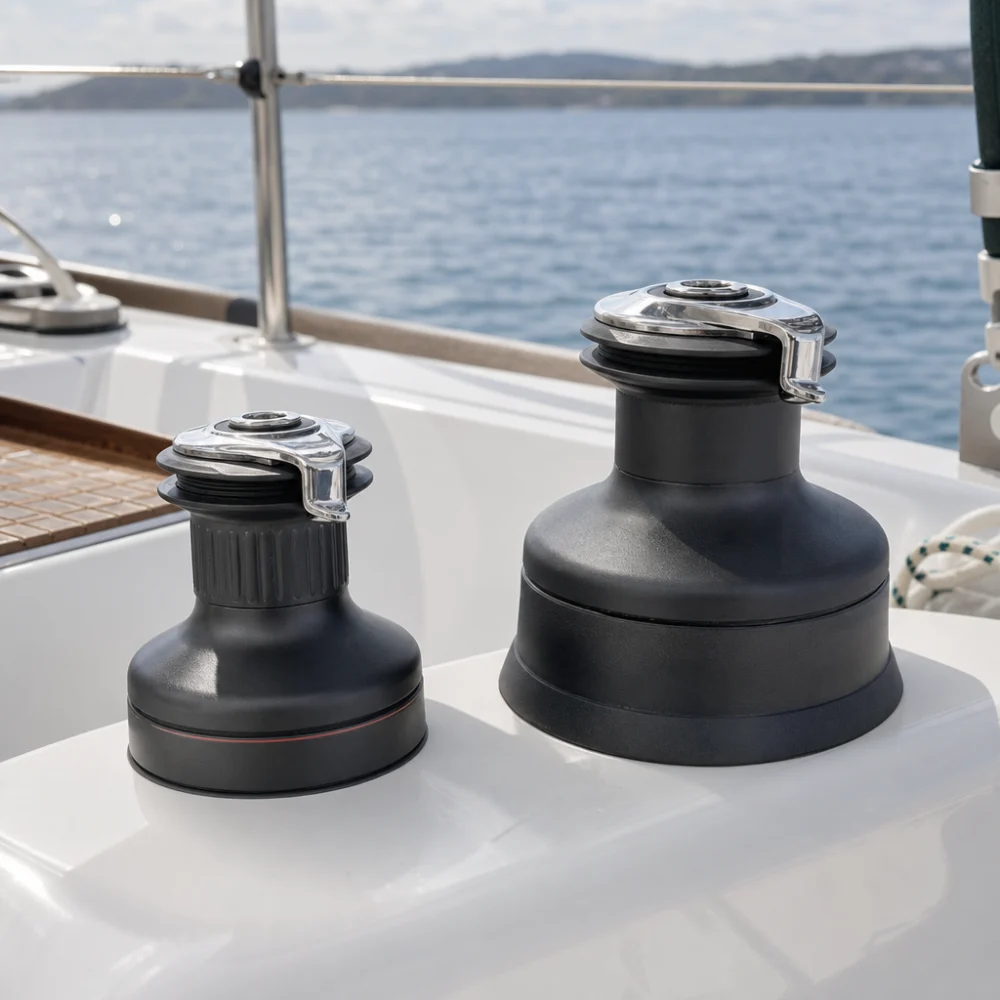
Which buyer needs point toward which features?
| Buyer need | What to prioritize | Why it helps |
|---|---|---|
| Replacing an existing winch | Mounting pattern, footprint, and clearances | Makes it more likely the new unit will fit the same location |
| Short-handed sailing | Ease of operation and mechanical advantage | Helps reduce effort when fewer hands are available |
| Occasional recreational use | Straightforward operation and solid build quality | Balances usability with long-term practicality |
| More demanding trimming tasks | Winch size class and handling feel | Supports smoother control when line loads are higher |
| Maintenance-conscious buyers | Materials, finish, and service expectations | Can reduce the effort needed to keep the winch working well |
Common mistakes and misunderstandings
- Choosing by appearance alone is risky. A polished finish does not tell you whether the winch fits the load, space, or operating needs.
- Assuming a similar-looking replacement will fit can lead to installation surprises. Confirm the footprint and mounting details first.
- Overbuying capacity can make a boat hardware choice more expensive or bulky than necessary. Match the winch to the actual job rather than the biggest option available.
- Ignoring who will use it can create handling problems later. A setup that is fine for an experienced sailor may feel awkward for a newer crew member.
Safety and suitability caveats
Sailboat winches should be chosen with the boat’s intended use in mind, but buyers should still verify the exact product information before purchase. The key concern is suitability, not just appearance: fit, load expectations, and ease of handling all matter. If a listing is vague about dimensions, operating style, or installation needs, it is better to pause than to assume it will work as expected.
Maintenance, storage and lifespan considerations
Marine hardware is exposed to moisture, movement, and repeated use, so ownership considerations matter. Look for winches that seem manageable to clean and inspect, and consider how much upkeep you are willing to do on a regular basis. Storage is usually about keeping the boat environment in mind rather than moving the product around, but the practical question remains the same: how easily can you keep it in good condition over time?
How to compare options efficiently
- Identify the winch’s job on the boat and who will use it.
- Check whether you need a replacement fit or a new installation layout.
- Compare the operating feel, size class, and construction details.
- Weigh ease of use against space, maintenance, and installation constraints.
- Read the individual product page carefully before deciding.
Summary buyer decision checklist
- Does the winch suit the intended sail control task?
- Will it fit the available mounting space and hole pattern?
- Is the handling feel appropriate for the crew that will use it?
- Do the material and finish suit marine exposure?
- Have you checked the individual product page for model-specific details?
Frequently asked questions
How do I know what size winch I need?
Start with the boat’s intended use and the load the winch will manage. Size matters because it affects both handling ease and how well the winch matches the job. If you are replacing an existing unit, compare the current footprint and installation details as well as the overall size class.
Can I replace a winch with one that looks similar?
Not safely by appearance alone. A similar look does not guarantee the same mounting pattern, footprint, or operating characteristics. Always compare the product page details against the existing installation before buying.
Are more complex winches always better?
Not necessarily. More complexity can bring more control or easier handling, but it can also mean more to consider during selection and maintenance. Simpler designs may be a better fit when the job is straightforward and ease of ownership matters most.
What matters most for a marine environment?
Construction and finish matter a great deal because the hardware will be exposed to moisture and routine wear. The right choice depends on how much corrosion resistance and upkeep you want to factor into the purchase. Look for clear product information on materials and care expectations.
Is installation compatibility important for first-time buyers?
Yes, because even a suitable winch can become a poor choice if it does not fit the boat layout. New installations need enough space for the base, handle movement, and mounting hardware. Check the product page carefully and compare it to your available deck area.
Should I buy based on the easiest handle feel?
Handle feel is important, but it should be balanced with the actual task the winch must perform. The right choice is the one that combines manageable effort with proper fit and suitability. Comfort matters most when the winch will be used often or by different people aboard.