
Trolling motor mounts are the hardware that connects a trolling motor to your boat in a secure, usable position. For most buyers, the main job is not just holding the motor in place, but helping it fit the boat, the intended mounting location, and the way the boat is used.
Because boats, motors, and mounting points vary widely, the details matter. A mount that looks similar at first glance may differ in how it attaches, how much adjustment it allows, or how well it suits a given hull, deck, or transom layout.
This guide focuses on the practical buying questions: what the mount is for, which type makes sense for your setup, and what to verify before you choose one.
What should you look for first?
Start with fit and intended use. The most useful mount is the one that works with your boat’s mounting location and gives the motor a stable, convenient position without forcing awkward compromises. After that, compare adjustability, build style, ease of installation, and whether the mount is meant for a permanent setup or a more removable one.
Specifications vary by model, so always check the individual product page before buying.
| Feature | What It Means | Why It Matters | What To Check |
|---|---|---|---|
| Mount location | Where the mount is designed to attach on the boat | Affects fit, balance, and how naturally the motor can be used | Confirm the intended mounting point matches your boat |
| Adjustability | How much the mount can be positioned or angled | Helps with comfort, access, and motor placement | Look for the adjustment range and how it is secured |
| Mount style | Whether the mount is fixed, removable, or folded away in use | Changes convenience and how much space the setup uses | Check how the mount stores, swings, or locks in place |
| Boat compatibility | The kinds of boats and mounting surfaces it is meant for | Compatibility is the biggest factor in avoiding a poor fit | Compare the mount’s stated use with your boat layout |
| Strength and support | How firmly the mount is built to hold the motor | Affects stability and confidence during use | Review materials, attachment points, and supported use notes |
| Installation needs | How much assembly or drilling may be involved | Determines time, effort, and whether the setup is reversible | Check the installation method and required hardware |
Key decision criteria explained
Mounting location
The first decision is where the motor will sit on the boat. Some buyers need a transom-style setup, while others need a bow or deck-based arrangement. The right choice depends on the boat design and how the motor will be used, so this is usually the most important fit check.
Adjustability and positioning
Adjustability matters when you want a more comfortable operating angle or need to work around hardware, railings, or storage constraints. More adjustment can make the setup easier to live with, but it can also add more moving parts to compare. Check how the mount holds position and whether it suits your preferred operating angle.
Removable versus fixed use
Some buyers want a mount that stays in place, while others prefer one that can be removed or folded away when not in use. A removable design can be convenient for storage or transport, but it may add steps when setting up. A fixed design can feel simpler day to day if you know the boat will keep the same layout.
Hardware and installation approach
Installation is worth reviewing before you buy because it affects both effort and flexibility. Some mounts may require more setup or more permanent attachment than others. If you want to avoid unnecessary changes to the boat, pay attention to the mounting method and the parts included.
Common mount types and how they differ
Within this category, the biggest differences are usually about location and how the mount behaves in use rather than flashy features. A transom mount suits one style of boat layout, while a bow or deck-style mount suits another. Some designs are more convenient to remove or stow, which can matter if space is limited.
- Fixed mounts: Best for buyers who want a stable, consistent setup and do not plan to move the mount often.
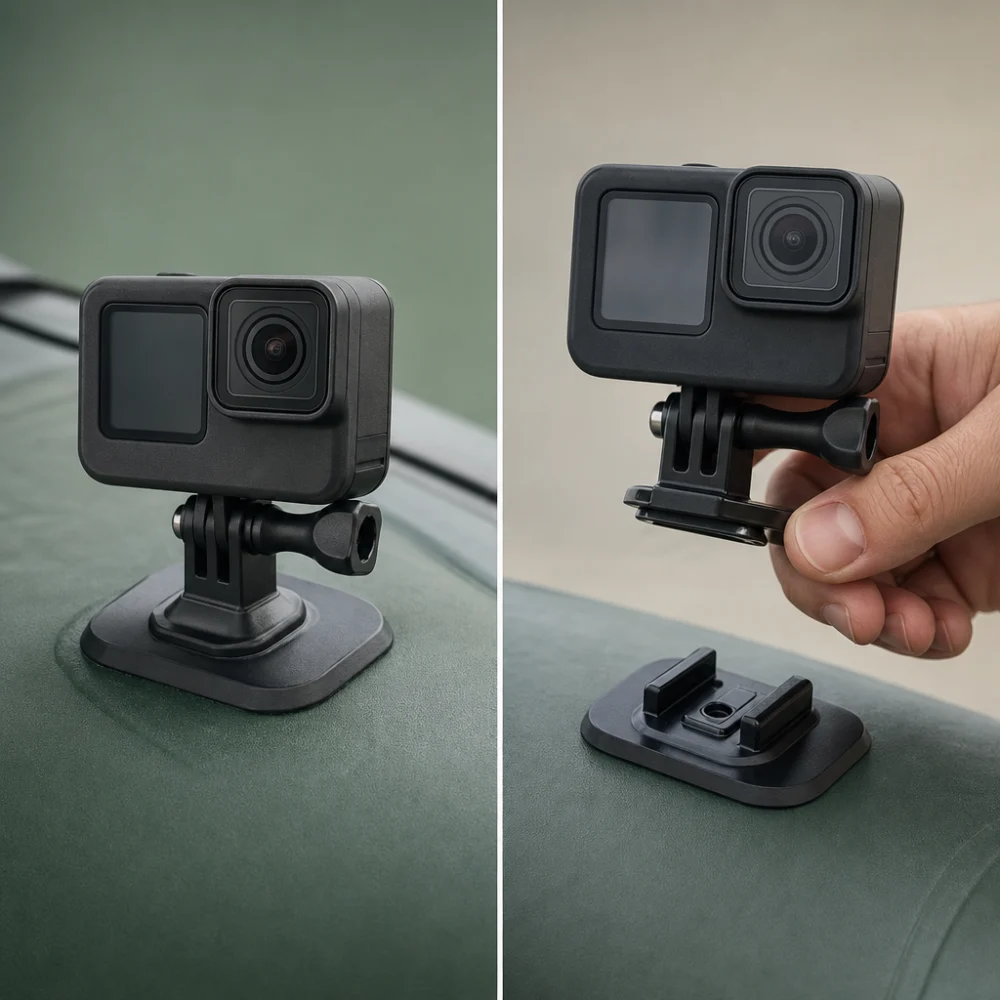
- Removable or folding mounts: Useful when storage, transport, or deck access matters, but they may involve more setup steps.
- Location-specific mounts: Designed around a particular mounting area, which can make fit simpler when the boat matches the intended use.
Which setup fits which buyer?
| Buyer need | What tends to matter most | Why |
|---|---|---|
| Simple replacement | Direct fit and familiar mounting style | Makes the swap easier and reduces surprises |
| First-time setup | Clear compatibility and straightforward installation | Helps avoid buying hardware that does not suit the boat |
| Limited storage space | Removable or folding convenience | Can reduce clutter when the boat is not in use |
| Frequent use | Stable mounting and comfortable access | Day-to-day convenience matters more over time |
| Changing boat layouts | Flexibility and adjustability | Useful when the setup may need to adapt later |
Common mistakes and misunderstandings
- Assuming all mounts fit the same way: The attachment point and boat layout matter as much as the motor itself.
- Overlooking how the mount stores or stows: Convenience can be a major difference if space is limited.
- Focusing only on strength: A very sturdy mount still needs to suit the boat and the way you use it.
- Skipping the installation method: Easy-looking mounts can still require more effort or a more permanent setup than expected.
Safety and suitability caveats
Choose a mount that matches the boat and the intended mounting point rather than forcing a near-match. If the product page does not clearly explain the intended use or installation approach, that is a sign to slow down and compare more carefully. For boating gear, a proper fit is part of everyday usability, not just a convenience detail.
Maintenance, storage and lifespan considerations
A trolling motor mount may need routine attention for fasteners, moving parts, and general wear from moisture and vibration. If you plan to remove it between outings, think about how easy it is to handle and store without bending or stressing the hardware. Corrosion resistance, cleaning needs, and how the mount holds up to repeated adjustment can all affect long-term satisfaction.
How to compare options efficiently
- Confirm where the mount needs to attach on your boat.
- Decide whether you want fixed, removable, or folding convenience.
- Compare adjustability, stability, and installation effort.
- Check the product page for compatibility notes and included hardware.
- Choose the mount that fits your boat layout and your day-to-day use.
Summary buyer decision checklist
- Does the mount match the intended boat location?
- Is the style suitable for fixed or removable use?
- Does the adjustability suit your setup and operating angle?
- Is the installation method practical for your situation?
- Are the material and support details appropriate for repeated use?
- Does the product page clearly describe compatibility?
Frequently asked questions
How do I know which trolling motor mount I need?
Start by identifying where the motor will attach and how you want it to sit on the boat. Then compare the mount style, adjustability, and installation method against that setup. The most important question is fit, because that determines whether the mount is actually usable.
Are fixed mounts better than removable ones?
Neither is always better. Fixed mounts can feel simpler and more stable for a permanent setup, while removable options can be more convenient when storage or transport matters. The better choice depends on how often you change the boat setup.
What is the biggest mistake buyers make?
One common mistake is focusing on the motor and treating the mount as a minor accessory. In practice, the mount is what determines whether the motor fits the boat cleanly and operates in a comfortable position. Compatibility deserves as much attention as style.
Should I choose the strongest-looking mount?
Not by appearance alone. Strength is important, but only after you confirm the mount is meant for your boat and mounting point. A strong mount that does not fit the layout well can still be a poor choice.
Do I need to think about storage when buying a mount?
Yes, especially if the mount will be removed between outings or if deck space is tight. A folding or removable design can make storage easier, but it may also add setup steps. Think about how often you will handle it, not just how it looks installed.
What should I check on the product page before buying?
Check the intended mounting location, any compatibility notes, installation method, and whether hardware is included. If the page is vague about those basics, compare more carefully before deciding. Specifications vary by model, so always check the individual product page before buying.