
Horse tack storage is about keeping bridles, saddles, halters, grooming tools, and related gear organized, protected, and easy to reach. The right setup depends on how much equipment you have, where you keep it, and whether you need something stationary, portable, or a mix of both.
For many buyers, the challenge is not finding storage in general but narrowing down the style that fits the stable, trailer, tack room, or home garage. A useful choice balances capacity, organization, airflow, durability, and convenience without taking up more room than needed.
If you are comparing tack storage for the first time, focus on the gear you use most often and the space where it will live. That usually makes the decision clearer than starting with appearance or accessory features.
What should you look for in horse tack storage?
The best starting point is to match the storage type to your daily routine and the amount of tack you need to keep together. A compact organizer may work well for a few essentials, while a larger rack, box, or wall-mounted solution may suit a fuller tack collection. The main trade-off is usually capacity versus space, with portability and protection also affecting the choice.
Specifications vary by model, so always check the individual product page before buying.
| Feature | What It Means | Why It Matters | What To Check |
|---|---|---|---|
| Capacity | How much gear the storage can hold | Helps prevent clutter and keeps frequently used items together | Match the size to the number of bridles, saddle items, and accessories you actually own |
| Mounting or placement | Where and how the storage sits in your space | Affects stability, convenience, and floor space use | Check whether it is wall-mounted, freestanding, hanging, or portable |
| Organization layout | Hooks, shelves, bars, compartments, or rails | Makes gear easier to sort and find | Look for a layout that fits the shapes of your tack and tools |
| Protection | How well the item keeps dust, moisture, and damage away | Can help preserve gear condition over time | Consider enclosed versus open storage and whether airflow matters for your use |
| Portability | How easy it is to move or carry | Useful for travel, shows, or multi-location use | Check handles, weight, and whether it folds or packs easily |
| Durability | How well the storage stands up to regular handling | Important for busy barns and frequent use | Review material, build quality, and how the item is supported or reinforced |
Key decision criteria
Space and placement
Start by measuring the area where the storage will go. Wall-mounted options can save floor space, while freestanding or portable designs may be easier to reposition. The trade-off is that a more compact solution may hold less gear or offer fewer separate zones for sorting items.
What you need to store
Different tack collections create different storage needs. A rider who mainly keeps bridles and small accessories may want a simpler organizer, while someone managing more equipment may prefer a larger layout with multiple places to separate items. Think about the gear you use every week, not just the pieces you own but rarely touch.
Organization and access
Good storage should make the right item easy to grab without moving everything else. Hooks, bars, shelves, and compartments each solve different problems. Open layouts are often quick to use, while covered or enclosed options may be better when protection matters more than instant access.
Portability versus permanence
Some buyers need a solution that stays in one place, while others need something they can move for shows, lessons, or changing barn setups. Portable storage often favors convenience, but permanent storage may better support larger collections or more orderly routines. The best choice depends on whether your tack lives in one location or follows you around.
Durability and maintenance
Because tack storage is handled often, simple construction and easy-to-clean surfaces can matter more than decorative details. Look for a design that fits your environment and can be kept tidy without much effort. For frequently used gear, a straightforward layout is often easier to live with than a complicated one.
Common product types and variants
Horse tack storage is less about rigid product families and more about how the storage is used.
- Wall-mounted storage: Often a good fit for tack rooms where floor space is limited and gear can stay in one place.
- Freestanding storage: Useful when you want flexibility in placement or may need to move the setup later.
- Portable storage: Helpful for riders who take tack to events, lessons, or multiple locations.
- Covered or enclosed storage: May suit buyers who want more protection from dust or general barn clutter.
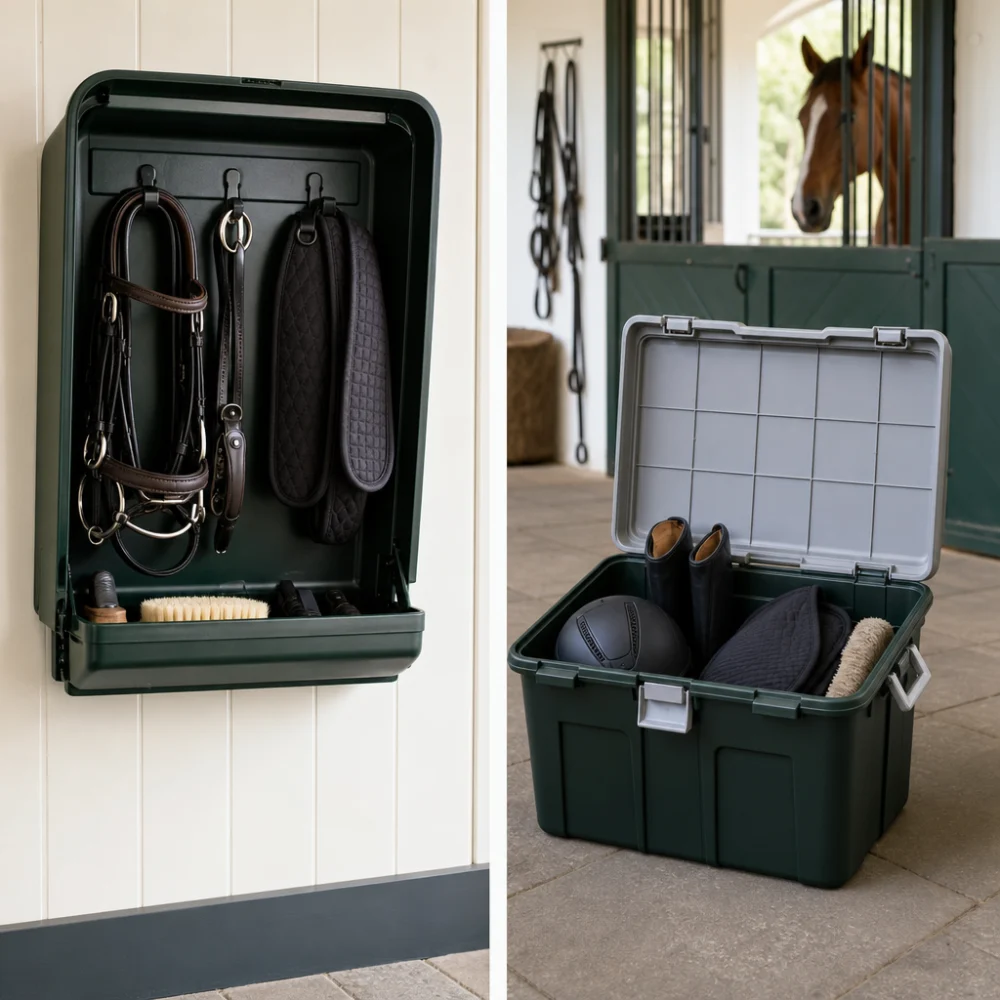
Each type has a different balance of access, space use, and protection, so the right answer depends on how you work day to day.
Which type fits which buyer need?
| Buyer need | Storage characteristics to favor | Main trade-off |
|---|---|---|
| Small tack room or limited space | Compact, wall-mounted, or vertical storage | Less room for extra gear |
| Frequent travel or shows | Portable, easy to carry, simple to pack | May hold less than a larger fixed setup |
| Several pieces of tack to sort | Multiple hooks, shelves, or compartments | Often takes up more space |
| Dust-conscious storage | Covered or enclosed design with sensible airflow | May slow down grab-and-go access |
| Shared barn or busy household use | Durable, easy-to-understand layout | May be less specialized for one rider’s routine |
Common mistakes and misunderstandings
- Buying for the wrong location: A storage solution can look ideal until you realize it does not fit the available wall, floor, or travel space.
- Choosing capacity by guesswork: It helps to count the gear you use regularly instead of estimating from memory.
- Overlooking access: Storage that is hard to reach or awkward to open can slow down everyday use.
- Focusing only on appearance: A neat look is nice, but the layout and usability matter more for long-term satisfaction.
- Ignoring handling needs: If you move gear often, portability may matter more than a larger fixed design.
Safety and suitability caveats
Tack storage should be stable, appropriately sized for the space, and suitable for the equipment you plan to keep on it. If you are mounting anything, make sure the product is appropriate for the surface and the weight it is intended to carry. Do not assume a storage item designed for one type of tack will suit every piece of equipment equally well.
Maintenance, storage and lifespan considerations
Most tack storage lasts better when it is kept dry, cleaned periodically, and not overloaded beyond its intended use. Open storage may need more dusting, while enclosed storage may need occasional cleaning inside. If your gear is damp after use, think about airflow and drying habits as part of the buying decision.
How to compare options efficiently
- List the tack and accessories you want to store.
- Measure the space where the storage will sit or hang.
- Decide whether you need fixed storage, portable storage, or a mix of both.
- Compare layout, access, protection, and durability.
- Check the individual product page for the exact fit and any model-specific details.
Summary buyer decision checklist
- Does it fit the space you actually have?
- Does the capacity match your regular tack collection?
- Is the layout easy to use in your daily routine?
- Do you need portability, or will it stay in one place?
- Will the design give your gear the protection you want?
- Is the construction suited to repeated handling?
Frequently asked questions
What is the main purpose of horse tack storage?
It helps keep riding gear organized, accessible, and easier to protect from clutter and unnecessary wear. The exact setup you need depends on how much equipment you have and where it will be used.
Should I choose wall-mounted or freestanding tack storage?
Wall-mounted storage can be a strong choice when floor space is limited, while freestanding storage may be easier to move or rearrange. The better option depends on your space and how permanent you want the setup to be.
How do I know if a storage option is large enough?
Count the tack and accessories you use regularly, not just the items you own overall. It is usually better to have enough room for daily use than to buy something that becomes crowded right away.
Does tack storage need ventilation?
Ventilation can be helpful when you store items that may retain moisture after use. The right balance depends on whether you care more about airflow, dust protection, or quick access.
What matters more: organization or protection?
That depends on your routine. If you use gear often, organization and access may matter most, while buyers who store tack for longer periods may care more about dust and general protection.
Can one storage solution work for all tack?
Sometimes, but not always. Different gear shapes and storage needs can make a single catch-all solution less efficient than a setup with separate places for different items.