
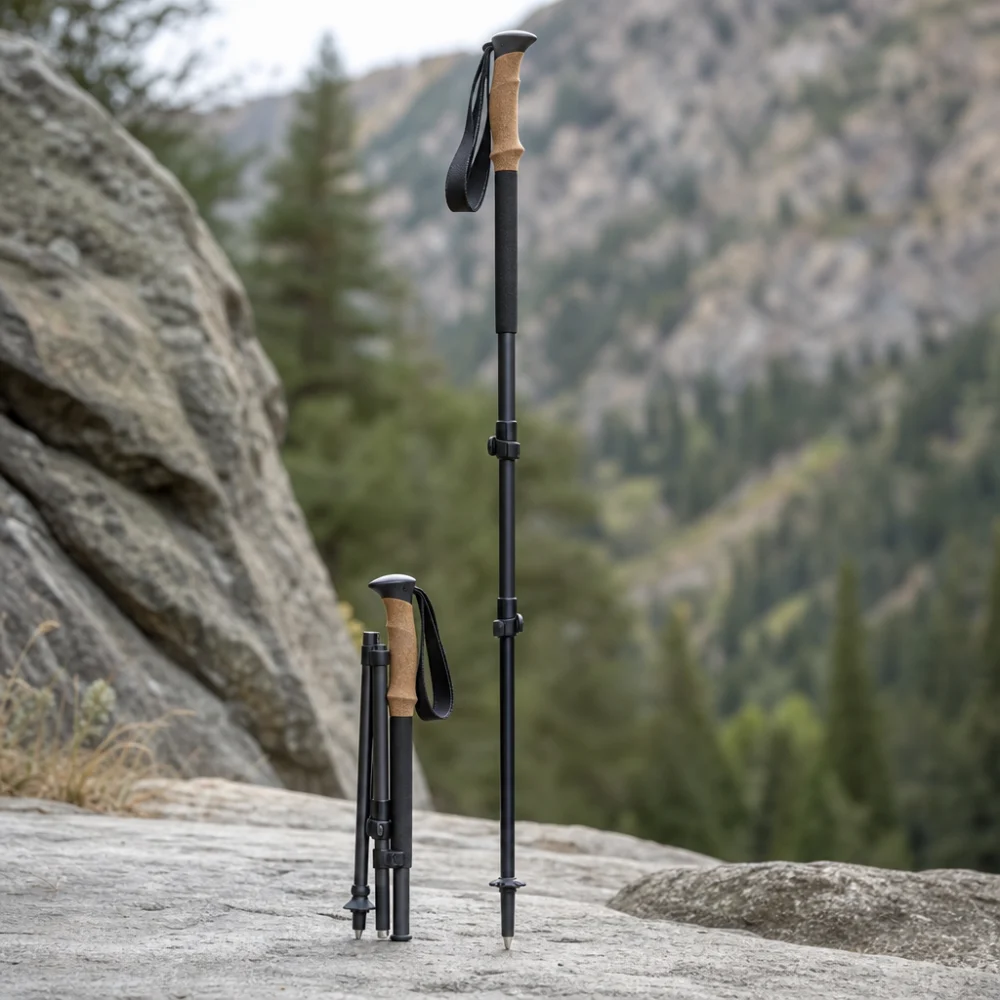
Telescoping trekking poles are a practical choice for hikers and walkers who want adjustable length in a compact carry format. They are especially useful when you want to fine-tune pole height for different terrain, pack them away easily, or share them between users with different fit needs.
This guide focuses on the buying decisions that matter most: adjustability, locking mechanism, handle comfort, packed length, and how the poles fit your typical use. It stays at category level so you can compare options confidently without getting lost in model-by-model details.
What should you look for in telescoping trekking poles?
The best starting point is how you plan to use them. If you want flexibility and easy adjustment, telescoping poles are a strong fit; if you want the smallest packed size possible, another pole style may be worth comparing. The main trade-off is between adjustment range, packability, and how much convenience you want when setting them up.
| Feature | What It Means | Why It Matters | What To Check |
|---|---|---|---|
| Length adjustment | The pole extends or shortens in sections. | Lets you match pole height to your body, terrain, and use case. | Look for the adjustment range and whether it suits your height and intended activity. |
| Locking mechanism | The system that holds the pole at the chosen length. | Affects confidence, ease of adjustment, and how quickly you can change length. | Check the lock type and how secure it feels in the product description. |
| Packed size | How short the pole becomes when collapsed. | Important for travel, storage, and attaching poles to a pack. | Compare the folded length if portability matters to you. |
| Grip and strap | The handle material and wrist support interface. | Influences comfort during long use and how securely the pole feels in hand. | Review grip shape, material, and whether the strap design looks comfortable for extended walking. |
| Weight and feel | How heavy the pole is and how it balances in use. | Can affect fatigue and how natural the poles feel over distance. | Compare the overall weight description and consider whether comfort or packability matters more. |
| Tip and basket compatibility | The end fittings and accessory support. | Helps determine whether the pole suits the terrain and accessories you may want to add. | Check the tip style and whether replacement parts or baskets are relevant to your terrain. |
Key decision criteria
Adjustment range
Telescoping poles are defined by their adjustable length, so this is one of the most important checks. A wider adjustment range gives you more flexibility, especially if you plan to use the poles on different trails or share them with another person. Specifications vary by model, so always check the individual product page before buying.
Locking style
Different locking systems suit different preferences. Some buyers want the quickest possible adjustment, while others prefer a lock that feels simple and confidence-inspiring. Think about how often you expect to change the length and whether you value speed, security, or both.
Grip comfort
Handle shape and material can matter more than people expect. If you use poles for longer outings, a comfortable grip can reduce hand fatigue and make the poles easier to live with. Also check whether the strap looks adjustable enough for your hand size and the way you like to hold a pole.
Packed length and transport
Telescoping poles are often chosen because they collapse for storage, but the folded size still varies. If you want to stash them in a daypack, car, or luggage, compactness becomes a major deciding factor. If transport is less important, you may be able to prioritize feel and adjustability instead.
Durability and intended terrain
The right choice depends on where and how often you plan to use the poles. Occasional walkers may prioritize ease of use, while regular hikers may care more about stability and how the poles feel over repeated use. Use the product details to judge whether the pole design seems suited to your terrain and frequency of use.
Common telescoping pole variants
Within this category, the main differences are usually about adjustment and locking design rather than radically different product types. Some poles collapse more compactly, some emphasize quick adjustment, and some focus on a lighter carrying feel. The key is to decide which trade-off matters most for your use.
- Compact-focused poles: Useful when transport and storage are priorities, but they may ask you to accept a different feel or adjustment experience.
- Easy-adjust poles: Good for buyers who expect to change length often, though the locking mechanism becomes especially important.
- Comfort-focused poles: A better fit when grip feel and general use comfort matter more than the smallest folded size.
Which buyer needs match which features?
| Buyer need | What to prioritize | Why it helps |
|---|---|---|
| Frequent day hikers | Comfortable grip, secure lock, sensible packed size | Supports repeated use without making setup or carry awkward. |
| Travel or storage-focused buyers | Short folded length and easy packing | Makes it simpler to carry poles in a bag, vehicle, or travel kit. |
| Shared or multi-user use | Wide adjustment range | Lets different users set a suitable pole height. |
| Occasional walkers | Simple design and easy handling | Keeps the buying decision straightforward when advanced features are less important. |
| Terrain-conscious buyers | Tip, basket, and overall build suitability | Helps the poles better match the surfaces and conditions you expect. |
Common mistakes to avoid
- Choosing by fold length alone: A compact pole is useful, but comfort and locking reliability still matter.
- Ignoring the adjustment range: A pole that does not fit your height or typical use is a poor match even if it looks convenient.
- Overlooking grip comfort: The handle is one of the parts you feel every time you use the poles.
- Assuming one pole suits every terrain: Trail conditions, packing needs, and use frequency can point to different priorities.
Safety and suitability caveats
Choose poles that match your intended activity and the terrain you expect to encounter. If you plan to use them on uneven ground, make sure the overall design, tip style, and adjustment system seem appropriate for that kind of use. Do not assume that a telescoping pole is automatically the right choice for every hiker or every trail condition.
Maintenance, storage, and lifespan considerations
Trekking poles usually reward basic care: keep them clean, dry them after wet use, and store them collapsed if that suits the product design. If the pole uses replaceable tips or baskets, it is worth checking whether replacement parts are easy to find. Over time, moving parts and locks may be the areas buyers care about most, so build quality and simple upkeep can influence long-term satisfaction.
How to compare options efficiently
- Start with your main use case: walking, hiking, travel, or shared use.
- Decide how much adjustability and packed length matter to you.
- Compare the lock type, grip comfort, and overall portability.
- Check whether the pole seems suited to your terrain and accessory needs.
- Read the individual product page carefully before deciding.
Telescoping trekking poles buying checklist
- Does the adjustment range suit your height and intended use?
- Is the locking system likely to feel secure and convenient?
- Is the folded size practical for your storage or travel needs?
- Does the grip look comfortable for the length of time you plan to use it?
- Are the tip and accessory details suitable for your terrain?
- Does the overall design match how often you expect to carry and use the poles?
Frequently asked questions
Are telescoping trekking poles good for beginners?
They can be a very reasonable choice for beginners because the adjustable design makes it easier to find a comfortable fit. The main thing to understand is the lock system and how the pole collapses for storage. If you want a straightforward, adaptable option, telescoping poles are often easy to compare.
What matters more: packed size or adjustment range?
That depends on how you will use the poles. If you travel with them or want to store them in a small space, packed size may matter more. If you expect to share them or use them in different conditions, adjustment range may be the more important feature.
How do I know if the grip will be comfortable?
You usually need to judge this from the product details, handle shape, and material description. Comfort is personal, so a design that looks right for one buyer may not suit another. If you use poles often, comfort deserves serious attention.
Should I choose telescoping poles over another folding style?
Choose the style that best matches your priorities. Telescoping poles are appealing when you want adjustable length and a practical collapsed format. If another style offers a better balance of portability or convenience for your needs, it may be worth comparing.
Do I need to think about replacement parts?
It can help to know whether tips, baskets, or other parts are easy to replace. This matters more if you expect regular use or use the poles on a range of surfaces. Even if you do not need replacements immediately, it is useful to understand what maintenance may involve later.