
Backpacking shelters are for people who need portable protection that is easier to carry than larger camp structures. The right choice depends on how you travel, how much weather protection you want, and how much space you are willing to carry on your back.
This guide focuses on the practical differences buyers usually compare: packed size, setup style, coverage, and comfort in changing conditions. It is meant to help you narrow the field before you compare individual product pages.
Because shelters in this category can vary a lot in structure and use case, it helps to start with your trip style rather than with a single feature.
What should you look for in a backpacking shelter?
The best starting point is a shelter that balances carry weight, protection, and living space for the conditions you expect. A lighter option may be easier to hike with, but it can involve trade-offs in room, coverage, or pitching flexibility. A more protective or spacious option may feel better in camp, but it can be less convenient to carry.
For most buyers, the key question is not whether a shelter is “good” in general, but whether it fits the way you backpack. Specifications vary by model, so always check the individual product page before buying.
| Feature | What It Means | Why It Matters | What To Check |
|---|---|---|---|
| Weight and packed size | How much the shelter adds to your pack and how much room it takes | Important for long miles, smaller packs, and minimalist trips | Look at packed dimensions and the overall carry burden relative to your route |
| Weather protection | How much cover the shelter offers from rain, wind, and exposure | Affects comfort and suitability for the conditions you expect | Check the shelter style, coverage area, and intended use |
| Interior space | The usable room inside for sleeping and gear | Matters for comfort, organization, and changing clothes | Review the space layout, sleeping configuration, and vestibule or storage areas if listed |
| Setup style | How the shelter is pitched and supported | Influences speed, simplicity, and how easy it is to pitch in poor conditions | Look for the required support method and whether it matches your experience level |
| Season suitability | The conditions the shelter is meant to handle | Helps avoid choosing something too light for your weather or too bulky for mild trips | Check the intended season use and any notes about exposure or ventilation |
Key decision criteria explained
Weight versus comfort
Lower weight often makes a shelter easier to carry, especially on longer hikes or when every ounce matters. The trade-off is that lighter designs may offer less room, fewer features, or more careful pitching requirements. If you value comfort at camp, it can be worth carrying a little more shelter.
Coverage versus openness
Some backpacking shelters aim for more enclosed protection, while others feel more open and airy. More coverage can help in unsettled weather, but open designs can feel better in mild conditions and may reduce bulk. Think about how much exposure you are willing to accept when conditions turn less predictable.
Ease of setup
If you arrive late, pitch in wind, or prefer a simpler camp routine, setup matters a lot. A straightforward shelter can reduce frustration, while a more involved design may reward you with better layout or lower carried weight. Check what support is required and whether the pitch process fits your experience.
Interior livability
Small differences in usable space can matter more than buyers expect. Room for sleeping, gear, and entry/exit can affect comfort on wet nights or multi-day trips. Consider whether you need enough space for one person, two people, or extra gear inside the shelter.
Common backpacking shelter types
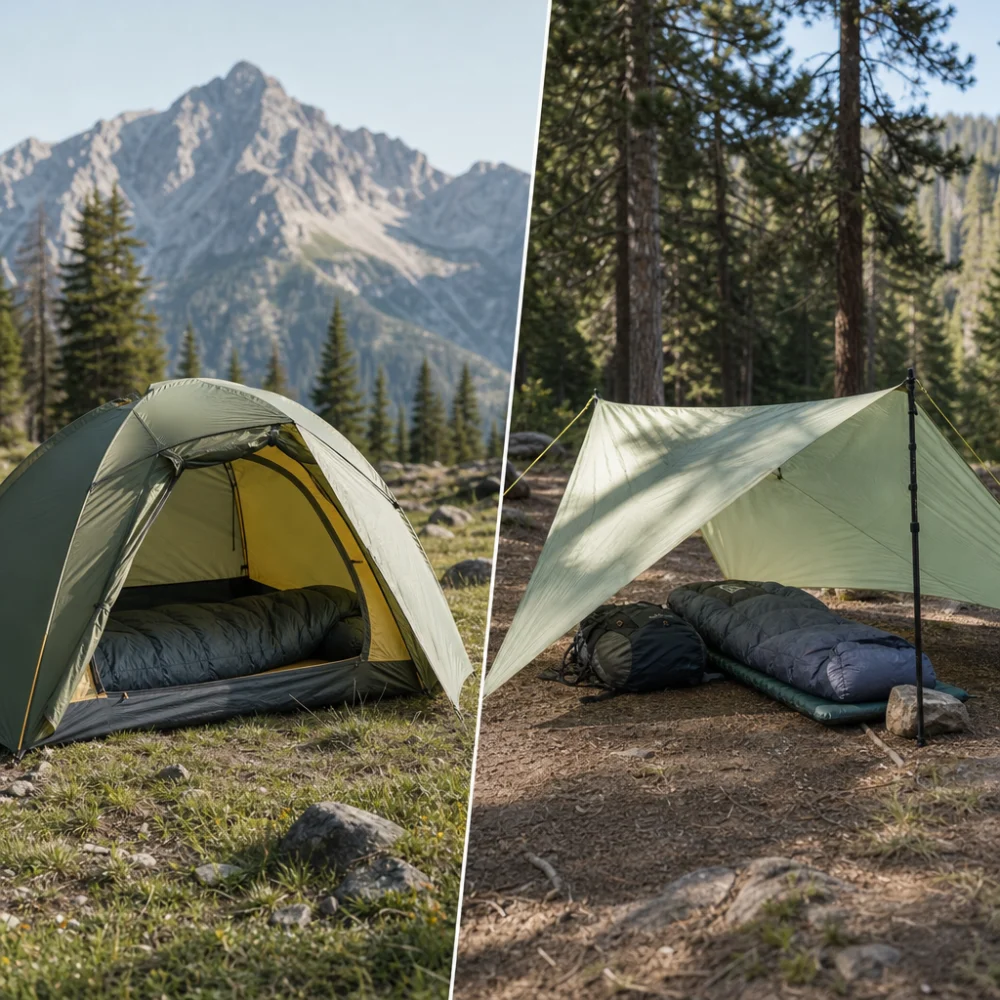
Backpacking shelters often differ by how they balance weight, coverage, and simplicity.
- Minimal shelters suit buyers who prioritize low carry burden and can accept a simpler setup or less interior room.
- More enclosed shelters may suit buyers who want greater protection and privacy, especially when the forecast is less stable.
- Open or airy designs may suit mild-weather trips where ventilation and a lighter feel matter more than full coverage.
Choose the type that matches your typical conditions, not just the occasional trip you hope to take.
How different buyers can narrow the choice
| Buyer need | What to prioritize | What to watch out for |
|---|---|---|
| Long-distance or ultralight-minded backpacking | Lower carry weight, compact packed size, efficient use of space | Very minimalist designs may feel cramped or less forgiving in poor weather |
| Weekend or casual backpacking | Balanced comfort, simple setup, enough space for relaxed use | A shelter that is too specialized may add complexity without much benefit |
| Unsettled or variable weather | Better coverage, dependable pitching, thoughtful weather protection | More protection can mean more weight or a larger packed footprint |
| New backpackers | Easy setup, clear structure, practical room for gear and sleeping | Overly minimalist designs can be less forgiving when conditions change |
Common mistakes to avoid
- Choosing by weight alone: a very light shelter may be a poor fit if you need more space or coverage.
- Ignoring setup complexity: a shelter that looks simple on paper may be harder to pitch in wind or wet conditions.
- Overestimating capacity: sleeping room and gear room are not always the same thing.
- Buying for rare conditions only: match the shelter to the trips you actually take most often.
Safety and suitability caveats
Backpacking shelters are not interchangeable in all conditions, and no single style is ideal for every trip. Consider the weather, terrain, and intended use before deciding, and check the individual product page for notes that affect suitability. If you backpack in demanding conditions, it is especially important to understand the shelter’s intended limits before you rely on it.
Maintenance and storage considerations
General care can affect how long a shelter stays practical to use. Keep the shelter clean and dry before storage when possible, and think about how easy it will be to repack after a trip. If the shelter depends on separate components or tensioned setup parts, check how those pieces are handled and stored so the system stays organized.
How to compare options efficiently
- Start with your usual trip length, weather, and carry preferences.
- Narrow the shelter style based on how much coverage and space you want.
- Compare weight, packed size, and setup expectations side by side.
- Check whether the interior layout fits your sleeping and gear needs.
- Review the individual product page for any model-specific details before deciding.
Backpacking shelters buyer checklist
- Does the shelter match your typical weather and trip style?
- Is the weight and packed size reasonable for your pack?
- Does the setup approach fit your experience level?
- Is there enough usable space for sleeping and gear?
- Does the shelter type balance comfort and carry efficiency the way you want?
- Have you checked the individual product page for model-specific details?
Frequently asked questions
What is the main difference between backpacking shelters and larger camp shelters?
Backpacking shelters are usually chosen with carry efficiency in mind, so they tend to prioritize portability and compactness. Larger camp shelters may offer more room or a different kind of camp setup, but they are not focused on the same packability trade-off.
How do I decide between lighter weight and more protection?
Think about where you backpack most often. If you usually travel in fair conditions and want an easier carry, lighter weight may make sense. If your trips often involve variable weather, more protection may be worth the extra burden.
Is more interior space always better?
Not always. More space can improve comfort, but it can also add weight and packed bulk. The right amount depends on whether you care more about relaxed living space or a smaller load.
Why does setup style matter so much?
Setup style affects how quickly you can make camp and how easy the shelter is to manage in challenging conditions. A shelter that is simple to pitch can be a real advantage if you arrive tired or the weather is changing.
Should beginners avoid minimalist shelters?
Not necessarily, but beginners often appreciate designs that are more forgiving and easier to understand. A very stripped-down shelter can work well if you value light carry weight, but it may take more care to use comfortably.
What should I check before buying a backpacking shelter online?
Focus on the product page details that affect your trip: carry weight, packed size, setup method, space, and intended weather use. Those are the factors most likely to shape whether the shelter feels practical once you own it.