
Portable camping air conditioners are a niche comfort purchase for campers who want more cooling than a fan can provide, but without moving into a built-in RV system. They can make sense for hot-weather trips, enclosed shelters, or setups where sleep comfort matters more than packing light.
Because this category can cover very different designs and power needs, the main challenge is matching the unit to your campsite setup. The right choice depends less on a general label and more on how you plan to power it, where you plan to place it, and how much cooling you realistically need.
If you are comparing options for a tent, camper, or small outdoor living area, focus on practicality first. A portable air conditioner is only useful if the size, airflow, drainage, and power requirements fit the way you actually camp.
What should you look for first in a portable camping air conditioner?
Start with the cooling job you want it to do, then check whether the unit fits your power source and your space. For some buyers, the priority is taking the edge off warm nights; for others, it is improving sleep in a small enclosed setup. The best starting point is usually the combination of power compatibility, portability, and the space the unit is meant to cool.
Specifications vary by model, so always check the individual product page before buying.
| Feature | What It Means | Why It Matters | What To Check |
|---|---|---|---|
| Power source | How the unit is powered | Determines whether it works with your campsite or vehicle setup | Battery, AC outlet, inverter, or generator needs |
| Cooling scope | The kind of area it is meant to cool | Affects whether it is suitable for a tent, small shelter, or enclosed space | Intended use and room or enclosure fit |
| Portability | How easy it is to carry and place | Important if you move camp often or have limited packing space | Size, weight, and carrying convenience |
| Noise level | How much sound it produces in use | Can affect sleep and campsite comfort | Product description notes and buyer comments where available |
| Drainage and maintenance | How moisture is handled and cleaned up | Impacts daily use and setup effort | Drainage method, tank needs, and cleaning requirements |
| Setup complexity | How much work it takes to get running | Matters if you want quick camp setup and fewer parts | Hose routing, venting, assembly, and accessories |
Key decision criteria explained
Power and campsite compatibility
Power is usually the first limiting factor. Some portable cooling units are meant for shore power or generator use, while others are aimed at battery-supported setups. The more cooling you want, the more important it becomes to match the unit to a realistic power plan rather than assuming any campsite outlet or battery will be enough.
Cooling need versus packing comfort
These products are about comfort, not the lightest possible pack. If you are car camping or using a larger shelter, a bigger and more capable unit may be reasonable. If you move gear by hand or sleep in a compact tent, a more compact setup may be easier to live with even if it offers less cooling.
Ventilation and moisture handling
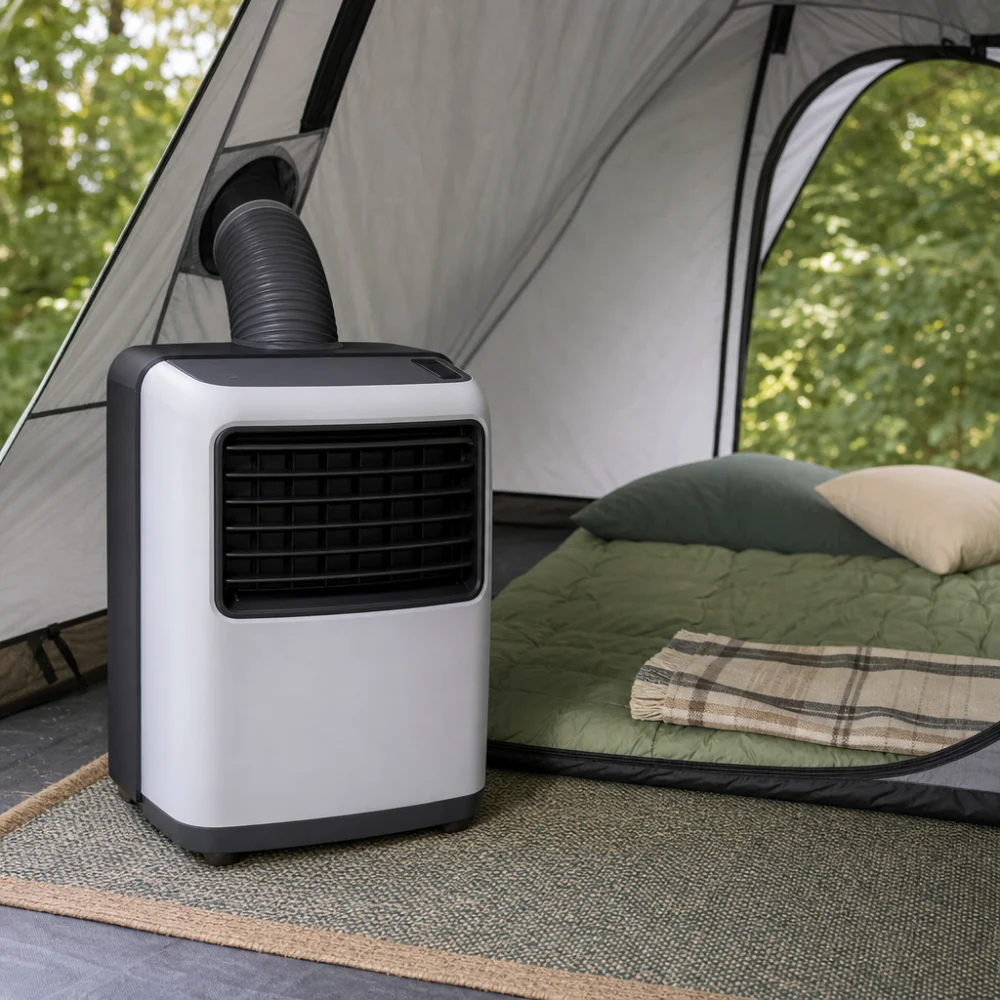
Air conditioning involves moving heat and managing moisture, so how the unit handles venting or drainage matters. Some buyers focus only on cooling output and overlook where warm air and condensation go. Check whether the product expects hose routing, drainage, or a certain placement around the sleeping area.
Noise and overnight use
If you plan to sleep near the unit, sound level becomes part of the buying decision. Even a useful cooler can be frustrating if the noise is distracting in a quiet tent or small camper. Look for wording that suggests the unit is intended for sleeping spaces, then compare that with your own tolerance for background noise.
Types of portable camping air conditioners
Within this category, buyers usually compare by form and setup style more than by brand style. Some units are more compact and move easily between campsites, while others are better suited to a fixed spot with dependable power. The main difference is how much cooling convenience you gain versus how much setup and power planning you accept.
- Compact portable units: Better when space is tight or when you want easier handling, but they may be less capable for larger or hotter spaces.
- More substantial campsite units: Better when cooling matters more than packing minimalism, but they often require more careful placement and power planning.
- Units with simple setup needs: Better for buyers who want fewer steps and less campsite fuss, though they may offer fewer options overall.
Who tends to need which kind of setup?
| Buyer need | What to prioritize | Why it helps |
|---|---|---|
| Hot-weather car campers | Cooling ability, power compatibility, and manageable size | Comfort matters, but gear can usually be a bit larger |
| Tent campers with limited space | Compact fit, placement flexibility, and lower setup fuss | Space and airflow constraints matter more |
| Sleep-focused buyers | Noise, nighttime suitability, and steady performance | A quieter, simpler setup is easier to live with overnight |
| Buyers comparing to a fan | Whether they need real cooling or just air movement | Helps avoid paying for more complexity than needed |
Common mistakes and misunderstandings
- Choosing by category name alone: “Portable” can still mean very different sizes and power needs. Check the actual setup requirements instead of assuming all units work the same way.
- Ignoring the power plan: A cooling unit is only useful if your campsite can support it. Verify how it is powered before comparing comfort features.
- Forgetting about venting or drainage: Cooling is not just about cold air. Make sure you understand what the unit needs to function properly in a real campsite layout.
- Expecting tent comfort to match home comfort: Camp setups are more exposed, less insulated, and more variable. It is better to compare realistically than to expect household-style performance.
Safety and suitability caveats
Choose a portable camping air conditioner only for the kind of space and power setup it is designed to support. In tents or small shelters, placement, ventilation, and stable setup matter because the product may need room to operate properly. If you are unsure whether a model fits your camp setup, check the individual product page closely and confirm the intended use before buying.
Maintenance, storage, and ownership considerations
These products often need a little more attention than a simple fan. Depending on the design, you may need to think about cleaning, draining moisture, storing hoses or accessories, and protecting the unit during transport. If you camp only occasionally, ease of storage may matter as much as cooling ability.
It also helps to think about where the unit will live between trips. A product that is easy to store, dry, and carry can be more practical for seasonal camping than one that is hard to move or takes up a lot of room.
How to compare options efficiently
- Decide whether you need cooling, better sleep comfort, or just stronger air movement.
- Match the unit to your power source and camping setup.
- Compare size, placement needs, and how easy it is to move and store.
- Check the trade-off between stronger cooling and more setup complexity.
- Read the individual product page for the exact requirements before you buy.
Summary buyer decision checklist
- Does the unit fit your campsite power setup?
- Is it sized for the space you want to cool?
- Will its noise level work for sleeping?
- Do you understand any venting or drainage needs?
- Is the size and weight practical for how you camp?
- Would a fan be enough, or do you truly need cooling?
Frequently asked questions
Is a portable camping air conditioner the same as a tent fan?
No. A fan moves air, while an air conditioner is meant to provide cooling through a more complex setup. If you only want a breeze, a fan may be simpler and easier to power. If you need more than air movement, this category is the more relevant place to compare.
Can I use one in any tent?
Not automatically. Tent size, airflow, venting, and power access all affect whether a unit is practical. It is better to confirm that the product is intended for your style of shelter before you buy.
Do these units work for off-grid camping?
Some may, but only if your power setup can support them. Off-grid use makes battery life, inverter use, and energy planning much more important. Check the product information carefully rather than assuming portability means battery-ready use.
Should I choose the smallest model available?
Not necessarily. The smallest option may be easiest to carry, but it may not fit your cooling needs. Balance packability with the amount of comfort you actually want at camp.
How important is noise?
Very important if you plan to sleep near the unit. In a quiet campsite, even moderate noise can be noticeable. If sleep comfort is a priority, treat noise as a real buying factor rather than an afterthought.
What should I check before comparing two products?
Start with power requirements, intended space, noise, drainage, and size. Those factors usually matter more than general marketing language. Then compare any extra convenience features only after the basics make sense.
What if I am unsure whether I need cooling at all?
Consider the kind of trips you take most often and how hot your sleeping space gets. If you only need occasional airflow, a fan may be enough. If hot nights regularly affect comfort, a camping air conditioner may be worth the extra planning.