
Chest packs are a compact carry option for people who want quick access to essentials without using a full backpack. They can make sense for hikes, fishing trips, travel days, dog walks, photography outings, or any situation where a small load stays close to the body.
The main buying question is not just how much a chest pack holds, but how it carries, how fast you can reach the contents, and whether it stays comfortable during movement. Small design differences can matter more than they first appear, especially if you plan to wear the pack for long periods.
This guide focuses on practical comparisons so you can narrow the category with confidence. It is meant to help you choose the right style for your needs, not to pick a single winner for every buyer.
What should you look for in a chest pack?
The best starting point is fit and access. A chest pack should sit securely enough to move with you, while still letting you reach what you need without removing it. After that, compare storage layout, strap comfort, and how the pack balances the items you carry. Specifications vary by model, so always check the individual product page before buying.
| Feature | What It Means | Why It Matters | What To Check |
|---|---|---|---|
| Carry position | Where the pack sits on your body and how it is stabilized | Affects comfort, movement, and how easy it is to reach the pack | Strap layout, how the load is supported, and whether the fit looks adjustable enough for your use |
| Storage layout | How pockets, compartments, and dividers are arranged | Helps you separate small items and avoid digging for essentials | Whether the layout matches what you carry most often, such as a phone, keys, snacks, or small gear |
| Access style | How the opening works and how quickly contents can be reached | Useful when you need frequent access while staying on the move | Zipper placement, pocket opening size, and whether the design seems easy to use with one hand if needed |
| Comfort features | Padding, strap shape, and how the pack feels during longer wear | Comfort matters more as the load or wear time increases | Padding, edge shape, and any signs the pack is meant for active use rather than very light carrying |
| Organization extras | Small details such as attachment points or separators | Can improve order, but only if you will actually use them | Whether the extras match your routine instead of adding clutter |
| Weather and material choice | The outer material and how well it suits your environment | Impacts durability, cleanup, and everyday practicality | Material description, care notes, and whether the finish fits outdoor or travel use |
Key decision criteria explained
Fit and body positioning
A chest pack is useful when it stays stable without feeling intrusive. The fit should let you move naturally, sit down, and reach items without constant adjustment. If you plan to wear it during active outings, prioritize a design that looks easy to tighten and wear close to the body.
Capacity and packing style
Capacity is not only about size. A compact pack can work well if you carry a few small essentials, while a more structured layout may suit people who want better separation. Think about whether you need one main compartment, several smaller pockets, or a balance between the two.
Organization versus simplicity
Extra pockets can help if you carry mixed items that you want to sort quickly. On the other hand, too many sections can make a small pack harder to use if you mainly want one grab-and-go space. A simple layout is often easier for casual use, while a more divided layout can help for activity-specific carry.
Access under movement
If you expect to open the pack while walking, fishing, traveling, or moving through a crowd, access matters a lot. Look for opening styles that make sense for frequent reach-ins and for the way you naturally use your hands. A pack that is easy to open on paper may still feel awkward if the access point does not suit your routine.
Materials and everyday durability
Outdoor and travel use can be hard on small bags. Material choice affects how the pack handles abrasion, dirt, and regular use, but it also influences weight and feel. For many buyers, the useful question is not whether a material sounds rugged, but whether it is practical for the setting where the pack will actually be worn.
Common chest pack types and variants
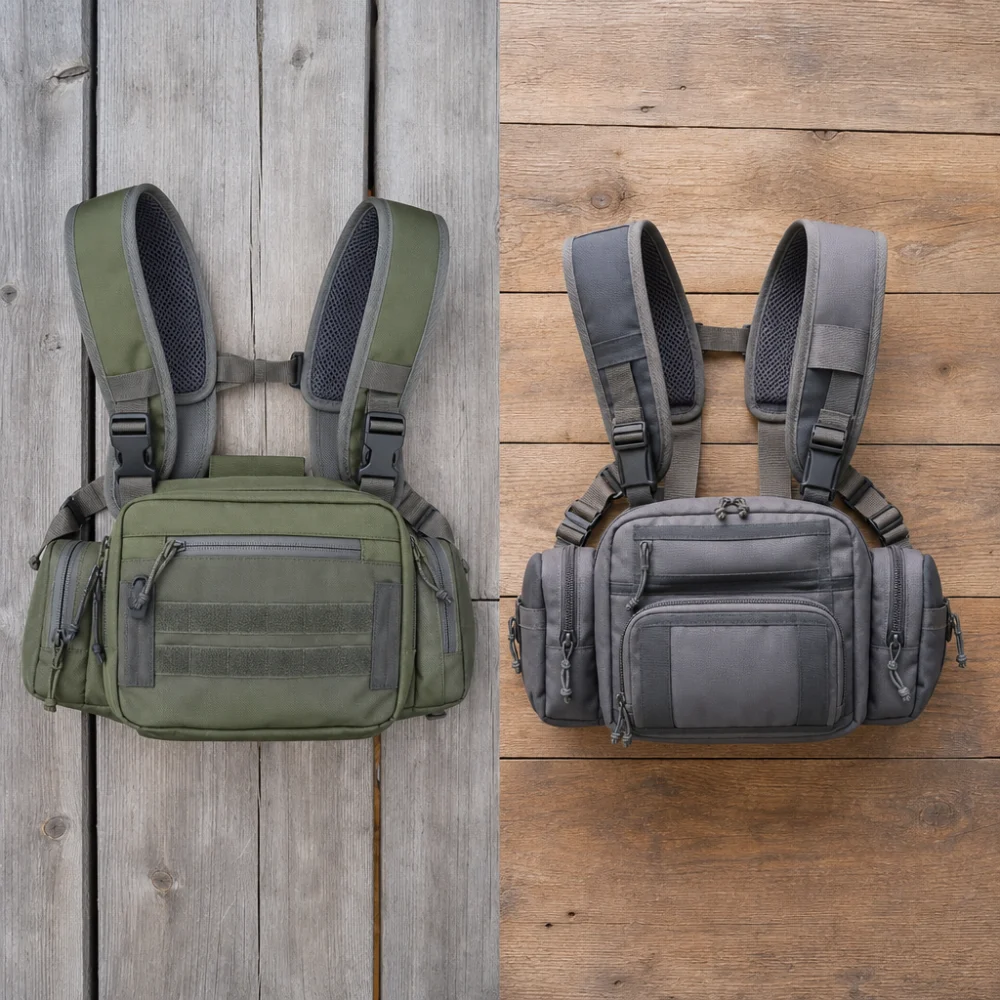
Within this category, the main differences usually come from layout rather than dramatic structural changes. Some chest packs are built for very light carry and minimal bulk. Others emphasize more organization or a firmer shape that keeps contents easier to sort.
You may also notice differences in how the pack is intended to be worn. Some designs feel more suited to short outings and quick access, while others are better for longer wear where comfort and balance matter more. The key is matching the carrying style to the way you move.
Which chest pack features suit different buyers?
| Buyer need | Helpful features | Trade-off to keep in mind |
|---|---|---|
| Daily carry for a few small essentials | Simple layout, easy access, lightweight feel | Less room for separation or bulkier items |
| Outdoor activity with frequent reach-in access | Stable fit, organized pockets, practical opening style | More structure can mean a bit more bulk |
| Travel or sightseeing | Secure carry, manageable size, easy organization | Smaller packs may not replace a larger day bag |
| Gift buyer looking for a versatile carry item | Adjustability, neutral design, broadly useful layout | Versatility can mean fewer highly specialized features |
| Buyer replacing a waist pack or sling bag | Comfort, access, and fit that better suits the preferred carry position | The new carry position may take some getting used to |
Common mistakes and misunderstandings
- Choosing by size alone: A larger pack is not always more useful if the layout is awkward or the carry feels unstable.
- Ignoring wear comfort: A chest pack that seems fine for a short try-on may feel different after longer use, especially if it carries heavier essentials.
- Overlooking access style: Fast access matters only if the opening works with the way you actually reach for items.
- Assuming more pockets always help: Extra organization is useful only when it matches the items you carry regularly.
- Not checking intended use: A pack that suits casual carry may not be the best fit for demanding outdoor use, and vice versa.
Safety and suitability caveats
Chest packs are generally simple to evaluate, but suitability still matters. Make sure the pack size, strap layout, and storage style fit the activity you have in mind. If you will use it in crowded, active, or uneven outdoor settings, check whether the design seems secure enough for that context.
Also consider what you plan to carry. Small personal items are usually the best match for this category, while larger or awkwardly shaped items may make the pack uncomfortable or difficult to use. Product pages may describe intended use differently, so read the details carefully rather than assuming every chest pack is suited to the same tasks.
Maintenance, storage, and long-term use
Most chest packs are easiest to live with when they stay lightly loaded and are cleaned before dirt builds up. Regular care is usually about simple habits: emptying the pack, checking pockets for debris, and storing it dry between uses. If a model uses special materials or closures, check the product page for care notes so you know what kind of upkeep to expect.
Durability also depends on how heavily you use the pack and how often you open it. A simpler design can sometimes be easier to maintain, while more organization can help protect small items from getting tossed together. The right balance depends on whether you value convenience, separation, or minimal bulk.
How to compare chest packs efficiently
- Start with the activity and decide what you need to carry most often.
- Narrow the type by deciding how much organization and access you want.
- Compare fit, strap comfort, and whether the carry position suits your movement.
- Check the pocket layout, closures, and material description for everyday practicality.
- Read the individual product page closely for model-specific details and limitations.
Buyer checklist
- Does the carry position suit how you plan to move?
- Is the storage layout simple enough for your routine?
- Will the pack be comfortable for the length of time you expect to wear it?
- Does the access style match how often you need to reach inside?
- Is the size appropriate for the items you actually carry?
- Do the material and care needs fit your environment and maintenance preferences?
- Have you checked the individual product page for model-specific details?
Frequently asked questions
What is a chest pack used for?
A chest pack is a small carry solution meant to keep essentials close and accessible. People often use them for outdoor activities, quick outings, travel, or everyday carry when a full backpack feels like more than they need. The best use case is usually carrying a limited number of items that you want to reach quickly.
How is a chest pack different from a sling bag?
The difference is usually in carry position and feel. Chest packs tend to sit closer to the front of the body, while sling bags are often worn in a way that shifts the load across one shoulder or around the torso differently. If you want a more centered, compact carry, a chest pack may feel more natural.
Should I choose more pockets or a simpler layout?
Choose the layout that matches what you carry. More pockets help when you want to separate small items, but they can feel unnecessary if you mainly need one small space for essentials. A simpler layout is often easier to use for casual carry.
Are chest packs good for long wear?
They can be, if the fit and load stay comfortable for your body and activity. Long wear is more about balance, strap comfort, and load management than about the category name itself. If you expect to wear the pack for hours, comfort details matter more than extra organization.
What should I check before buying one online?
Review the carry style, storage layout, approximate size in the description, and any notes about materials or intended use. It also helps to look closely at photos to understand how the pack opens and how the pockets are arranged. Specifications vary by model, so always check the individual product page before buying.
Can a chest pack replace a backpack?
Usually only for lighter carry. A chest pack is better for a few essentials than for bulkier loads or all-day packing needs. If you regularly carry many items, a backpack may still be the more practical choice.