
Portable shooting targets are for people who want a target setup they can move, pack away, or use in different places without committing to a permanent range arrangement. They are common for recreational practice, skill-building, and casual sessions where convenience matters as much as the target itself.
The main buying decision is not just what the target looks like, but how it fits your shooting setup, your space, and how often you plan to move it. A portable option can be simple and convenient, but that usually comes with trade-offs in stability, durability, or assembly.
Because this category covers a range of designs, it helps to think first about how you will use the target, then compare materials, portability, and how easy it is to reset or store.
What should you look for in a portable shooting target?
The best starting point is to match the target to your use case: quick backyard practice, frequent transport, or a more stable setup that still breaks down for storage. The most useful portable target is the one that balances ease of carry with enough stability for your intended use. If you expect to move it often, compactness and quick setup matter more; if you plan longer sessions, sturdiness and reset convenience may matter more.
Specifications vary by model, so always check the individual product page before buying.
| Feature | What It Means | Why It Matters | What To Check |
|---|---|---|---|
| Portability | How easy the target is to carry, pack, or move | Important if you practice in different locations or store it between uses | Size when folded or broken down, carry method, and overall setup effort |
| Stability | How well the target stays in place during use | A more stable target is easier to use consistently | Base design, anchoring method, and whether it is meant for light or heavier use |
| Reset style | How the target is used again after a hit | Affects session speed and convenience | Whether it is reactive, replaceable, or needs manual resetting |
| Material and build | What the target is made from and how it is put together | Influences durability and maintenance | Construction details and whether the product is intended for repeated outdoor use |
| Setup time | How long it takes to assemble and begin using | More steps can reduce convenience, especially for frequent practice | Number of parts, tool-free assembly, and storage breakdown process |
| Intended use | The kind of practice the target is designed to support | Helps avoid buying a target that does not match your shooting style | Product description, intended range, and any compatibility notes on the page |
Key decision criteria
Portability versus stability
Portable targets often ask you to choose between easier transport and a steadier setup. A lighter or more compact design is easier to move, but it may need more care to stay positioned the way you want. A heavier or broader design can feel more secure, but it may be less convenient to carry and store.
Reset and cleanup convenience
Some buyers want a target that makes repeated practice quick and easy. Others prefer a simpler setup that does not have moving parts or extra pieces to manage. Think about whether you want a target that can be used again with minimal interruption, or one that is simple and low-fuss.
Storage space
If your storage space is limited, the folded or packed form matters a lot. A target that breaks down neatly can be easier to keep in a vehicle, garage, or closet. If space is not a concern, you may be able to prioritize sturdier construction instead.
Durability expectations
Different targets are built with different levels of wear in mind. Some are meant for casual sessions and occasional transport, while others are better suited to repeated handling. Check the build description carefully and pay attention to the parts most likely to see wear, such as stands, frames, or reset components.
Common product types and variants
Portable shooting targets usually fall into a few practical groups.
- Freestanding targets: Good when you want something quick to place and move, with the trade-off that stability may vary by design.
- Foldable or collapsible targets: Useful for compact storage and transport, though they may take a little more setup.
- Reactive or resettable targets: Helpful for repeat practice and immediate feedback, but they may be more complex than simple static targets.
- Target-and-frame combinations: Convenient when you want a ready-to-use arrangement, though larger assemblies can be less portable.
The right type depends on whether you care most about easy transport, fast repetition, or a sturdier feel during use.
Which type fits different buyers?
| Buyer need | What to prioritize | What to avoid |
|---|---|---|
| Frequent transport | Compact breakdown, low carry burden, quick reassembly | Bulky designs that are awkward to move often |
| Limited storage space | Foldable format and a small packed footprint | Large one-piece setups that are hard to tuck away |
| Casual practice | Simple setup and uncomplicated use | Overly complex mechanisms that add hassle |
| Repeat sessions | Easy reset and consistent placement | Targets that require frequent manual adjustment |
| More stable placement | Broader base or better anchoring features | Very light designs that may shift too easily |
Common mistakes and misunderstandings
Choosing only by size. Bigger is not always better if the target becomes difficult to move or store. Size should be balanced against portability and setup effort.
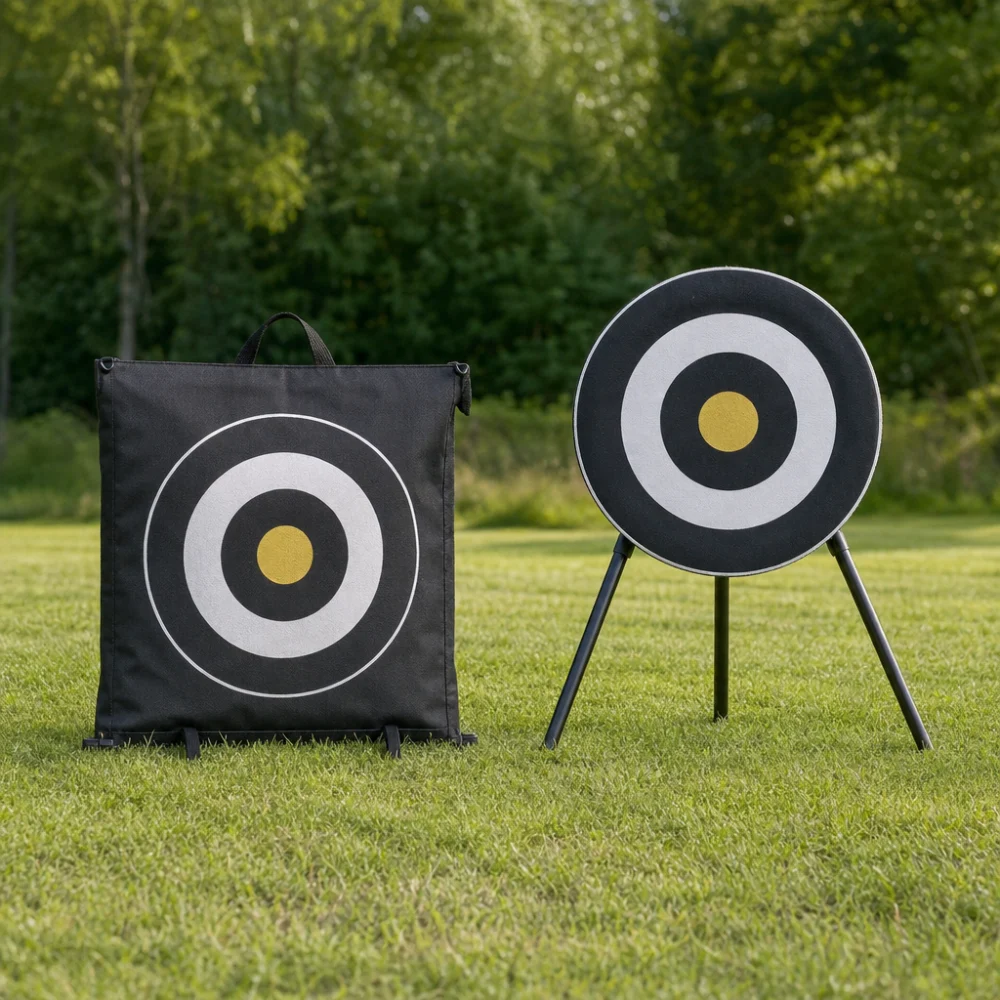
Ignoring how it stands in place. A target can look convenient but still be frustrating if it shifts too much during use. Look closely at how the base or support system is meant to work.
Overlooking reset effort. Some buyers focus on appearance and forget to check how the target is used again after each session. If you plan frequent practice, that detail matters a lot.
Assuming all portable targets are equally durable. Portability and long-term toughness do not always go together. Check the material and construction notes on the product page rather than assuming a portable design is automatically rugged.
Safety and suitability caveats
Portable shooting targets should be chosen for the setting and activity they are meant to support. Make sure the target is appropriate for your planned use, your available space, and any related equipment you already have. If you are comparing different target styles, remember that suitability is often more important than feature count.
Do not assume a portable target is suitable for every environment or every style of practice. It is worth checking whether the product is meant for indoor, outdoor, or general use, and whether any supporting gear is needed separately.
Maintenance, storage, and lifespan considerations
General care affects how well a portable target holds up over time. Products that are moved often may need more attention to folding points, joints, stands, or surfaces that wear from repeated handling. If a target uses separate pieces, keep track of them so setup stays easy.
Storage also matters because repeated packing and unpacking can affect convenience and durability. A design that stores neatly may be easier to keep in regular use than one that becomes awkward to manage after the first few sessions.
How to compare options efficiently
- Start with your main use: transport, storage, repeat practice, or a more stable setup.
- Choose the type that fits that need best: foldable, freestanding, reactive, or a combined frame style.
- Compare the practical features that affect daily use, especially setup time and how the target stays in place.
- Check build details and expected upkeep so you know what you are maintaining over time.
- Review the individual product page for any model-specific details before deciding.
Summary buyer decision checklist
- Does the target match your intended use and shooting setup?
- Is it easy enough to carry, store, and assemble for your routine?
- Does the design seem stable enough for the way you plan to use it?
- Is the reset or reuse process simple enough for your sessions?
- Do the material and construction details fit your durability expectations?
- Have you checked the individual product page for model-specific information?
Frequently asked questions
What makes a shooting target portable?
A portable shooting target is designed to be moved, packed away, or stored more easily than a fixed setup. That usually means a smaller footprint, a foldable format, or a simpler structure. The trade-off is that extra portability can sometimes reduce stability or add setup steps.
Are portable targets good for frequent practice?
They can be, especially if you want a setup you can assemble and put away often. For frequent use, look closely at setup time, reset convenience, and whether the design feels sturdy enough for repeated handling. A target that is easy to store but awkward to use may not be satisfying for regular sessions.
Should I choose a foldable or a freestanding design?
Choose foldable if storage and transport are your main concerns. Choose freestanding if you want a quicker setup and do not mind a larger footprint. The right choice depends on whether convenience while carrying or convenience during use matters more.
What details are most important on the product page?
Look first at the intended use, how the target stands, how it stores, and how much effort setup requires. Those details usually matter more than the overall appearance. Specifications vary by model, so always check the individual product page before buying.
How do I compare two similar portable targets?
Compare them by portability, stability, reset style, and storage size rather than by general description alone. If those are similar, the deciding factor is often the one that feels easiest to live with over time. Small differences in setup or storage can make a big difference in regular use.
What is the most common buying mistake?
A common mistake is focusing too much on how compact a target is and not enough on how it behaves in use. A very portable design can be great for storage, but only if it still works well for the way you practice. Balance convenience with the setup you will actually want to use.