
Paintball air tanks are one of the most important parts of a paintball setup because they supply the air that powers the marker. The right tank choice affects handling, refill convenience, and how comfortably the setup balances in your hands.
If you are replacing a tank or buying one for a new setup, the main task is not finding the fanciest option. It is matching the tank to your marker, your play style, and the way you want the setup to feel over a full day of play.
This guide focuses on the buying decisions that matter most for paintball air tanks, including fill type, capacity, materials, regulator design, and compatibility checks.
What should I look for in a paintball air tank?
Start with compatibility, then work through size, fill type, and comfort. A tank that fits your marker and meets your field or playing needs is more useful than one that looks impressive on paper. The biggest trade-off is usually between a lighter, more compact setup and one that offers more air capacity or a different feel in the shoulder or grip area.
Specifications vary by model, so always check the individual product page before buying.
| Feature | What It Means | Why It Matters | What To Check |
|---|---|---|---|
| Fill type | Whether the tank uses compressed air or another fill system | Determines how you refuel and what support you need at the field or shop | Match the fill type to your marker and to the refilling options available where you play |
| Tank size | The overall capacity and physical size of the tank | Affects how long you can play before refilling and how the setup handles | Look at the balance between air capacity, weight, and how the tank sits on your marker |
| Material | The tank body construction | Influences weight, handling, and how the setup feels during longer sessions | Compare the listed material and consider whether lower weight is more important than other preferences |
| Regulator setup | The part that manages air delivery from the tank | Can affect consistency, ease of setup, and compatibility | Check whether the tank includes a regulator and whether it matches your marker requirements |
| Mounting and fit | How the tank attaches and sits on the marker | A poor fit can make the marker awkward or uncomfortable | Review the connection type, shape, and any fit notes on the product page |
Key decision criteria explained
Compatibility with your marker
Compatibility is the first filter because a tank that does not match your marker or setup is not a practical choice. Look for the connection details, regulator information, and any notes about what the tank is intended to work with. If the listing is vague, treat that as a reason to verify before buying rather than assuming it will fit.
Air capacity versus handling
Larger or more capable tanks can reduce how often you need to refill, but they may also feel bulkier. Smaller tanks usually make the setup easier to carry and shoulder, though you may give up some convenience between fills. The right choice depends on whether you value lighter handling or fewer interruptions during play.
Weight and balance
Weight affects more than comfort. It changes how the marker swings, how it sits in a pack, and how tiring it feels over time. Buyers who play longer sessions often notice this trade-off quickly, especially if the tank is mounted in a position that changes the marker’s balance.
Regulator quality and setup needs
The regulator helps manage air delivery, so it is worth checking carefully on any listing that includes one. Some buyers want a simple, ready-to-use setup, while others may already have a preferred configuration. Either way, the product page should make clear what is included and whether anything else is needed.
Field and refill convenience
Even a good tank can be inconvenient if refilling is awkward where you play. Consider how easy it will be to get fills, whether the tank’s fill type is supported locally, and whether your usual field has the right equipment. That practical step matters as much as the tank itself.
Common paintball air tank types and variants
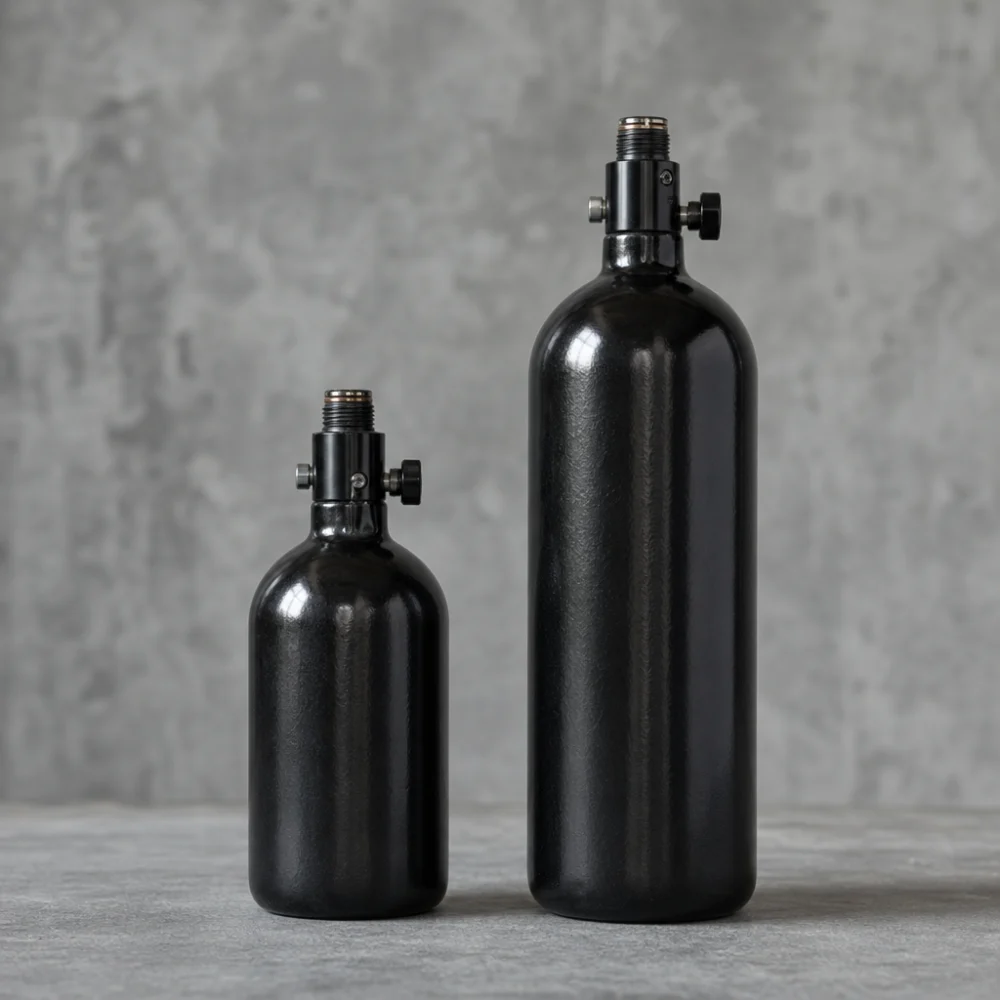
Most of the meaningful differences within this category come from capacity, construction, and included regulator features. A compact setup may suit players who want easier handling, while a larger setup may suit players who prefer longer intervals between refills. If you are comparing options, focus on the type that matches your marker use and comfort preference rather than assuming that a bigger or pricier tank is automatically better.
- Compact tanks: Usually chosen for lighter handling and a smaller footprint.
- Larger-capacity tanks: Usually chosen to reduce refill frequency.
- Tank and regulator combinations: Useful when you want a more complete setup in one listing.
- Replacement tanks: Useful when you already have a setup and only need the air source itself.
Which tank suits different buyers?
| Buyer need | What to prioritize | What to avoid overlooking |
|---|---|---|
| First-time buyer | Clear compatibility details and straightforward setup | Missing regulator information or unclear connection notes |
| Frequent player | Balance between capacity, weight, and refill convenience | A tank that is comfortable to buy but awkward to carry |
| Player focused on mobility | Compact handling and lower carried weight | Assuming a smaller tank will always meet your fill needs |
| Replacement shopper | Exact fit with the existing marker or setup | Changing the connection type without checking the full system |
Common mistakes and misunderstandings
- Buying by size alone: Air capacity matters, but fit and balance matter too.
- Assuming all tanks work the same way: The fill type and regulator details can change what is compatible and convenient.
- Overlooking local refill support: A tank is only practical if you can refill it where you play.
- Ignoring the full setup: The tank, regulator, and marker need to make sense together.
- Choosing the heaviest option without thinking about carry comfort: Extra capacity is not always worth the handling trade-off.
Safety and suitability caveats
Paintball air tanks are equipment items that should be chosen carefully for the marker and play setting you intend to use. Do not assume a tank is suitable just because it appears similar to another one, and do not rely on appearance alone for compatibility. If a product page does not clearly explain the fill type, regulator, or connection details, it is better to verify those points before buying.
Maintenance, storage, and lifespan considerations
For buyers, the main care questions are storage, inspection, and refill handling rather than day-to-day cleaning. A tank should be stored and transported in a way that protects it from knocks and unnecessary wear, and any tank you rely on should be visually checked before use. If the listing mentions special care, service intervals, or inspection requirements, factor that into the long-term convenience of owning it.
How to compare paintball air tanks efficiently
- Start with your marker and confirm what type of air tank it can use.
- Decide whether you care more about compact handling or fewer refills.
- Compare the regulator details, connection type, and any included components.
- Check how the tank’s size and weight will feel on your setup.
- Verify the product page details before committing.
Buyer checklist
- Does the tank match your marker and setup?
- Is the fill type supported where you play?
- Does the size fit your preference for compact handling or longer play between refills?
- Are the regulator and connection details clearly listed?
- Will the tank feel comfortable on your marker during longer sessions?
- Have you checked any care or inspection notes on the product page?
Frequently asked questions
Do all paintball air tanks work with every marker?
No. Compatibility depends on the marker, the connection details, and sometimes the regulator setup. Always check the product page and compare it with your marker requirements before buying.
Is a bigger tank always better?
Not necessarily. Bigger tanks can reduce refill frequency, but they may feel heavier or less comfortable on the marker. The better choice depends on whether you value play time between fills or easier handling.
Should I buy a tank with a regulator included?
That depends on what you already have and how complete you want the setup to be. An included regulator can simplify the purchase, but you should still confirm that it matches your marker and intended use.
What matters more, weight or capacity?
Both matter, but not in the same way for every player. If you prioritize mobility, weight may matter more; if you want fewer interruptions, capacity may matter more.
How do I know if a tank is a replacement or a complete setup?
Check the listing for included components and connection details. Some products are sold as a tank only, while others may include additional hardware or setup elements.
What should I check before using a new tank?
Review the product information for the fill type, connection, and any care or inspection notes. If anything is unclear, verify it before heading out to play.